

Keppel Infrastructure Trust should get its DPU on strong upward trajectory before revising fees
Based on calculations provided in the circular, the new fee structure may be viewed as less about aligning interests than about the trustee-manager lining its pockets
UNITHOLDERS of Keppel Infrastructure Trust (KIT) will vote on a proposal to revise its fee structure at an extraordinary general meeting (EGM) scheduled for Apr 19.
During the coming fortnight, they are likely to hear a lot about why this fee structure revision is not only justified but in their own interests. Indeed, an "information session" facilitated by the Securities Investors Association (Singapore) is to be held this week - on Wednesday (Apr 6).
Unitholders of KIT should ask some hard questions about why the proposed fee structure revision is warranted at this particular moment.
KIT's distribution per unit (DPU) has barely budged over the last 5 years. Moreover, the trustee-manager's recently unveiled "refreshed" growth strategy may not deliver immediate results.
KIT's trustee-manager should lean on the resources of Keppel Corp to reposition the trust's portfolio and ensure it delivers higher returns before demanding higher fees.
Under the proposed fee structure, KIT will pay its trustee-manager a base fee of 10 per cent of its yearly distributable income; and a performance fee of 25 per cent of any increase in its DPU multiplied by the weighted number of units in issue.
This is quite different from its existing fee structure. KIT currently pays its trustee-manager a yearly base fee of S$2 million (adjusted for inflation since 2010); and a performance fee of 4.5 per cent of the trust's total cash inflows.
KIT's trustee-manager said in a circular dated Mar 28 that the existing fee structure has been in place since the trust was listed in 2010. Known as K-Green Trust at the time, it had just 7 employees and only S$760 million in assets under management (AUM).
KIT - which merged with City-Spring Infrastructure Trust in 2015 - is now a much larger entity. As at Dec 31, the trust had some S$4.5 billion in AUM and 22 employees.
Following a strategic review last year, KIT's trustee-manager is also now pursuing a strategy that will see it focus on "evergreen" assets that provide utility-like contracted cash flows; assets that benefit from the decarbonising economy; assets that support the digital economy; and socio-economic infrastructure that supports economic growth and enhances social well-being.
KIT's trustee-manager said in the circular that the new fee structure - being tagged to distributable income and increases in DPU - is more aligned with its objective of long-term value creation and serving the interests of unitholders.
The trustee-manager added that the new fee structure will enable it to deepen and expand its talent pool, and hunt for suitable assets to optimise and expand KIT's portfolio.
Significantly higher fees
The new fee structure, however, will result in KIT paying significantly higher fees in absolute terms to its trustee-manager.
Excluding acquisition and disposal fees (which are to remain unchanged under the proposed fee structure), KIT paid its trustee-manager fees totalling S$11.9 million for FY2020 and S$11.8 million for FY2021.
If the proposed fee structure had been applied, KIT would have paid its trustee-manager fees totalling S$23.7 million for FY2020 and S$21.2 million for FY2021 - that is, 99.2 per cent and 79.7 per cent more than it actually paid.
This would have reduced KIT's FY2020 free cash flow to equity (which is its definition of distributable income) by 5.2 per cent, from S$225.7 million to S$213.9 million. The trust's FY2020 DPU would have been 6.5 per cent lower, at S$0.0348 instead of S$0.0372.
KIT's free cash flow to equity for FY2021 would have been similarly reduced by 4.9 per cent, from S$192.2 million to S$182.8 million. Its FY2021 DPU would have been 4.8 per cent lower, at S$0.036 instead of S$0.0378.
These calculations, which can be found in the circular, might have some investors feeling that the new fee structure is less about the trustee-manager aligning its interests with those of unitholders than it is about the trustee-manager simply lining its own pockets.
It is worth pointing out that even though KIT's funds from operations and free cash flow to equity have increased 37.8 per cent and 28.6 per cent respectively over the last 5 years, its DPU has been relatively stagnant.
KIT reported an annual DPU of S$0.0372 for FY2016 to FY2020. For FY2021, its DPU rose 1.6 per cent to S$0.0378.
Integral part of Keppel
To be fair, the independent financial adviser (IFA) tasked with evaluating the proposed revision in the fee structure found that the revised fees KIT might soon have to pay its trustee-manager - compared to its revenue, market capitalisation and AUM - are not all that different from other locally-listed business trusts and real estate investment trusts (Reits).
The IFA also found that the proposed structure of KIT's base fee and performance fee is identical to several local Reits.
Yet, for business trusts and Reits that are affiliated to large corporate groups, fee structures are probably of secondary importance in regulating the behaviour of managers.
Property developers like CapitaLand and Mapletree are widely seen to have an overarching interest in ensuring their Reits garner strong investor interest and function as effective asset securitisation vehicles - regardless of the Reits' fee structures.
KIT is clearly an integral part of the Keppel group - which bills itself as an ecosystem of companies working together to meet the growing need for energy, infrastructure, clean environments and connectivity.
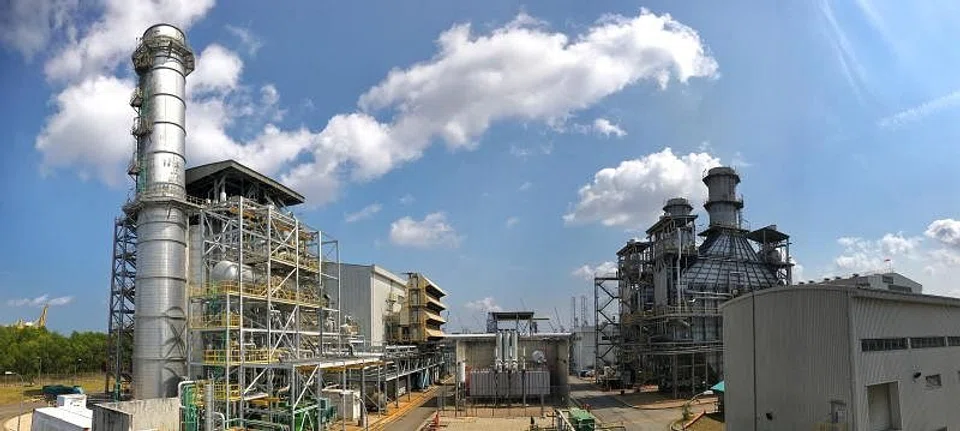
For instance, the trust's 1,300MW combined cycle Keppel Merlimau Cogen Plant (KMC) located on Jurong Island earns steady "capacity payments" from the Keppel group.
Separately, back in 2019, KIT divested a 51 per cent stake in the 1-Net North Data Centre to Keppel DC Reit for S$102.9 million.
It seems unlikely that KIT's trustee-manager - which is owned by the Keppel group - would be any less motivated to continue enhancing the value of KIT's portfolio in the absence of a fee structure revision.
KIT's trustee-manager certainly hasn't been idle recently. KIT in February invested in Aramco Gas Pipelines Company, which holds a 20-year lease and leaseback agreement over the usage rights of Aramco's gas pipelines network.
KIT's trustee-manager also announced plans last month to unlock value from the trust's 100 per cent stake in water treatment chemicals supplier Ixom Holdings, which was acquired in 2019.
Delaying the fee structure revision until after these and other initiatives set KIT's DPU on a stronger upward trajectory might help win over more investors.
TRENDING NOW

Motoring tycoon Peter Kwee is back in court: Here are his previous legal battles

Demand, tech capabilities position Apac and AI as Skyscanner’s next growth frontiers: CEO Bryan Batista

Beyond the greenback, Vietnam’s big borrowers turn to Asian-currency bonds
Nvidia’s outlook cut to stable by Moody’s on governance concerns

