

Latest proposals will boost investing on SGX, but costs may negate efficacy
Fees and commissions incurred might be relatively sizeable and eat into the returns

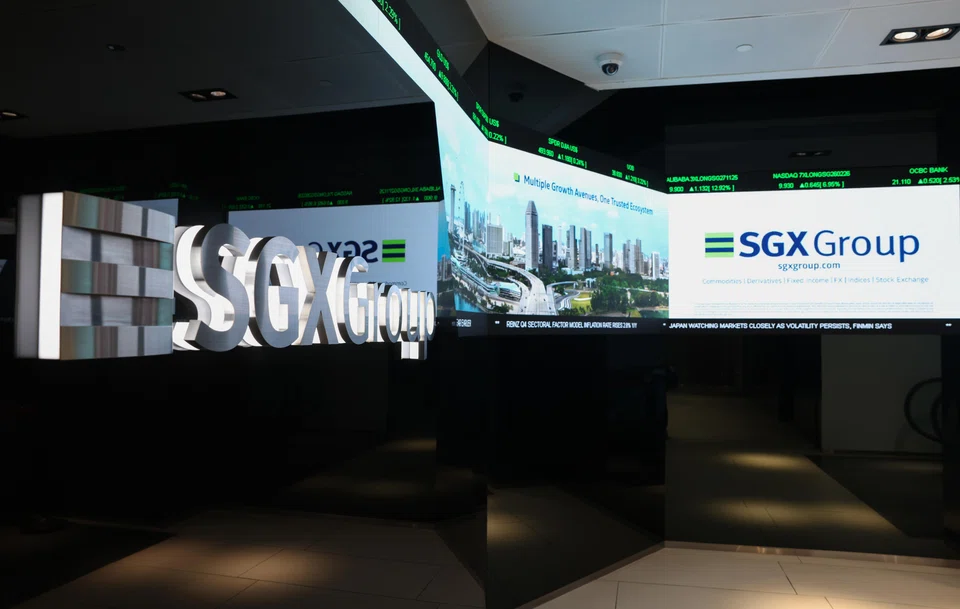
[SINGAPORE] It’s laudable that the Singapore Exchange (SGX) has proposed ways to improve access and reduce friction in investing for retail investors amid enhancing the development of Singapore’s equities market.
Among the recent proposals are reducing the standard board lot size and facilitating the broader use of broker custody accounts, with public feedback being sought for these measures.
Specifically, reducing the board lot size of SGX-traded securities involves cutting from 100 units to 10 units for those counters that are trading above S$10, and from 100 units to one unit for those priced above S$100.
The rationale is that lowering the minimum investment size for higher-priced securities would potentially broaden investor participation.
This would lead to an increase in trading activity and enable investors to access higher-priced securities easily to build more diversified portfolios.
Affordability may be undermined by fees and charges
That is the ideal outcome – but in reality, affordability may be undermined by fees and charges.
With an investment S$100 to S$1,000 per transaction, fees and commissions incurred might be relatively sizeable and eat into the returns.
When one sells this investment – assuming there are no further purchases – there is another set of fees and charges that will further diminish one’s returns.
For example, for an investor who buys 10 units of iFast at S$10.30 per share, or S$103 in total, the fees and commissions – including those by SGX using the listed fintech’s platform – would amount to S$10.39 or over 10 per cent of this investment.
The lion’s share of the fees and charges is the flat S$8.80 commission to iFast.
Some brokerages levy smaller or no commissions and/or platform fees while others might impose a minimum charge, but inexperienced investors may not know about them.
This is an area that should be looked at. Fees should be cut or waived for transactions below S$1,000 when the board lot size drops below 100, or only charge for sale transactions.
The usual level of fees can be imposed after an investor has made a certain number of transactions a year or his total holdings have exceeded a certain value.
More broker custody accounts?
Meanwhile, there is also an intention to increase the adoption of broker custody accounts. This may add costs to investors.
Singapore investors currently can hold their SGX securities either in direct accounts with the Central Depository (CDP), or through broker custody accounts, also known as sub-accounts, or both. Two-thirds of retail accounts in CDP are individually segregated direct accounts, while the remaining one-third are in broker custody accounts.
A CDP account, operated by the Singapore bourse, acts as a secure storage for SGX-listed stocks owned by an investor. A broker custody account, on the other hand, is held under a broker who manages the investor’s holdings.
If investors adopt the same broker custody model for both their SGX and foreign-listed securities, they can view and manage all their holdings together through the same broker.
But usually, a custodian fee is levied by investment platforms or brokerages for the safekeeping, administration and maintenance of the investor’s securities.
Having access to a consolidated view
Some platforms waive custodian fees if their customers trade a specified minimum number of times during a period – which might encourage irrational investment.
Additionally, one can only trade through that broker. Switching out of that broker with a transfer of one’s holdings come with fees or restrictions.
Investors would have access to a consolidated view of their CDP holdings without a broker custody account if the Singapore Financial Data Exchange (SGFinDex) brings brokers on board. This would allow investors to view their CDP stock holding information through the broker’s website or app.
SGFinDex started in December 2020 and allows users to view their finances and insurance data on a single online platform of their choice instead of having to visit the website of each institution or government agency.
Anyway, the broker custody account proposal does not capture all investment holdings for investors.
Investments made using Supplementary Retirement Scheme (81 per cent of S$20.6 billion was invested as at December 2024) or Central Provident Fund funds (S$21.4 billion invested as at September 2025) are not reflected in CDP accounts and thus will not show up even if a broker custody account is used.
Notwithstanding the proposed changes, retail investors may choose to continue using direct accounts even after the changes take effect.
TRENDING NOW

Philippine power giant First Gen rebuffs foreign offers, plans up to US$2.6 billion in expansion

Once staunchly pro-China, Malaysian Chinese businesses are now distancing themselves from Beijing

Nearly half of Singapore workers put in at least six unpaid hours a week: survey

Vietnam’s data-centre investment rush faces reality check on power and site constraints

