Lazada layoffs suggest spinoff, IPO of Alibaba unit might not be on the horizon

Benjamin Cher
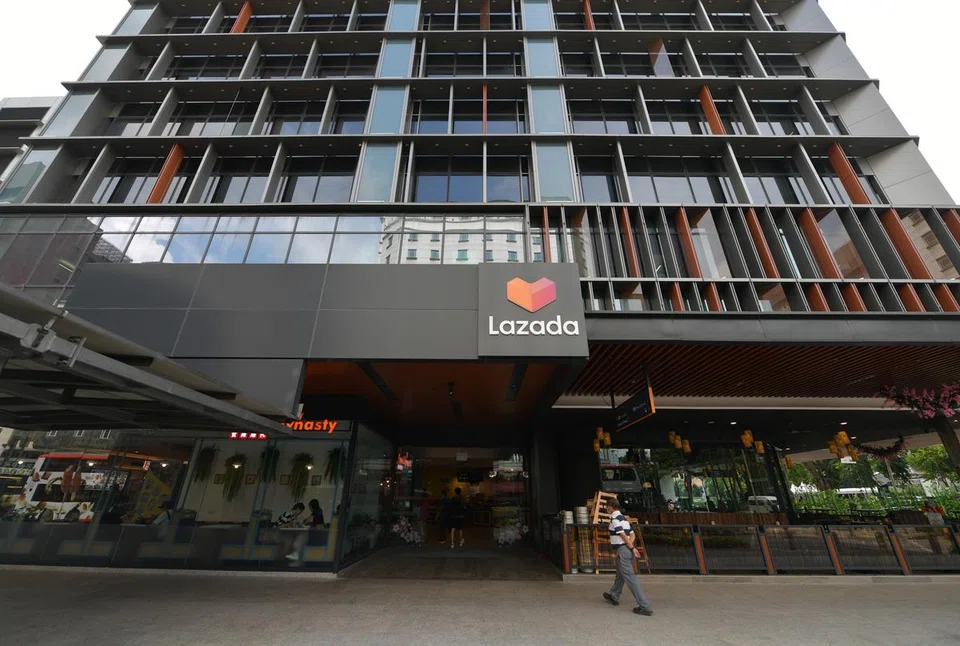
NEWS on Jan 3 about layoffs ripping through Lazada may have come as a shock to many observers. But to some industry watchers, the cost-cutting measures might be a case of too little, too late.
Alibaba-backed Lazada has fallen behind in the e-commerce race in South-east Asia. Former employees have lamented about its inability to reclaim its crown from Shopee, despite the Sea subsidiary undergoing a rough patch.
Part of this has been due to disruptions in the regional e-commerce scene, not least by the emergence of TikTok Shop.
The new entrant, backed by China-based ByteDance, has been making significant inroads into the region.
From nothing in 2020, its gross merchandise value (GMV) grew to US$600 million in 2021 before jumping to US$4.4 billion in 2022, according to a report by consultancy Momentum Works.
On the other hand, Lazada was the only e-commerce platform in the report to register a decline in GMV – slipping from US$21 billion in 2021 to US$20.1 billion in 2022.
The drop was attributed to a decrease in average order value, which is unlikely to improve amid the current macroeconomic headwinds and high interest rate environment.
In terms of GMV, Lazada in 2022 ranked second overall among e-commerce players across South-east Asia. However, its GMV share within certain individual markets leaves it in a precarious position.
For example, Lazada has a 10 per cent share of the total GMV pie in major market Indonesia, which puts it in third place behind Shopee and Tokopedia.
It enjoys a 40 per cent share of GMV in Thailand, but is still a distant second to Shopee in most other key South-east Asian markets.
Alibaba’s own battles
Lazada supporters will point to the recent injection of US$845 million by Alibaba as a positive sign. However, this has to be taken into context.
As a loss-making subsidiary of Alibaba, Lazada should be expected to periodically receive funds from the parent company to sustain operations. This should not be seen as a move to fortify the war chest.
Alibaba might also have its hands full as it faces its own e-commerce battle in China. Its grip on the Chinese market has been loosened by group buy platform Pinduoduo (PDD), which in December overtook Alibaba in terms of market capitalisation. As at Jan 10, PDD’s market cap stood at US$199.9 billion, compared to Alibaba’s US$180.1 billion.
In its latest results for the third quarter of 2023, PDD posted a 94 per cent year-on-year increase in revenue to US$9.4 billion. Its quarter-on-quarter revenue growth has also been equally impressive, climbing steadily from US$5.5 billion in the first quarter to US$7.2 billion in the second quarter.
In contrast, Alibaba’s e-commerce revenue has been declining quarter on quarter since Q1 2023. The group’s e-commerce revenue, including international and China commerce, fell to US$16.7 billion in Q3 2023, from US$18.9 billion in Q2 and US$22.5 billion in Q1.
Alibaba’s tussle with PDD has also spilled outside of China.
Temu, the PDD-owned cross-border e-commerce platform which takes in products on consignment, has topped the Apple US App Store download charts for 2023 – beating even TikTok.
Temu has also made inroads into South-east Asia, bringing yet another competitor to Lazada’s turf by setting up shop in the Philippines and Malaysia.
Some market watchers have suggested that the Lazada layoffs could be a precursor to the spinoff and listing of Alibaba’s global commerce unit, known as the Alibaba International Digital Commerce Group (AIDC). But the retrenchment exercise should, instead, be seen as part of Alibaba’s efforts to conserve resources.
When going for an initial public offering (IPO), a company should be coming from a position of strength rather than one of weakness. Listing AIDC now would prompt more questions around valuation and Lazada’s drag on the group as it defends its turf.
Investors would be reluctant to buy into a company if there are parts of it that are still struggling.
The AIDC IPO is also not expected to take place any time soon, as Alibaba would likely want to retain more control over its business units as it executes reforms in the business. Notably, founder Jack Ma had sent an internal memo to employees calling for change, after Alibaba’s market cap fell below PDD’s.
With an e-commerce battle that is raging across many fronts, the Lazada staff affected by the layoffs could be the first of many casualties.