

Leaving out AMK Hub makes Mercatus’ retail portfolio a more digestible acquisition target

Kalpana Rashiwala
ALMOST 3 months have passed since Mercatus Co-operative – substantially owned by NTUC Enterprise – was said to have bundled 4 of its retail assets in Singapore for a potential sale “in excess of S$4 billion”. Yet, there are no signs of a deal close to being done.
The portfolio is appealing, with a strong concentration of suburban malls – a relatively resilient segment of the retail property market, catering to the daily needs of shoppers living in Singapore’s heartlands.
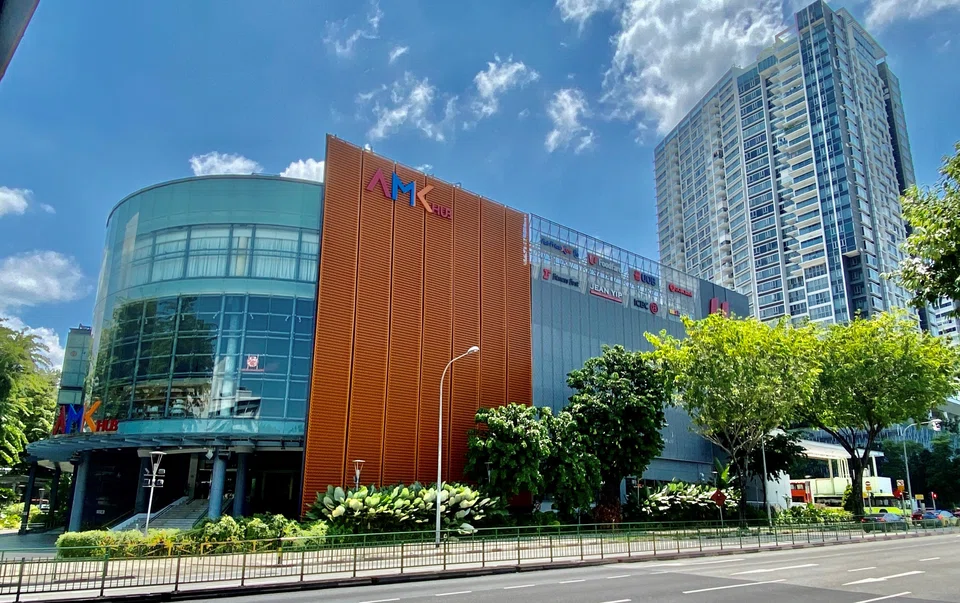
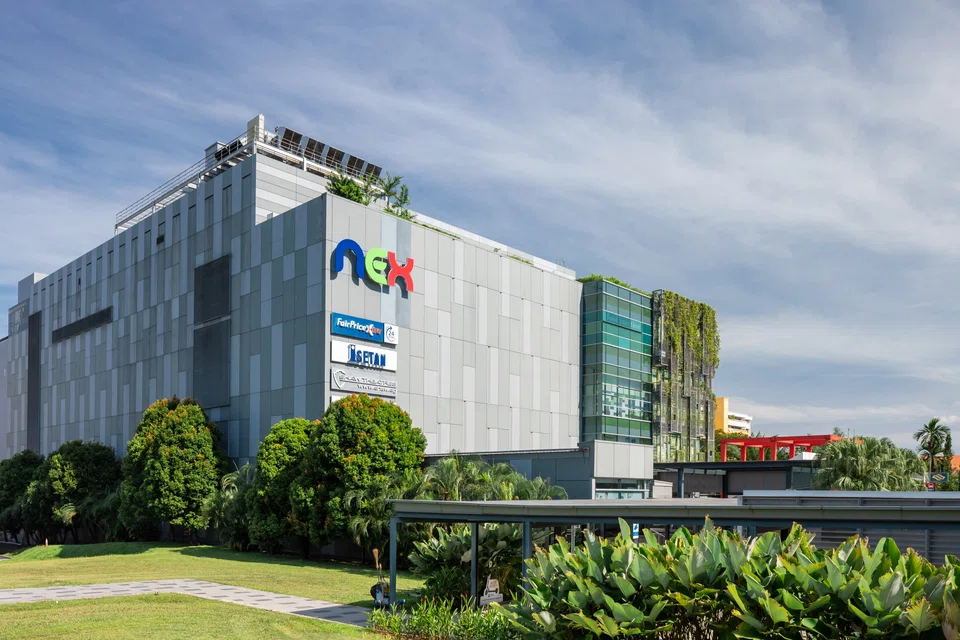
Jurong Point, AMK Hub in Ang Mo Kio, and a half-stake in Nex in Serangoon Central are “fortress retail” assets integrated with MRT stations and bus interchanges, with 1.36 million sq ft of retail space. (The fourth asset comprises levels 1 and 3 of Thomson Plaza, adding up to 110,000 sq ft; this space is branded as “Swing By @ Thomson Plaza”. Thomson Plaza is a stone’s throw from Upper Thomson MRT station, which opened last year.)
Based on valuations as at Dec 31, 2021 and total revenue figures last year of the 4 assets in Mercatus’ latest annual report, analysts estimate the net property income yield at 4.3 per cent to 4.5 per cent for 2021 – with prospects for improvement assuming trading conditions recover to pre-Covid levels.
Industry observers had predicted that Mercatus’ package would pique the interest of overseas pension funds, private equity investors and real estate investment trusts (Reits), along with some local groups.
“In any case, observers think it also makes sense for Mercatus to retain AMK Hub – given that the NTUC movement continues to have an interest in ensuring the success of the co-operatives/social enterprises that cater to the needs and welfare of the community.”
Indeed, there has been talk that at least 3 Reits - CapitaLand Integrated Commercial Trust (CICT) and Frasers Centrepoint Trust (FCT) from Singapore, and Link Reit from Hong Kong – are among the parties that submitted non-binding offers to JP Morgan, which marketed the bundled package after being appointed by Mercatus as financial adviser for a strategic review of some of its properties.
But most potential buyers face challenges making such a large acquisition and making it yield accretive given the current high cost of capital, say industry watchers.
Institutional property investors have grown more cautious in the past 3 months, with rising interest rates, choppy equity markets and no let-up in geopolitical tensions.
Even if, say, CICT or FCT were to gear up to the maximum 45 per cent aggregate leverage limit typically allowed for S-Reits (and there may be concerns if they did so), these trusts would still need to conduct substantial equity fundraising exercises to acquire the bundle of 4 retail assets from Mercatus.
Based on a DBS Group Research report dated Aug 10, the equity fund raising component for CICT would be S$1.2 billion (8 per cent of its market cap); and that for FCT, S$1.5 billion (37 per cent of its market cap). “We believe that the current volatile markets could mean that it may not be the most opportune time to tap the equity markets for new capital and that (this) could have an impact on accretion levels” from the proposed acquisition, DBS said.
A Citi report on Aug 31 also noted that “most investors have questioned the transaction’s earnings accretion (if any) and hefty capital outlay”.
Of course, bidders keen on acquiring the 4 retail assets from Mercatus could limit equity fund raising requirements by selling some existing assets to free up resources. Or, they could make the acquisition jointly with their sponsor or other parties.
There may be a twist in this saga, however, with the acquisition size becoming more palatable.
First, Mercatus is understood to have withdrawn AMK Hub from the bundle – due to a restriction in the state lease for the site.
Mercatus was born in 2011 out of the consolidation of all property assets owned by the National Trades Union Congress (NTUC), the Singapore Labour Foundation (SLF) and their affiliated unions.
The land on which AMK Hub sits was directly alienated to SLF, which is a statutory board.
The lease stipulates that not less than 50 per cent of the gross floor area of the development must be used by SLF, NTUC, its affiliates and related organisations, public institutions and non-profit organisations.
Such tenants at AMK Hub include Fairprice Xtra, NTUC Foodfare, NTUC Learning Hub and NTUC Health Denticare.
A market watcher said that from the viewpoint of an intending buyer of AMK Hub, having such organisations in the mall may not be a bad thing. They help to anchor the mall and support occupancy. That these co-ops/social enterprises may not be able to pay rentals as high as typical, profit-driven retail/F&B operators, can be worked into the pricing for AMK Hub by a prospective buyer.
Nevertheless, BT understands Mercatus withdrew AMK Hub after the close of the initial round of non-binding offer submissions. Perhaps the offers received for the overall package of 4 assets were not as high as Mercatus/JP Morgan had envisaged.
In any case, observers think it also makes sense for Mercatus to retain AMK Hub – given that the NTUC movement continues to have an interest in ensuring the success of the co-operatives/social enterprises that cater to the needs and welfare of the community. By retaining AMK Hub, these organisations can be assured of premises at affordable rentals.
Right of first refusal for half-stake in Nex
Another factor that could lower capital outlay for interested bidders is if a right of first refusal is exercised for Mercatus’ half-stake in Nex by the party that owns the other half: Yunnan Gold (Mauritius), held by China Investment Corporation and PGIM Real Estate.
The 4 retail assets had a total appraised value of S$4.13 billion as at Dec 31, 2021. Of this, S$978 million was for the 50 per cent stake in Nex and S$846 million for AMK Hub.
Jurong Point was valued at S$2.11 billion and the Swing By @ Thomson Plaza, at S$203 million.
Sans AMK Hub and 50 per cent of Nex, the deal size looks a whole more digestible.
TRENDING NOW

Motoring tycoon Peter Kwee is back in court: Here are his previous legal battles

Demand, tech capabilities position Apac and AI as Skyscanner’s next growth frontiers: CEO Bryan Batista

Beyond the greenback, Vietnam’s big borrowers turn to Asian-currency bonds
Nvidia’s outlook cut to stable by Moody’s on governance concerns

