

Lighter-touch regulation is what China stock markets need
THE renewed sharp declines in China's stock markets is a sobering reminder that official attempts to prop up share prices can only go so far and attempts by government to be a cheerleader for the stock market can do more harm than good.
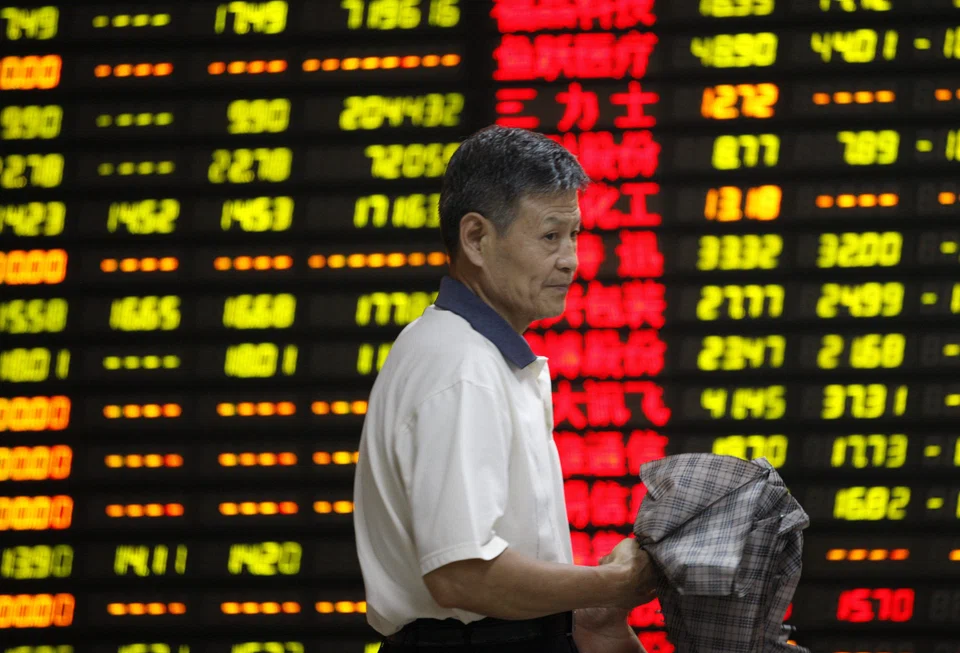
On Monday, the Shanghai Composite Index suffered its biggest one-day decline since Feb 27, 2007, plummeting by 8.5 per cent, while the Shenzhen Composite fell 7 per cent. More than 1,500 shares dived by their daily limit, including index components PetroChina, China Unicom and Bank of Communications.
Before hazarding any guesses as to what might be going on and its implications, some perspective is in order.
The Shanghai Composite Index had risen around 250 per cent between 2013 and June 2015. In just over three weeks, from June 12 to July 8, it tumbled 32 per cent. Thereafter, following heavy government intervention, the market bounced back about 20 per cent. Even after Monday's sharp correction, it is still up about 15 per cent year to date.
The fact that barely 9 per cent of Chinese households have invested in the stock market and less than 20 per cent of household wealth is held in the form of shares would suggest that the economic ramifications of even a sharp stock-market plunge should not be cause for panic. However, there may be some legitimate concerns. As the world's largest hedge fund manager, Ray Dalio, CEO of Bridgewater Associates, pointed out in a note to clients last week, more people have bought shares near the top of the market than near the bottom (some 12 million trading accounts were opened in May alone, the month before the market crashed), and what matters is not just the economic impact of the share price correction, but also the psychological effects, including among those who did not buy shares. Bridgewater reckons that the impact of stock-market losses on households would be "significant" at around 2.2 per cent of overall household income.
But also important is the way the Chinese government has dealt with the stock-market volatility and how this will be perceived, both domestically and internationally. The intervention has, by any standard, been heavy-handed. For a start, state-owned media repeatedly exhorted people to buy stocks - in hindsight, a terrible mistake. When the market fell, the government restricted short selling, suspended initial public offerings, encouraged a fund backed by brokerages to buy stocks and even engaged in direct purchases itself, through the China Securities Finance Corporation. This has created moral hazard - a perception that when the market corrects beyond a point (and it is not even that bad a correction when viewed in a two-year perspective) the government will step in as a buyer of last resort. This will not inspire confidence in the market, at least not among international players.
Certainly, the government should provide adequate liquidity - which the People's Bank of China has done, to its credit, through rate cuts - and should, of course, stand ready to deal decisively with major bankruptcies and any systemic impact on the financial system. But propping up the stock market is not the appropriate way to do this.
As for the latest correction, some analysts have speculated that it might reflect the adoption of a more "hands-off" approach by the authorities. If so, that is a positive development. China's stock markets should be allowed to reach their own level, on their own.
READ MORE: Shanghai stock market savaged by biggest sell-off in 8 years






