
Long, winding road to Biden spending wins
Even under the best scenario, numerous obstacles, problems and negotiations on how to fund the spending bill will likely take up a considerable amount of time.
 Add BT as a preferred source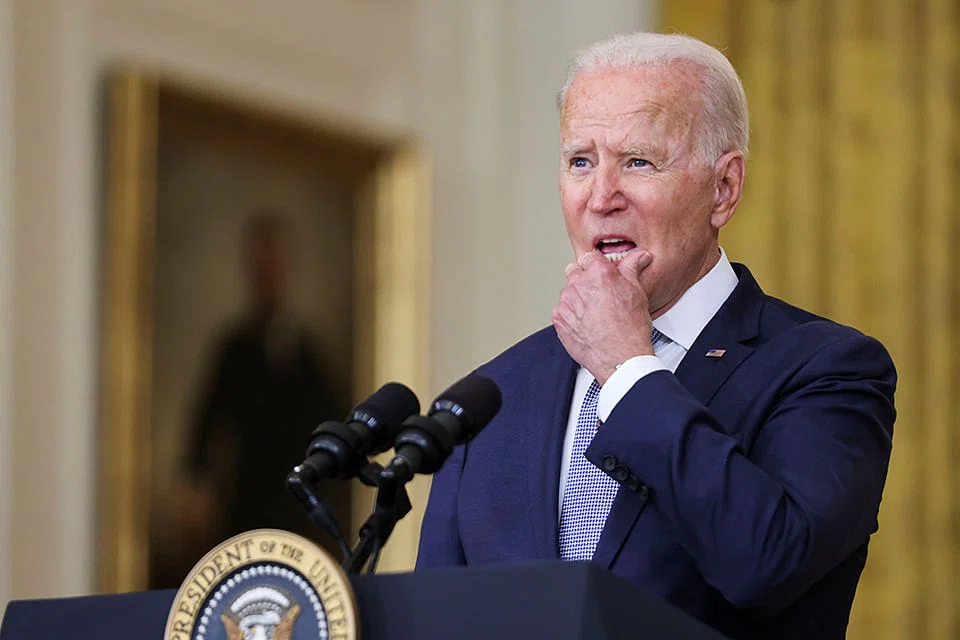
IF there is one lesson I have learned after many years of covering the way legislation is written and policy is made in Washington, it's that you need to wait for a while, sometimes for a very long time, before you uncork the champagne to celebrate a victory.
The point is that the legislative and policy process in the US capital is so long and convoluted, and involves so many players, that figuring out who won or who lost in this game is not as easy as it seems at first.
So, yes, there is no doubt that at first glance most observers would agree that President Joe Biden emerged with a big win last Tuesday when in a vote of 69 to 30, the Senate gave an overwhelming bipartisan approval to a US$1 trillion infrastructure bill advanced by his administration.
Indeed, his predecessors in office, including former president Donald Trump, could only dream about achieving what many considered to be the impossible dream: Getting the two major political parties to pass legislation to rebuild the nation's deteriorating roads and bridges, fix its decaying railroad system and air terminals, and to get its broadband system working.
To figure out why the passage of the infrastructure bill in the Senate last week was so significant just consider the following: You will probably not find even one American who was not forced to replace his tyres after driving over a huge pothole last year; who did not complain about the long lines and broken toilet seats in their local airport; who didn't once have problems trying to get connected to the Internet.
For these Americans, a president who is going to start fixing and re-building the country's infrastructure is akin to a national hero. And during an era dominated by political polarisation, the president succeeded in bringing Democrats and Republicans together to get all of that done, is remarkable in itself; and more specifically, some would argue that the notion that Democratic President Joe Biden was able to get Republican Senate Minority Leader Mitch McConnell and 17 other Republicans Senators to vote for the bill was stunning in contemporary political terms.
Navigate Asia in
a new global order
Get the insights delivered to your inbox.
Moreover, voters and their representatives in Congress love a bill like this which would deliver money to their different districts and provide new jobs for those working on fixing the roads and building bridges.
And if that was not enough, then came this: On Wednesday the Senate made history again when it approved a gigantic US$3.5 trillion budget blueprint that would dramatically expand the American welfare state system, providing more funding for healthcare, childcare, family leave and public education.
But this time in a vote of 50 to 49, the spending blueprint passed along party lines, with all the Republican Senators voting against it. And more worrisome from President Biden's perspective, there were clear indications that a few Democrats in the Senate and in the House of Representatives who belong to the party's centrist wing were not ready to turn the spending blueprint into a spending bill, certainly not in its current size.
And now this: Some progressive Democrats in the Senate, where power is divided evenly between the two parties, and in the House of Representatives (where the Democrats have only a three-vote margin) are warning that they would not vote in favour of the bipartisan infrastructure bill before Congress approves spending the US$3.5 trillion on what these Democrats refer to as "human infrastructure".
Progressive Democrats are already angry that in order to get a bipartisan infrastructure bill approved President Biden agreed to Republican demands to cut parts of an original US$2.3 trillion bill that included more spending targeting climate change, including more funding for lead pipe replacement, mass transit and clean energy projects.
The leaders of the House would now have to work with their counterparts in the Senate to fashion the final language of the infrastructure bill that would then be approved by the entire Congress and sent to President Biden who would sign it and turn it into law.
That in itself could take a few weeks since the Democrats and the Republicans have yet to agree on how to pay for the plan, with most Republicans expressing opposition to raising new taxes for that purpose.
SLOW PROCESS
But what could really jeopardise the infrastructure bill and the rest of ex-president Trump's spending agenda - and certainly slow the entire process - is the insistence by the Democratic Speaker of the House of Representatives Nancy Pelosi that she would not agree to a stand-alone vote on the bipartisan infrastructure bill.
Pressed by the progressives in the House, she stated that a vote on that bill would only take place after the Senate and the House agree to approve a US$3.5 trillion spending bill, which would probably not happen before the fall when lawmakers return to Washington from their summer break.
And if you thought that was a problem, you need to consider the following: It is true that progressive Democrats have gained more influence in recent years and ended up being the driving force behind the US$3.5 trillion spending bill.
But there are quite a lot of centrist Democrats in both the House and the Senate, and they now have sent a clear message to the progressives, along the lines of "anything you can do, we can do better".
Indeed, a group of moderate Democrats in the House threatened at the end of last week that unless the infrastructure bill was passed in the House and approved by Congress asap, they would not vote in support of the gigantic spending bill that the progressives are pushing forward for a vote in the House. That is, they would not allow the infrastructure bill to become a legislative hostage of the left-leaning Democrats.
But the progressive lawmakers are not stupid and understand that if the infrastructure bill gets approved, their moderate adversaries would take their time and perhaps even try to kill their spending bill in the Senate.
There, several centrist Democrats, led by Senator Joe Manchin of West Virginia and Senator Kyrsten Sinema of Arizona, have made it clear that they were not going to approve spending trillions and trillions of dollars by the government. Are you kidding?
They are joined by several fiscally conservative Democratic House members who are running for re-election next year and are not going to risk their principles and careers in order to help pass legislation that calls for the expansion of the federal government and that would require raising taxes to help fund that.
"I do not support a bill that costs US$3.5 trillion," stated Senator Sinema. She and Democratic Representative Elissa Slotkin from Michigan, have made it clear that they may approve only a pared down spending bill to help fund several social-economic programmes.
That may not be acceptable to the progressives whose initial spending bill came to US$6 trillion. As they see it, they have already made enough concessions to the centrists.
So even under the best case scenario, progressive and moderate Democrats are probably going to spend several months negotiating a trimmer spending bill and try to agree on how to fund it while allowing the infrastructure legislation to get through Congress and on to the president's desk sometime soon.
If and only if all of that happens would it then be time to open the champagne bottle.
Decoding Asia newsletter: your guide to navigating Asia in a new global order. Sign up here to get Decoding Asia newsletter. Delivered to your inbox. Free.
Share with us your feedback on BT's products and services

