

A long year that is not over
Growth has been resilient and fundamentals remain positive, but problems have grown
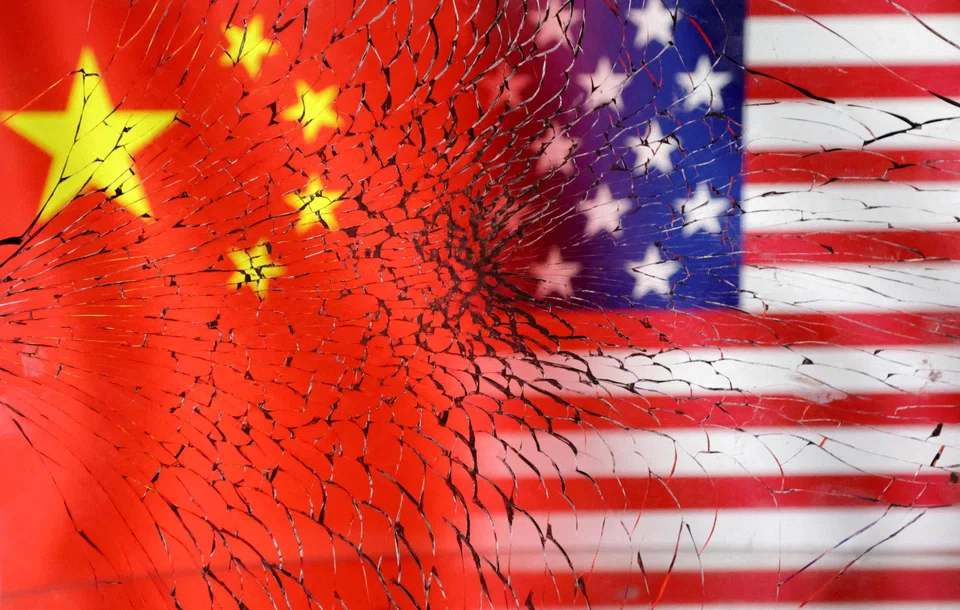
FOR those interested in politics and how it affects the business outlook, 2025 has been a long year. After many incidents and unexpected turns, some might hope for a holiday break and greater stability in the new year. That seems unlikely.
The Trump 2.0 administration is not even a year old, and its “Liberation day” tariffs were imposed barely nine months ago.
What began in 2025 is far from over. The politics that matter are becoming more complex and consequential, and Asia will not be spared.
From tariffs to poison pills
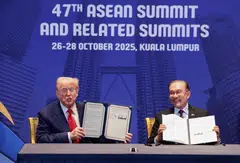
Consider the trade deal signed by the United States and Malaysia on the sidelines of the Asean summit. Tariffs are set at 19 per cent, but they escalate to 24 per cent if Washington decides that Malaysia has entered into any agreement with another country deemed to be against US interests.
The implications go beyond tariff levels. Malaysia must align with American standards in areas such as digital trade taxation, and comply with any export restrictions the US chooses to impose against foreign nationals or companies. Taken together, some describe these terms as a “poison pill”.
No third country is named, but many read the provisions as targeting China. Beijing is reportedly displeased, cautioning Malaysia to “fully consider and properly handle this matter”.
Some Malaysians share those concerns. Wong Chen, chairman of the parliamentary committee on international affairs and trade, fears that Malaysia’s sovereign rights to act independently have been curtailed. Defending the agreement, Malaysian officials argue that they retain wiggle room, especially on commitments that extend into the future.
Managing relations with both China and the US has always been difficult, and these new deals add another layer of challenge. Other countries may take a different approach.
Indonesia, for instance, is seeking to reopen discussions. While the precise wording is not public, Jakarta may wish to avoid similar “poison pill” provisions.
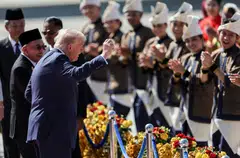
There is much at stake. China is a major trade and investment partner, and its companies play a key role in the nickel industry, central to Indonesia’s development plans.
Jakarta may have more room to manoeuvre: it is larger, and President Prabowo Subianto has appeared alongside not only US President Donald Trump but also China President Xi Jinping and, most recently, Russia President Vladimir Putin.
Even so, the broader impact on Asean will be negative. Different members will face different obligations, complicating intra-regional supply chains and undermining ease of trade. This is particularly acute where Chinese input, ownership or technology are involved.
Although Asean has negotiated trade agreements collectively with many partners, it has not done so with the US, nor aligned its positions.
At the Asean and Asia-Pacific Economic Co-operation (Apec) summits in November, Asian countries – China excepted – largely acceded to American power and Trump’s swagger.
‘Minus One’ and multiple connections
Yet many are looking elsewhere. Asians are reaching out to alternative markets and partners. This cannot mean a wholesale embrace of China, given American intention and “poison pills”. Instead, many are looking beyond both Washington and Beijing, to seek connections in what might be called a “minus-two” world.
This effort will renew attention to multilateral forums such as APEC and the Group of 20, at least when leaders meet. A closer partnership with the EU is another possibility.
There is talk of an EU agreement with Asean, or with the Comprehensive and Progressive Agreement for Trans-Pacific Partnership. However, the EU’s emphasis on values and standards can slow negotiations, and its current focus is on bilateral deals with Indonesia and, separately, Malaysia.
Some in Asean are also pursuing bilateral initiatives even if some, such as Indonesia’s outreach to Russia, can raise eyebrows. Smaller states are active too. Singapore, for instance, is part of the Future of Investment and Trade initiative with 13 partners, and has concluded a Green Economy Agreement with Chile and New Zealand.
It is unclear whether these strategies will succeed. What is clear is that the search for alternatives will make an already busy and messy world even more so. This cannot be ignored or wished away.
Effort is needed to discern what truly matters.
Sino-American tensions and Trump’s actions are critically important, and may be entering a new phase. Yet not everything should hinge on the US and China.
Focus on what you can
Focus must also be given to domestic and regional challenges. Doing so can create buffers and greater stability amid global turbulence.
Take the severe storms and flooding that have hit the region. Governments must respond quickly and effectively, or face growing criticism that can undermine political stability.
Moreover, the impacts are potentially long-lasting and complex. Floods disrupt agriculture, livelihoods and food security, particularly in rural areas.
Jobs and the cost of living are another pressing concern. Combined with anger over inequality, these pressures can fuel protests and unrest. Indonesia saw this vividly in August; while the situation is currently under control, underlying tensions persist. Similar challenges exist in Thailand and elsewhere, exacerbated by divisive politics.
If such domestic issues fester, they impact not only politics but also social stability and economic growth.
At the start of the year, there were good reasons to be positive about the region even if we recognised there was a “poly-crisis” and lingering effects from the pandemic.
Compared with many parts of the world, growth has been resilient and fundamentals remain positive. But problems have grown. This is not only because of Trump and Sino-American tensions but from mounting challenges within countries and across our region.
The writer is chairman of the Singapore Institute of International Affairs. His 2025 book is Island in the World: Singapore’s Geopolitical DNA.
Decoding Asia newsletter: your guide to navigating Asia in a new global order. Sign up here to get Decoding Asia newsletter. Delivered to your inbox. Free.
Share with us your feedback on BT's products and services
TRENDING NOW

Once staunchly pro-China, Malaysian Chinese businesses are now distancing themselves from Beijing

Looking beyond looming CEO succession, should UOB potentially pursue a transformative merger?

Could stablecoins be the future of money?

Grab CEO’s wife Chloe Tong on life with Anthony Tan and finding her purpose

