Many US policymakers tilt towards trade protectionism
The effects of the Crash of 2008 are still being felt in 2015, with growing evidence that protectionists in Congress may block two major free trade pacts.
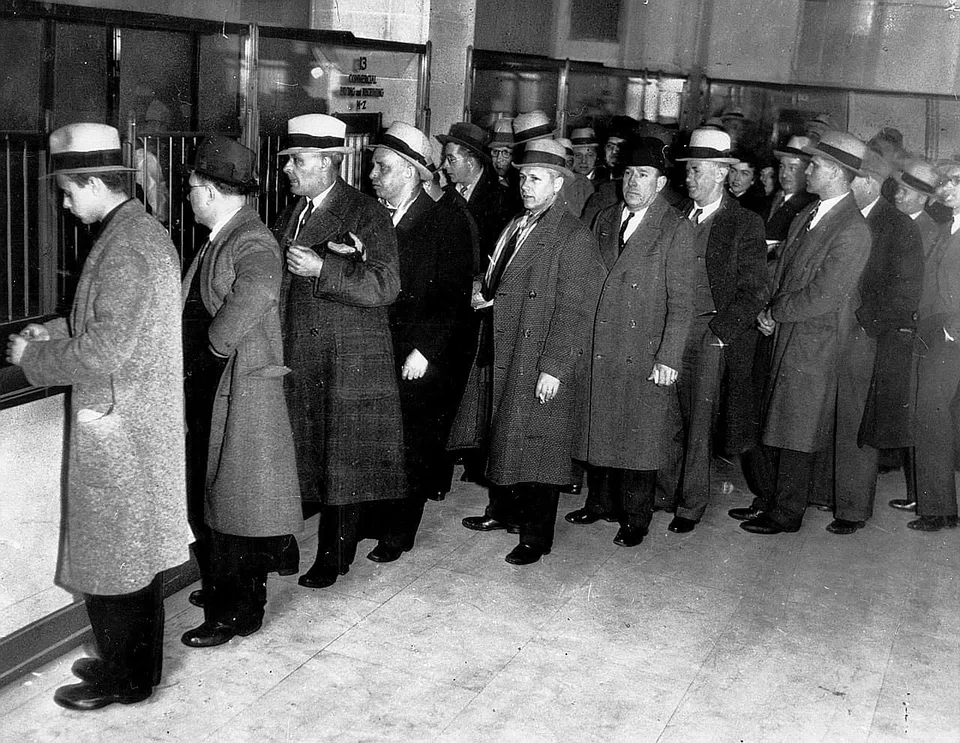
TWO devastating American financial crises - the Crash of 2008 and the Great Depression of 1929 - have caused many US policymakers to prefer a policy of trade protectionism and avoid wasteful foreign military interventions.
US foreign policy is now confronting strong domestic pressure. Firstly, there is a mood of protectionism within US Congress at present. The country must avoid becoming protectionist, and must not erect tariff walls as it did in the years following 1929, with disastrous effects on global trade.
Secondly, weakening US economic power has reduced US ability to intervene abroad unilaterally, signalling a switch to multilateralism following 2008. Similarly, the US had consciously adopted a policy of isolationism in 1929 following its bitter participation in World War I.
After both crises, the weary American giant began looking inwards to carry out domestic economic reforms.
There is growing evidence that protectionists in US Congress may block two major free trade agreements, the Trans-Pacific Partnership (TPP) and the Transatlantic Trade and Investment Partnership (TTIP). Both pacts are each expected to raise global income by about US$295 billion a year, with US$78 billion as the yearly US share.
Despite America's business-friendly environment, many US Congressmen view free trade pacts as a threat. They argue that the vast American continent is self-sustaining, with foreign trade accounting for just 23 per cent of GDP. As a result, there are not many devotees of international trade among US Congressmen.
In January, nine of the 16 new Democratic Party lawmakers in the House of Representatives opposed President Barack Obama's request for authority to fast-track TPP and TTIP, arguing that these deals threaten US jobs, hurt American business owners, and impair the ability of Americans to govern themselves as an independent nation. "Our constituents sent us to Congress to get American trade policy back on track - not give away its authority to do so," the Congressmen wrote in a letter.
They argued that the TPP, which the US is negotiating with 11 other trading partners, interfered with non-trade issues such as land use, copyright and patent standards. US industry groups oppose free trade deals which carry "harmful provisions" that "uphold the one-sided concerns of corporate interests" who are unconcerned about the impact of these policies on American firms and people.
Nonetheless, the White House has declared that its goal is to complete the TPP with Asian countries this year.
The effects of 2008 are still being felt in 2015. The 2008 financial crisis started when an overheated US housing market triggered worldwide recession following dramatic failure of Lehman Brothers. In a display of solidarity, the G-7 attempted to stem the crisis by lowering interest rates sharply, pumping liquidity into the financial system to quell panic, and supporting important financial institutions. Yet it did not prevent protracted global recession, which led to weak and uneven global growth that continues to the present day.
MULTILATERAL ACTION
The Crash of 2008 has compelled the US to avoid unilateral military interventions abroad, and instead to work with partners. In a major foreign policy speech in May 2014, Mr Obama explained that the crisis in Ukraine, the proliferation of weapons in Iran, and the use of such weapons in Syria were instances of US efforts to enforce international norms in collaboration with foreign partners.
"There are a lot of folks, a lot of sceptics, who often downplay the effectiveness of multilateral action," Mr Obama declared. "For them, working through international institutions like the UN or respecting international law is a sign of weakness. I think they're wrong."
"This is American leadership," he continued. "This is American strength."
The Great Depression of 1929-39 also pushed the US to adopt a posture of isolation caused by the embittering US experience in World War I, and distaste for the enervating politics of Europe, as well as the rejection of the League of Nations by the US Senate. The internationalism espoused by president Woodrow Wilson was replaced by narrow nationalism and isolationism under the following Republican administrations of presidents Warren Harding, Calvin Coolidge, and Herbert Hoover.
Some economists blame Hoover for sparking the Great Depression by pushing through his now-infamous Smoot-Hawley Tariff Act of 1930, a protectionist law that isolated US trade by raising US tariffs on some 890 products. They believe this was one of the factors that caused the Great Depression. Other countries soon retaliated with their own protectionist policies, and world trade shrank precipitously. By end-1934, world trade fell 66 per cent from the 1929 level.
When the Smoot-Hawley law was passed the US economy was beginning to descend into the Great Depression. Two years later, in 1932, US unemployment reached almost 24 per cent as more than 5,000 banks failed, and hundreds of thousands people became homeless and lived in shanty towns known as "Hoovervilles".
Some Americans suspect that the Great Depression originated abroad. Economic historian Charles Kindleberger argues that the Great Depression did not originate in the US, but was a worldwide phenomenon rather than an American recession. Paul Samuelson, however, believes that the Crash of 1929 on Wall Street intensified the depression. Milton Friedman has declared that it was caused by US monetary policy.
After World War I, the world fell into turmoil as war reparations paid by Germany and the war debts of the Western allies corrupted the global economy. Trade tariff increases by the US and Britain hurt the world economy.
In the 1932 US election, Democratic Party candidate Franklin D Roosevelt charged Hoover for the depression caused by speculation in stocks, loans, and high tariffs, which made it hard for countries to repay their debts.
Historian Joan Hoff Wilson believes that the US deliberately kept high tariffs and favourable trade balances in order to maintain its post-World War I global economic supremacy.
Given the current protectionist mood among some US Congressmen and industry groups, it appears the ghost of Smoot-Hawley is still around.
This is the seventh article in a series on US foreign relations