

MAS makes a habit of showing up the market

Wong Wei Kong
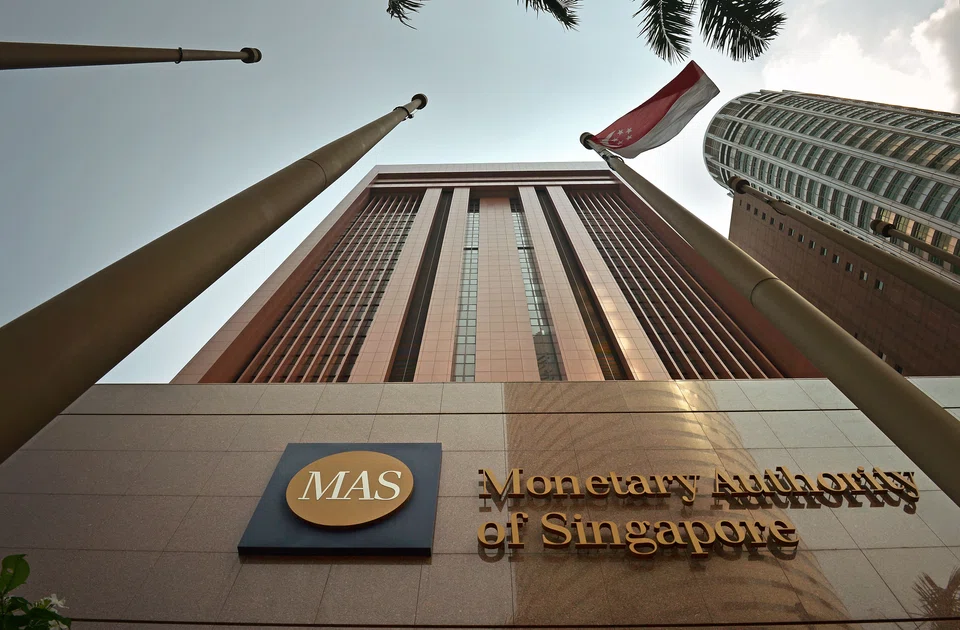
IN DELIVERING the slightest of easings on Wednesday, the Monetary Authority of Singapore (MAS) reiterated a point which the market has stubbornly resisted: that its Singapore dollar policy is not a primary tool for boosting growth.
Instead, it is targeted squarely at containing inflation, and providing price stability that is supportive of growth. Growth itself has to come the hard way - by painstaking efforts to restructure the workforce, adopting technology, and improving productivity.
Ahead of the policy announcement, the majority of market economists had called for an aggressive easing move by MAS, either through a downward re-centring or flattening of the Singapore dollar policy band. Instead, the central bank said it would maintain its policy of a gradual appreciation of the Singapore dollar, but on a "slightly" reduced slope. There will be no change to the width of the policy band and the level at which it is centred.
Two central themes ran through the arguments for more pronounced easing: one, that inflation was more benign than earlier thought; and, two, that the economy was also weaker than previously imagined.
These were right in half. Indeed, MAS narrowed 2015 inflation forecasts to the lower end of earlier expectations. For 2015 as a whole, MAS now sees core inflation and headline inflation coming in at around 0.5 per cent and -0.5 per cent respectively. These are at the lowest ends of its earlier forecast ranges of 0.5 to 1.5 per cent for core inflation, and -0.5 to 0.5 per cent for headline inflation. Still, the new inflation targets remain within the earlier forecast range.
The economy was indeed weaker, but it did not slip into the technical recession that many market analysts thought it would in the third quarter.
Gross domestic product (GDP) grew 1.4 per cent from a year ago. On a quarter-on-quarter seasonally adjusted annualised basis, the economy expanded 0.1 per cent - a reversal from the 2.5 per cent contraction in the preceding quarter, thus escaping a technical recession (two successive quarters of negative growth). Averting a technical recession certainly does not mask the weakness in the economy. Indeed, MAS noted that Singapore's economic growth is "slightly weaker" than envisaged earlier. While keeping its 2015 GDP growth forecast at around 2-2.5 per cent, the central bank warned of downside risks.
Even so, the slight easing it announced on Wednesday is far from the aggressive move than the market had called for to weaken the Singapore dollar, and to make exports cheaper and more competitive to give the manufacturing sector a boost. Growth will have to come from fundamental improvements to productivity and processes, a major focus now of the government, or from a recovery in demand. Indeed, one can argue that MAS's latest policy stance of a slight easing basically acknowledges the more benign inflationary context; providing a growth stimulus was not on the cards at all. The policy stance is still supportive of recovery, by providing price stability; an appreciating Singapore dollar helps keep imported inflation at bay.
If containing inflation remains the main target of Singapore's monetary policy - a position that MAS has always maintained despite the market tendency to link it directly to exports and growth - then what it thinks of inflation going forward gives a hint of what may lie ahead. Beyond this year, the central bank said it expects core inflation (which strips out accommodation and private transport costs, and is the focus of monetary policy) to "rise gradually" over the course of 2016 towards its historical average of close to 2 per cent. This suggests - again, contrary to some market expectations - that room for further or more aggressive easing moves may be limited, barring exceptional events.
READ MORE:






