

Massive share buybacks not the answer; Hongkong Land needs restructuring to unlock value
Leslie Yee
PROPERTY group Hongkong Land Holdings (HKLH) is at around the half-way mark for the use of its share-buyback mandate, but the stock is nowhere near improving its valuations. It may be time for a change of tactics.
The company, owned by Jardine Matheson Holdings , had on Sep 6, 2021, announced it would invest up to US$500 million in a share-buyback programme. By Jul 22, 2022, HKLH had spent US$491 million on share buybacks – reducing issued share capital by 4 per cent.
On Jul 28, 2022, HKLH said it would allocate a further US$500 million to buy back shares until the end of 2023. And between end-July and end-October, the number of shares in issue fell by 0.4 per cent.
Yet, as at Nov 2, HKLH’s share price is down by about 1.2 per cent, versus its price of US$4.20 prior to unveiling the share buyback programme.
HKLH’s 72 per cent discount to its end-June net asset value (NAV) is steeper than that of fellow property groups that are members of the Straits Times Index (STI), namely City Developments Limited (CDL) and UOL Group . As at Nov 2, 2022, CDL’s discount to adjusted end-June NAV, taking into account fair-value gains of investment properties, was 52 per cent; UOL’s discount to end-June NAV was 48 per cent.
The money might have been better spent if HKLH were to pay shareholders a special dividend instead. Paying out US$500 million in special dividends would work out to each shareholder receiving more than US$0.22 per share.
Restructuring
HKLH should also explore corporate restructuring. The group can learn from another STI member, real estate investment manager CapitaLand Investment (CLI). While CLI’s share price has weakened amid rising interest rates, it is trading at a slight premium to its end-June NAV.
CLI’s predecessor CapitaLand had traded substantially below book value before its restructuring in 2021. It took its development business private; the listed entity CLI holds only the property investment, fund management and investment, and lodging businesses. CLI manages listed real estate investment trusts (Reits) and private funds. Investors like the recurring revenue and high profit margin of the fund management business.
Jardine Matheson and/or the Keswick family, which controls the Jardine group, could work with partners, if needed, to privatise HKLH’s property development business. The property investment business could be held by a listed entity, modelled as a real estate investment manager. HKLH can inject investment properties into Reits or private property funds, thereby creating a fund management business to be held under the listed entity.
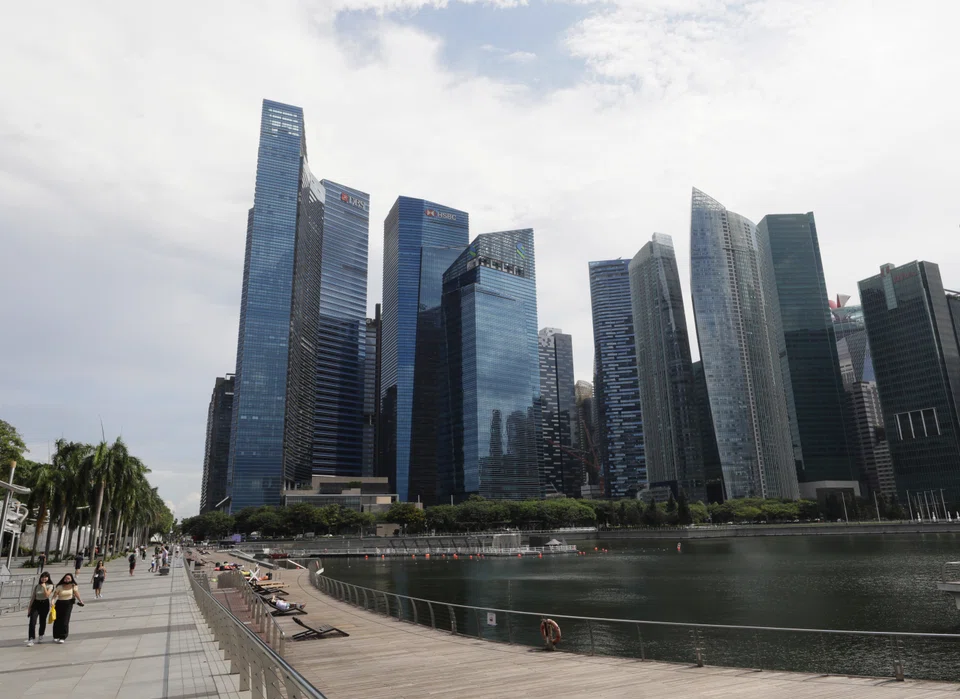
As at end-June, HLKH held over US$33 billion of investment properties, including those held by associates and joint ventures. These investment properties accounted for about 77 per cent of total assets. In Singapore, the group’s attributable interests in investment properties totals 165,000 square metres (sq m) – mainly in Grade-A office space spread across buildings in Marina Bay, such as Marina Bay Financial Centre, One Raffles Link and One Raffles Quay.
Better days for Hong Kong
Now may be a good time for HKLH to start work on a corporate restructuring plan. Capital markets could become less volatile if and when the United States Federal Reserve stops hiking interest rates, possibly in 2023.
HKLH owns and manages prime office and luxury retail property in cities such as Hong Kong, Singapore, Beijing and Jakarta. The group is also developing various residential, commercial and mixed-use projects in cities across China and South-east Asia.
The company’s most important market is Hong Kong, where its crown jewel is its portfolio of 12 interconnected prime commercial buildings in the heart of the financial district – more than 450,000 sq m of Grade-A office and luxury retail space. The bulk of HKLH’s underlying profit in H1 2022 came from investment properties, with Hong Kong contributing 71 per cent of gross attributable rental income.
The vacancy rates of Grade-A office buildings in Hong Kong have almost trebled in three years to an all-time high of a combined 11.9 million square feet as of October, said CBRE Group. Still, on a committed basis, vacancy for HKLH’s Central office portfolio was a fairly modest 5.1 per cent as at end-June. HKLH noted that amid a flight to quality, a number of new tenants committed to long-term leases.
Perhaps, HKLH will benefit from Hong Kong potentially re-opening further and initiatives aimed at boosting the city’s competitiveness. In late September, Hong Kong removed mandatory hotel quarantines for visitors. International arrivals need to self-monitor for three days after entering the city. They can go out, but cannot enter bars or restaurants over the said period.
From Nov 1-3, Hong Kong hosts the Global Financial Leaders’ Investment Summit, which has attracted the participation of the heads of top American financial institutions. After an absence of more than two years, the Hong Kong Sevens, a premier Rugby Sevens event and typically a top corporate networking event, will be held from Nov 4-6. There will be food and live music on offer at this event.
In his maiden policy address in October, Hong Kong’s chief executive John Lee unveiled new visa measures to woo foreign talent and reverse the city’s brain drain.
Ben Keswick, executive chairman of Jardine Matheson, chairman of HKLH and a fifth-generation member of the Keswick family, should take the lead in unlocking value at HKLH.
TRENDING NOW

Who is Leo KoGuan, the Singapore-based billionaire backing Nvidia’s Jensen Huang?

Demand, tech capabilities position Apac and AI as Skyscanner’s next growth frontiers: CEO Bryan Batista

Higher rates, weaker spending: Is the Philippines entering stagflation?

South-east Asia has lost Nvidia’s best salesman

