

The message from an exhausted US hegemon
America urges its Nato allies to shoulder more of the burden of dealing with global threats
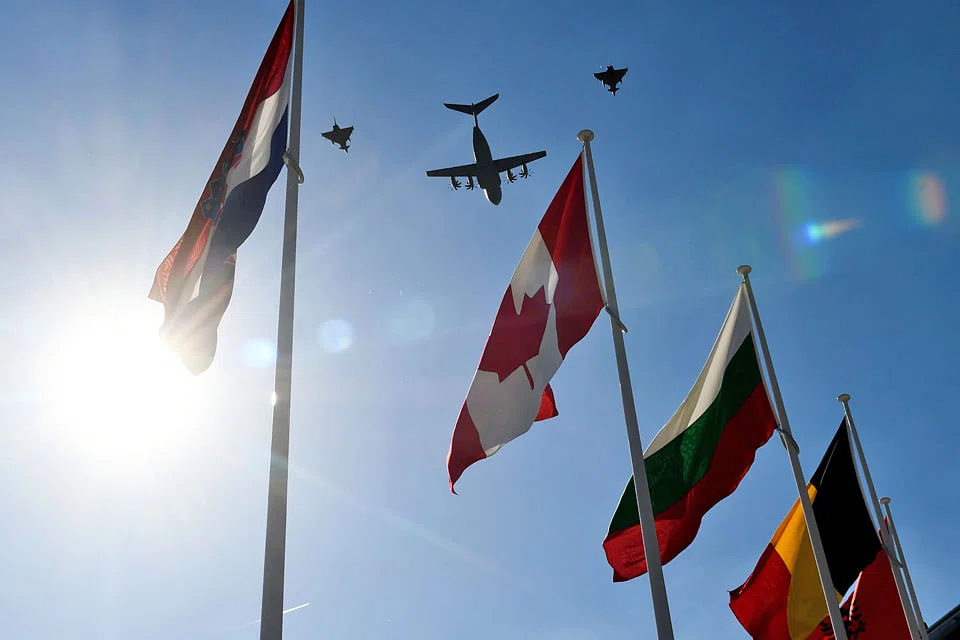
THE United States president was clearly frustrated with America's allies who turn to the US for assistance but don't always want to help shoulder the burden - military, financial or otherwise - of dealing with urgent global threats.
The president sounded very blunt, telling an interviewer that he had warned Nato allies that they would no longer be able to count on US assistance if they did not start spending at least 2 per cent of their GDP on defence. The leader of the free world insisted that US partners needed to take the lead and pull their weight on issues like terrorism and Russian aggression. And appearing weary of the never-ending demand and expectations placed on the US by America's allies across the Atlantic, the president complained that "free riders aggravate me".
No. That wasn't US President Donald Trump calling on Nato members to raise their financial contributions to the military alliance, as he did recently during his address before the military alliance's leaders in Brussels, igniting a storm of protests in European capitals and elsewhere. Critics denounced him as a "nationalist" and an "isolationist" who seemed intent on destroying the foundations of the post-World War II liberal international order.
In fact, the above devastating criticism of America's Nato allies was made by no other than the self-proclaimed liberal internationalist president Barack Obama during an interview with Atlantic magazine in 2013.
Actually, unlike Mr Obama who is celebrated in Europe as a staunch supporter of the Atlantic alliance and as a cheerleader for globalism and multiculturalism, President Trump refrained from bashing the Nato partners as "free riders" and from threatening them with retaliations if they failed to fulfil their financial commitments to the military alliance that the Americans continue to subsidise.
The US doesn't have "to always be the ones who are up front", Mr Obama explained in his interview, adding that in order to prevent the Europeans "from holding our coats while we did all the fighting", they needed to take the leadership role during the campaign to oust Libya's dictator Muammar Gaddafi. "It was part of the anti-free rider campaign," according to the president who was still recovering from disastrous Nato military misadventure/regime change/nation-building in Libya.
And if you think that Mr Obama sounded tough when it came to America's European allies, you probably missed the address that his defence secretary Robert Gates, delivered before the Security and Defence Agenda, a Brussels policy centre, in June 2011, when he criticised Nato nations for their failure to increase defence spending and participate in the military alliance's activities, warning of "a dim if not dismal future" unless more member nations reversed course.
Secretary Gates also issued a warning: endless wars and rising budget deficits could force the US, the political leader and the financial backer of the alliance, to question its support for Nato. With little indication of any change in policy among the more reluctant member nations, expect a growing political pressure to reassess US commitments to the alliance from angry and exhausted Americans.
"The blunt reality is that there will be dwindling appetite and patience in the US Congress, and in the American body politic writ large, to expend increasingly precious funds on behalf of nations that are apparently unwilling to devote the necessary resources or make the necessary changes to be serious and capable partners in their own defence," he said. "Looking ahead, to avoid the very real possibility of collective military irrelevance, member nations must examine new approaches to boosting combat capabilities - in procurement, in training, in logistics, in sustainment," he added.
Nobody accused Mr Gates of fanning isolationism. In fact, in retrospect he did get things right. Those who paid attention to what the former Pentagon chief and his boss at the White House had to say about Nato and US foreign policy a few years ago, should not have been surprised when a leading presidential candidate running in 2016 suggested that Nato was becoming "obsolete" and warned that his administration would reassess its commitment to the alliance unless other members paid their fair share to its budget.
Hence Donald Trump who insisted that the notion that the US would continue bankrolling the Nato alliance by paying close to 75 per cent of its spending wasn't politically sustainable, did win the presidential election. That meant that many of his voters agreed with the idea of bidding farewell to those in Brussels whom they considered to be free-loaders, aka "free riders".
But in his address in Brussels last week, President Trump refrained from, characterising the alliance as "obsolete" and went on to hail "our Nato allies" who "responded swiftly and decisively" after 9/11. He did urge Nato members to "finally contribute their fair share and meet their financial obligations", noting that 23 of the 28 member nations were "still not paying what they should be paying and what they're supposed to be paying for their defence".
But Mr Trump clearly sounded much less blunt than Mr Gates did six years ago, when he suggested that the Nato partners were "apparently willing and eager for American taxpayers to assume the growing security burden left by reductions in European defence budgets". The respectful President Trump only pointed out that the alliance partners' behaviour was "not fair to the people and taxpayers of the United States". After all, "2 per cent is the bare minimum for confronting today's very real and very vicious threats". So please, pay your dues, so we could all work together to confront common threats like terrorism.
But that wasn't the way it sounded to German Chancellor Angela Merkel who, while addressing her supporters on a campaign stop in a Bavarian beer hall, a day after the Nato meeting, stated that the "era in which we could fully rely on others is over to some extent". Implying that Mr Trump was intent on getting rid of Nato, she insisted that it was time for Germany and the rest of Europe to "take our fate into our own hands". American and European pundits joined the anti-Trump chorus, portraying Chancellor Merkel as the last defender of the liberal West, who was supposedly standing up to the proponents of illiberal democracy, including President Trump and his pal, Russian President Vladimir Putin. The German leader was trying to save the liberal international order and globalism.
President Trump was a convenient target for Mrs Merkel's criticism. But the message he delivered in Brussels reflected the sentiments of the American people, who still feel the devastating economic consequences of the 2008 financial crisis and the ensuing Great Recession and who still find themselves fighting long and expensive wars in the Greater Middle East. Those sentiments are also affecting the views of Republican and Democratic politicians, who despite their differences on specific policy issues, seem to agree that the US cannot shoulder alone any more the costs of maintaining the liberal international order in both the geo-strategic arena and in the geo-economic field.
It's important to stress that neither the American people nor their leaders are becoming "isolationist" in a sense that they supposedly want to withdraw all US troops from overseas, or to bring an end to the global free trade system. But they also seem to agree that if their military partners and trade partners want Washington to continue leading the way, they cannot free ride anymore on American security protection and should also expect Washington to do more to protect its businesses and workers from what are perceived to unfair trade policies on the part of other economies.
The Nato European allies, who have been sheltering under the huge American military protection since 1945, have done a good job developing welfare states that provide free health and education, while contributing very little to strengthen their military capabilities and cutting their defence budgets to the bone, failing to meet the 2 per cent of the GDP target.
From that perspective, America's public and leaders aren't going to tolerate the existing status quo under which the Europeans continue to enjoy their annual six-week vacations and to flood American markets with their products, while expecting American taxpayers to subsidise their security and US soldiers to defend them against threats in their own strategic backyard. They need to start shouldering some of these responsibilities, or find themselves being forced to take their fate into their own hands.






