

Middle East politics get murkier, dashing hopes for coalition against IS
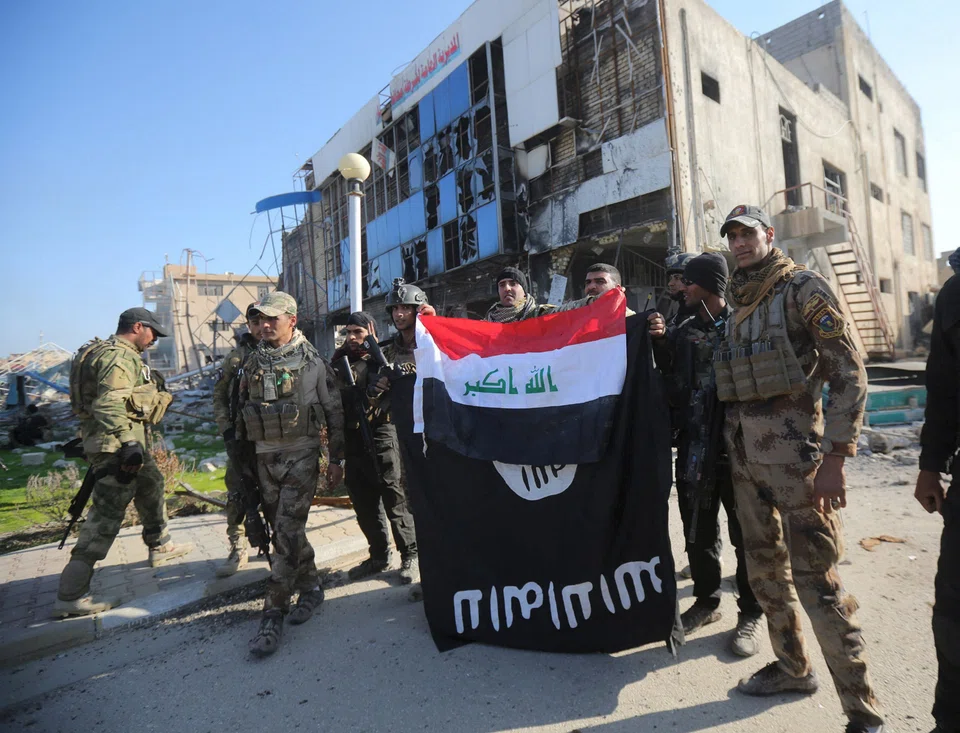
THE severing of diplomatic ties between Saudi Arabia and Iran this week puts paid to all hope that some form of limited cooperation between Riyadh and Teheran could have helped crush the Islamic State (IS) rebels. Yet it was but a few days ago that Iraqi Prime Minister Haider al-Abadi happily announced, after his troops recaptured the city of Ramadi from IS militants, that his next target was Mosul. The town has the largest urban population under IS rule. More importantly, it is an oil production centre and thus a major source of revenue for the militants.
Clearly then, no one should underestimate the problems that lie ahead for Mr al-Abadi. The entire region is beset by both power jostling and sectarian division. The IS forces, and Al-Qaeda before that, are not just against the Shi'ite-led governments in Baghdad and Damascus but against every manifestation of foreign power and influence. The Islamists want not just to end all Western, and now Russian, backing for Arab regimes but also rid the region of cultural and social values that come with that support. Even bit players in the region have not had their people spared. IS has not hesitated to kill Japanese and Chinese citizens. These militants want to create an imagined pure theocratic state that would lead the way for all Muslims the world over.
This situation would be challenging enough if the world were united against the IS menace. Unfortunately, the counter-insurgency is being driven by the disparate and often conflicting agendas of the parties involved in the conflict. The US backs both the Shi'ite-led Iraqi government and Sunni Saudi Arabia, and frowns on Mr al-Abadi leaning on Iranian support.
In fact, the Obama administration seems unsure of its overall strategy. It must be acutely aware that the Saudi acceptance of US dollars for their oil trade remains a major underpinning for the greenback's role as the top global reserve currency. The military alliance between Riyadh and Washington is based on hard economic considerations, not shared values. So the US seems uncertain how to react when confronted with the fact that money from private individuals in Saudi Arabia and the Gulf monarchies is flowing to IS coffers. At the same time, Washington wants its regional allies to provide the ground forces to fight the militants.
Saudi Arabia's primary motive is to thwart all Iranian influence among Arabs, and in pursuit of this goal, wants to see Syrian President Bashar al-Assad gone and replaced by Sunni leaders. Riyadh backs several rebel groups opposed to the Assad regime. But the allegiance of these groups is nebulous, and some have been known to switch their support to formations that have Al-Qaeda or IS elements in them.
The Russians back Mr al-Assad and his regime, and want to secure their sole naval base in the Mediterranean on the Syrian coast. Russian President Vladimir Putin also seems prepared to do whatever it takes to ensure that Moscow has a place at the table if and when post-conflict negotiations take place. Turkey sees itself as a Sunni power and backs some rebel factions - the so-called moderates opposed to the Assad regime - but is most concerned that Syrian Kurds are not given a chance to create their own state along the common border. Ankara fears that its own restive Kurdish minority might opt to break away from Turkey. That the US invasion and occupation of Iraq created an semi-autonomous Kurdish state along its border with Iraq is a sore point with Turkish leaders.
Against this backdrop, it is hard to be optimistic. Mr al-Abadi vowed to rid Iraq of IS this year. These are brave words, and everyone who has paid any attention to the recent history of his unfortunate country - and that of neighbouring Syria - must hope that Iraqis and Syrians will somehow find peace soon.
TRENDING NOW

Simba admits exceeding spectrum limits amid failed M1 deal; full-year profits surge 277%
Temasek’s Wan Chee Foong to helm PIL, Lars Kastrup to be board adviser

He built the Vingroup empire. Now South-east Asia’s richest man is handing some key roles to his sons
One-third of Singapore-listed firms at risk in severe AI downturn: MAS

