Might US-China mini-thaw be 'on the cards'?
 Add BT as a preferred source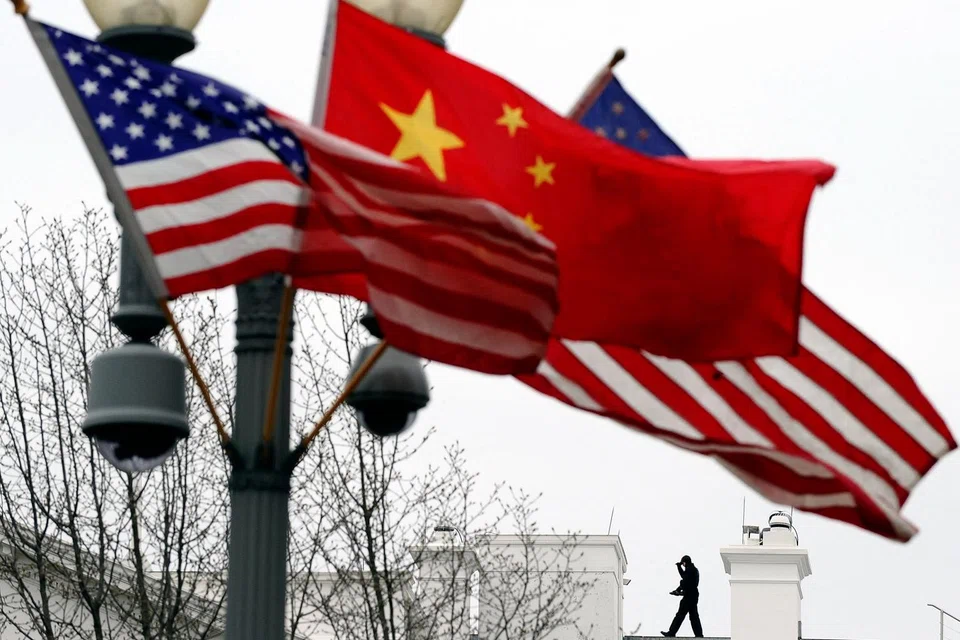
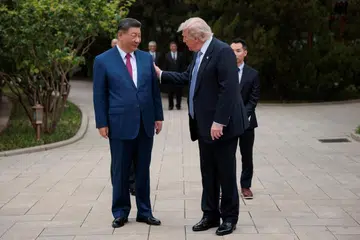
WITH Chinese President Xi Jinping reportedly not travelling to the upcoming face-to-face G20 and COP 26 meetings in Europe, perhaps the most important remaining meeting in international relations this year may be neither of those summits, but the newly announced bilateral session between United States President Joe Biden and Xi.
Xi also did not attend Tuesday's virtual G20 leadership meeting on Afghanistan, and since Biden's inauguration the two leaders have only spoken by phone twice, in February and September, in what has been a frosty start to their relationship. With the surprise announcement about the Biden-Xi session, a key question is whether this might potentially presage a thaw in ties as part of an ongoing effort to responsibly manage the competition between the countries.
One apparent piece of evidence to support this claim is that Biden last week said that he and Xi spoke in September about Taiwan where China has recently stepped up its military manoeuvres into the island's air defence identification zone. The US president claims that Beijing agreed to "abide by the Taiwan agreement, and we made it clear that I don't think he should be doing anything other than abiding by the agreement".
Biden appears to be referring to Washington's longstanding 'one China' policy under which it recognises China rather than Taiwan in an agreement that allows Washington to maintain a robust unofficial relationship with Taipei, including selling arms as part of the Taiwan Relations Act which states that the US must help the island defend itself. However, only days later, Xi publicly recommitted towards the reunification of Beijing and Taipei, apparently slapping Biden down.
Given this confused messaging, expectations around the bilateral meeting are already being played down, yet it will shape the tone of the world's most critical bilateral relationship for at least the remaining three years of Biden's term of office. This is because, while economic and security fundamentals will largely determine the course of ties in coming years, personal chemistry could also be key.
The importance of this personal factor was shown during the Trump era when the then-president's erratic nature accentuated the natural volatility in ties. During the Obama years, by contrast, when Biden was vice-president, the fact that relations remained generally cordial reflected, in significant part, the commitment of Xi Jinping and Barack Obama to bilateral stability.
Both Obama and Xi appeared to recognise the super-priority of the relationship, and Washington pursued a strategy that promoted cooperation on softer issues like climate change, while seeking constructive engagement on vexed, harder issues such as South China Sea tensions.
Indeed, Xi even outlined a desire to fundamentally redevelop a new type of great power relationship with the US to avoid the conflictual great power patterns of the past - an audacious goal which still lacks any obvious definition years later.
While Biden was a key part of the Obama team, he knows that the dynamics of the bilateral relationship have changed significantly since then. This is not just because of the controversies of the pandemic, and the extra uncertainty injected into bilateral ties by Trump.
Many of China's policies that the US finds troubling - including in Hong Kong, and actions in the South China Sea - were a feature of the Obama era too. And the Obama team's constructive engagement approach with China did not produce many of the longer-term desired results in terms of shaping Beijing's behaviour.
Both sides will put these issues 'on the table' when Biden and Xi meet with the goal of seeking a strategic dialogue to try to find a framework to renew bilateral relations well into the 2020s if this is possible. They know that this could have a broader, positive effect for international relations, and potentially forestall significant further tensions that may be otherwise 'baked in'.
IN-BUILT HAZARDS
The in-built hazards in the US-China bilateral landscape that could cause tensions in coming years include US legislation such as the Hong Kong Human Rights and Democracy Act. This legislation has infuriated Beijing as an "intervention" in its affairs, and will require an annual check on whether Hong Kong has sufficient political autonomy from Beijing to qualify for continued special US trading consideration that enhances its status as a world financial centre, creating a yearly mechanism around which future tension could coalesce.
Trump also signed legislation requiring the US commerce secretary to deliver a 'Report on Chinese Investment' in the US to Congress and the US Committee on Foreign Investment every two years up to 2026. The bill singles out Chinese investment as a security threat, and zeros in on Beijing's 'Made in China 2015' plan.
Both of these pieces of legislation have sowed the seeds for future strife with the Chinese defence ministry asserting that they "abound in Cold War thinking, exaggerates the level of the China-US confrontation. . . undermines the atmosphere of development of China-US military ties, and damages China-US mutual trust and cooperation".
With the two sides far apart on many key issues, the Biden-Xi session offers an opportunity to size each other up and gauge intent. This is true just as much for Beijing, as for Washington, as Xi tries to get a better sense of what Biden's election means for bilateral relations.
For all of Biden's indications that he might row back some of Trump's overt hostility to China, Biden has yet to reverse any of his predecessor's fundamental policies. Indeed, he has reaffirmed numerous of them, including maintaining sanctions in response to human rights abuses in Xinjiang and Hong Kong, and rejecting nearly all of China's maritime claims in the South China Sea.
Amid all the (mainly security-related) disagreements that exist, what remains unclear is the degree to which the Biden team might seek to work with Beijing in areas where there are clearly defined common interests like climate change, both before and after November's Glasgow COP 26. Tackling global warming is a key political priority of both nations, and it is sometimes forgotten that a key precursor for the Paris deal in 2015 was a US-China agreement in this area brokered by Obama and Xi.
If measures in areas like climate change can be agreed, it would show that the direction of bilateral relations with Beijing need not inevitably be a force for greater global tension. Instead, it might yet indicate that there is still capacity to evolve a strategic partnership to help underpin a renewed basis for bilateral relations in the post-pandemic era to come.
- The writer is an associate at LSE IDEAS at the London School of Economics
Decoding Asia newsletter: your guide to navigating Asia in a new global order. Sign up here to get Decoding Asia newsletter. Delivered to your inbox. Free.
Share with us your feedback on BT's products and services