As more nations aspire to join CPTPP, upholding agreement’s high standards is key
THE Comprehensive and Progressive Agreement for Trans-Pacific Partnership (CPTPP) – a mega free trade pact of which Singapore is a part of, along with 10 other nations around the Pacific Rim – endured a rocky beginning several years ago, but there are signs that it can set the gold standard when it comes to multilateral trade agreements.
The Trans-Pacific Partnership was pushed by United States President Barack Obama during his time in office until January 2017, but was thrown into disarray when his successor Donald Trump – in one of his first acts in the White House – yanked the world’s largest economy out of the agreement despite it already being signed. The remaining 11 members decided to carry on without the US, which led to the formation of the CPTPP.
Collectively, the CPTPP members represent about 13 per cent of global gross domestic product. The latest data shows that the pact has had a positive impact on trade and investment flows in the region. Intra-CPTPP trade increased by over 4 per cent to US$467 billion in the CPTPP’s first year in 2019, up from an average of US$448 billion for the 2010 to 2018 period. Intra-CPTPP digital services trade rose by 46 per cent to US$51.9 billion in 2019, up from an average of US$35.5 billion for the 2010 to 2018 period. CPTPP parties also saw their foreign direct investment inflows rise 10 per cent year-on-year to US$294 billion in 2019.
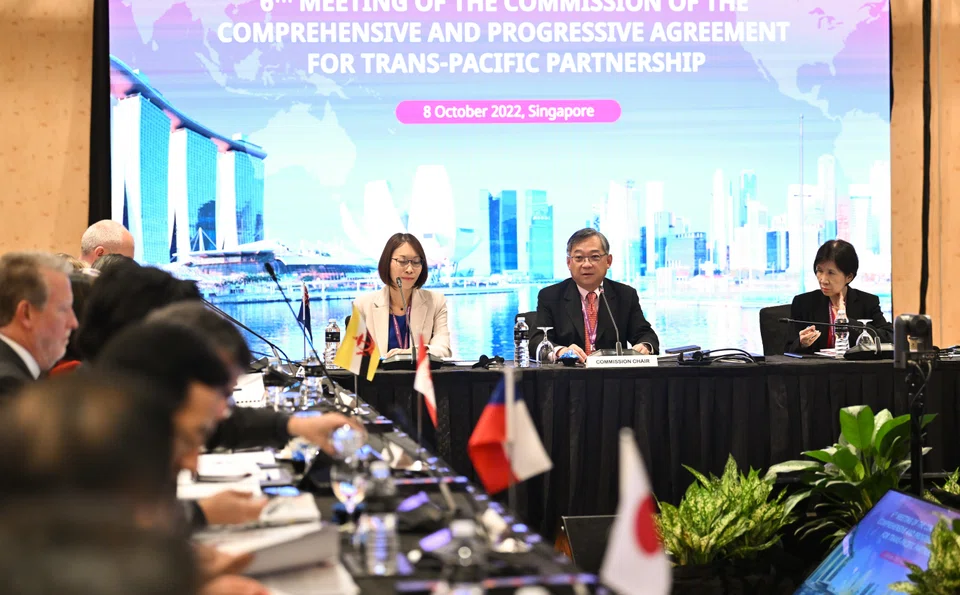
Singapore hosted the sixth meeting of the CPTPP Commission – the group’s top decision-making body – last Saturday (Oct 8), and it was announced that Malaysia had completed its official ratification process and will become the ninth party to the agreement on Nov 29. That leaves just Brunei and Chile as the remaining two countries that have yet to complete their ratification. The hope is that they will do so sooner rather than later, so that the CPTPP can better work towards a strong and resilient economic recovery that is inclusive and sustainable for all.
It is encouraging that there is a steady stream of countries that have expressed interest in joining the CPTPP family, in a testament to the strong reputation and credibility of the agreement. The United Kingdom seems the most likely to be the first new member, although discussions on its accession are still ongoing. The likes of China, Taiwan, Costa Rica and Ecuador have officially applied to join the CPTPP, while South Korea and Thailand have previously indicated a willingness to join.
As Singapore’s Trade and Industry Minister Gan Kim Yong said at Saturday’s meeting, it is important that the UK’s accession is carried out well and with the right processes in place, so as to uphold the CPTPP’s rules and ambition, in terms of market access commitments.
Many aspirant members will be looking at the UK’s journey to enter the agreement, as this will serve as a pathfinder for them too. The CPTPP is better off with more members, rather than fewer. The countries involved will become more competitive and attractive to investments, and there can be a better standardisation of import and export procedures, which in turn will deliver greater economic benefits to all. It will also be easier to tap on new and emerging areas of cooperation in the digital economy and the green economy. What matters, of course, is that those who wish to join the CPTPP must first ask themselves if they can meet the agreement’s high standards, and if they are fully committed to free and open trade.