MYAirline’s collapse a warning to carriers of greater turbulence amid strong greenback, fuel prices

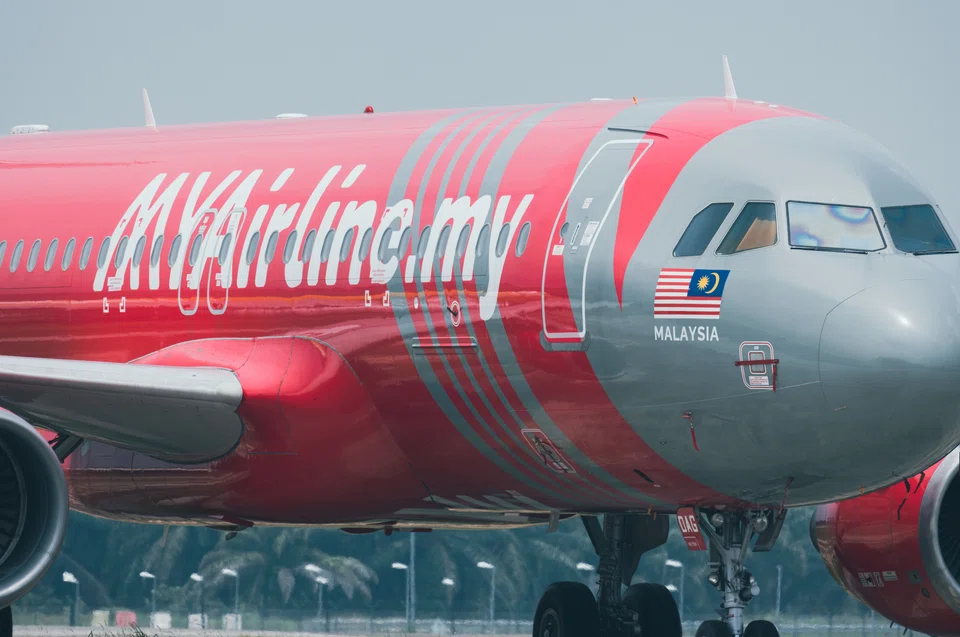
A SPIKE in jet fuel prices and a strong US dollar have stirred up turbulence in the aviation industry. And it appears to have claimed its first scalp in the region.
Malaysian budget airline MYAirline last week became one of the first carriers post-pandemic to have its wings clipped by financial woes.
In a shock announcement, the budget carrier said operations will cease until further notice, pending the completion of shareholder restructuring and a recapitalisation of the company.
Citi analysts noted that MYAirline’s suspension is unlikely to have any significant impact on the wider industry, given that the carrier contributed only 3 per cent of Malaysia’s total seat capacity across domestic and international markets.
Before its suspension, the airline operated nine A320s and served primarily the domestic market, with Bangkok being its only international destination.
Still, the analysts pointed out that the grounding of MYAirline is arguably proof that the brand presence, scale and financial muscle of low-cost carriers are material in assessing an airline’s competitiveness.
Earlier, some 30 foreign pilots reportedly exited Bamboo Airways after alleged late payments in salaries. The group accounted for more than 10 per cent of Bamboo Airways’ cockpit crew before the exodus.
The Vietnamese carrier, which touts itself as a hybrid between full-service and low-cost business models, denied that delay in payment was the reason behind the departures.
To be clear, the challenges to profitability are faced by full-service airlines and low-cost carriers alike.
The commercial airline industry has always been known for fierce competition and high capital expenditure, hardly making it a lucrative business.
Before the industry was hit by the pandemic in early 2020, airlines had a “historic profit streak” with an average net profit margin of 4.2 per cent, the International Air Transport Association (Iata) said earlier.
That kind of profitability is nothing to shout about. Yet, earnings are expected to reach US$9.8 billion in 2023 with a net profit margin of a mere 1.2 per cent. This is considered a feat after the deepest losses in aviation’s history.
In worse news for airlines, Iata’s forecast was made before the industry was hit by the double whammy of a more expensive trading currency and fuel. Under current conditions, the reality could be much bleaker.
The greenback, the currency used to pay for oil and aeroplanes, has appreciated by 5.35 per cent in the past six months, as recorded by the US Dollar Index – a measure of the value of the greenback against six other major currencies.
At the same time, the reserve currency’s strength is expected to stay elevated amid anticipation of the Federal Reserve holding interest rates higher for longer.
Meanwhile, jet fuel prices have surged by about 40 per cent in the quarter to September, although the costs have retreated somewhat in recent weeks.
Many airlines are charging passengers a fuel surcharge or raising prices to mitigate the impact of the high costs of jet fuel.
Fuel, the largest cost item for airlines, typically accounts for about 30 per cent of total costs if unhedged.
Australia’s Qantas Airways last month said that the group has been hit with a A$200 million (S$172.5 million) jump in fuel cost – driven by a combination of higher oil prices, higher refiner margins and a lower Australian dollar. While the fuel cost increase would be absorbed for now, it may be passed on to customers if prices stay high.
The impact on carriers operating in the budget and ultra-low-cost sector is particularly acute. Their tighter budget means they are unlikely to have fuel or currency hedging, and the proportion of fuel expense is higher than their full-service peers because of a smaller cost base.
The reduction in capacity of Bamboo Airways and the suspension of MYAirlines might not have an impact on Singapore Airlines (SIA). But the flag carrier’s near-term earnings performance is unlikely to be spared the brunt of a costlier US dollar and jet fuel.
Already, there are analyst reports that flagged the potential impact on SIA, which has hedged nearly 40 per cent of its projected fuel consumption for the rest of the financial year to March 2024.
Every US$1 per barrel increase in jet fuel prices will reduce SIA’s core net profit for FY2024 by 2 per cent, according CGS-CIMB’s forecast.
Meanwhile, UOB Kay Hian expects the airline group to report earnings of S$420 million to S$550 million for the second quarter of FY2024. This is after factoring in SIA’s hedging position, the surge in jet fuel prices in the September quarter and the group’s operating data for July and August. The estimate is comparatively lower than the group’s Q1 FY2024’s net profit of S$734 million and Q2 FY2023’s S$557 million.
The mainboard-listed carrier will publish its half-year financial results on Nov 7.