NATO looks east to Asia Pacific
NATO faced a potential near-death experience during Donald Trump’s US presidency, yet today the seven-decade old body is enjoying its strongest international support in years and is set this week to agree the largest overhaul of its defences since the Cold War.
This is not just because of Russia’s invasion of Ukraine. For there is growing Western concern about China too which is expected to be called a strategic challenger in NATO’s new military strategy, the first for a decade, launched this week.
In this context, it is no coincidence that a unique feature of the forthcoming summit will be the attendance of several Asia-Pacific leaders for the first time at any NATO leadership meeting. Regional politicians who will be at the event include Japanese Prime Minister Fumio Kishida, South Korean President Yoon Suk-yeol, Australian Prime Minister Anthony Albanese, and New Zealand Prime Minister Jacinta Ardern.
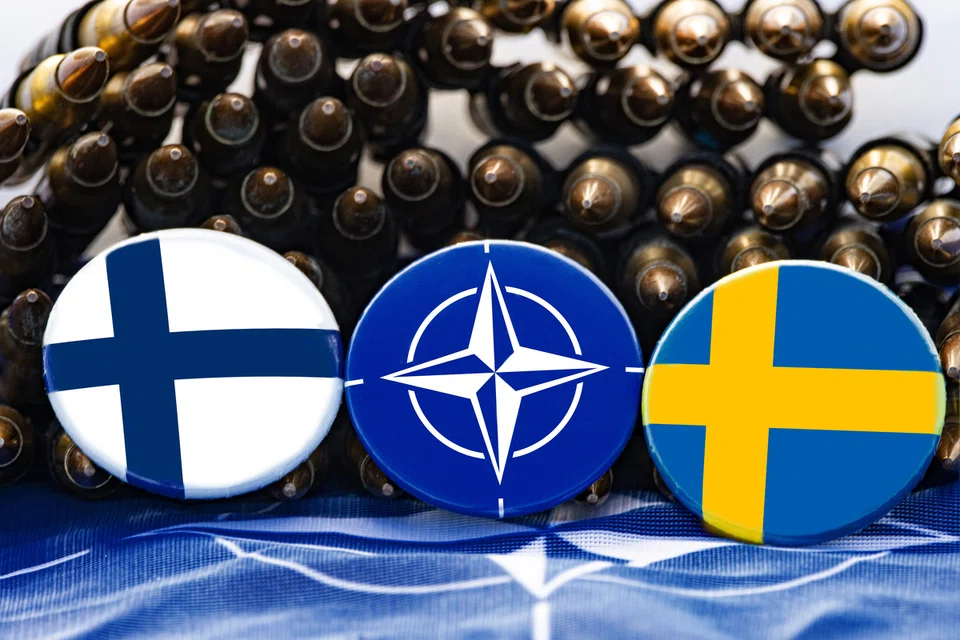
The most obvious manifestation of NATO’s changing fortunes, however, is not in Asia-Pacific, but in Europe where Finland and Sweden in the north of the continent have recently applied for membership, reversing decades of their military neutrality. Yet, the growing warmth toward NATO is being felt across all the continent.
Take the example of Spain, which hosts this week’s summit, where pro-NATO sentiment has risen to a very high 83 per cent, a double-digit increase compared to 2018, according to a recent survey by the Real Instituto Elcano think tank. There is significant increased support even from leftist parties which have traditionally been sceptical about the military alliance.
This data underlines how much the crisis in Eastern Europe has highlighted the continuing relevance of the Western alliance of countries with a collective population of about 1 billion. For all its remaining weaknesses, NATO remains one of the world’s most successful ever military organisations helping underpin the longest period of sustained peace in the West’s modern history.
This massive, positive shift in sentiment toward the military alliance since February has allowed it to turn the corner on the worst strains in its 70-year history that were seen during Trump’s presidency. Former US officials, including ex-National Security Adviser John Bolton, have confirmed that Trump came close to announcing US withdrawal from the alliance.
This would have been a body blow to its credibility. Indeed, it is chilling to think what a re-elected Trump, who initially described Vladimir Putin’s invasion as “genius”, would have meant for the future of NATO during one of its gravest ever threats.
However, the challenges within NATO during the Trump era were by no means only of the ex-US leader’s own making. One of his critiques of the alliance -- that more than half of its members were not spending the prescribed 2 per cent of gross domestic product on defence -- is a long-standing sore point that other US presidents have highlighted, dating back to at least Bill Clinton.
It is important, therefore, to see that more nations in Europe have now committed, in the wake of the Ukraine crisis, to this target. Most symbolically, this includes Germany under new Chancellor Olaf Scholz.
Moreover, while Trump supported Brexit, that dimension of the fracturing of the Western alliance owed more to long-standing UK political issues that he exacerbated, rather than created. Ironically, the Ukraine crisis may now help heal some of the schisms, as London and continental European capitals work together closely in their response to Russia’s revanchism.
NATO is poised at the summit to announce plans to increase its presence in Eastern Europe, including an expansion and rebranding of the 40,000-strong NATO Response Force, possibly by as much as six-fold or higher. This would be reflected in a new force model for NATO’s Eastern flanks, dubbed Allied Reaction Force, with thousands more troops based in their home countries but ready to deploy if needed.
Foes such as Russia aside, possibly the biggest medium-term threat to the alliance is now the prospect of a new US president in 2025 or after -- possibly even Trump himself -- coming into power with a NATO-sceptic agenda that draws on the remaining concerns about whether the alliance is fit for purpose now that it is into its eighth decade. It was Macron’s exasperation at the diminished commitment of the United States, under the Trump presidency, which drove his astonishing outburst in 2019 about the alliance’s supposed “brain death”.
Washington’s waning commitment irked Macron, including the Trump White House’s failure to consult Western allies before pulling US forces out of Syria in 2019. This development reverberated inside the organisation, as it cleared the way for a much-criticised move by Turkey -- itself a NATO member, which had just decided to buy the Russian S-400 anti-aircraft missile system -- to push into Syria with Kurdish forces, which had been helping Western forces fight terrorists, expelled from the area.
Macron was even forced to declare that he did not know if the United States, under Trump, could still be relied on to defend the alliance under the terms of its founding charter, which states that any attack on one member will trigger a collective response. His comments, while clearly heartfelt, were slapped down at the time by some other leading European leaders, including then-German Chancellor Angela Merkel. Their preferred approach was to keep a diplomatic silence and “last out” the Trump presidency.
In the longer term, it is plausible that a higher defence spending target will be locked in by NATO amid concerns over broader shifts in the global security environment, including threats and opportunities vis-a-vis China. US officials have claimed that Russia has asked China for military assistance in its invasion of Ukraine, although Beijing and Moscow have denied the reports.
Whatever the truth of the matter, China has refused to condemn Russia over Ukraine, and remains one of its key allies. So, what is perceived as Beijing’s growing global assertiveness, including its increasingly sophisticated missile systems, is a rising NATO concern and this will become especially marked if it doubles down on its alliance with Moscow in the 2020s.
Andrew Hammond is an associate at LSE IDEAS at the London School of Economics