
A new cold war could slow the advance of science
 Add BT as a preferred source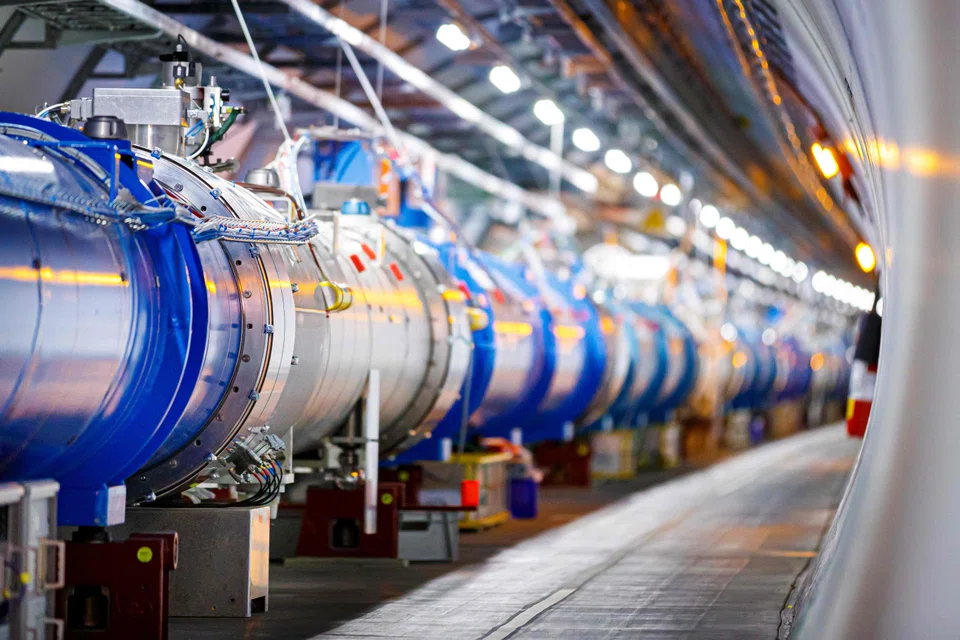
ONE of the many unfortunate consequences of Russia’s invasion of Ukraine is the collateral damage to international scientific cooperation. The past 2 decades may have been the apex of this cooperation. Now it appears to be coming to at least a pause, if not an end.
In the years immediately after the Cold War ended in 1991, Russian scientists turned increasingly to Europe and the United States to remain involved in frontier research. Through the efforts of Presidents George H W Bush and Bill Clinton, Space Station Freedom became the International Space Station, which included major contributions from Canada, Japan, European nations and Russia as partners.
From 1993 to 1996, the Russian agency responsible for atomic energy signed agreements with the European Laboratory for Particle Physics, known as CERN, and contributed money, equipment and brainpower to the Large Hadron Collider (LHC) project. That project led to the discovery in 2012 of the Higgs boson, a heavy subatomic particle that imbues other elementary particles with mass. Its existence was predicted a half-century earlier.
Decoding Asia newsletter: your guide to navigating Asia in a new global order. Sign up here to get Decoding Asia newsletter. Delivered to your inbox. Free.
Share with us your feedback on BT's products and services

