

A new slant on the US presidential race
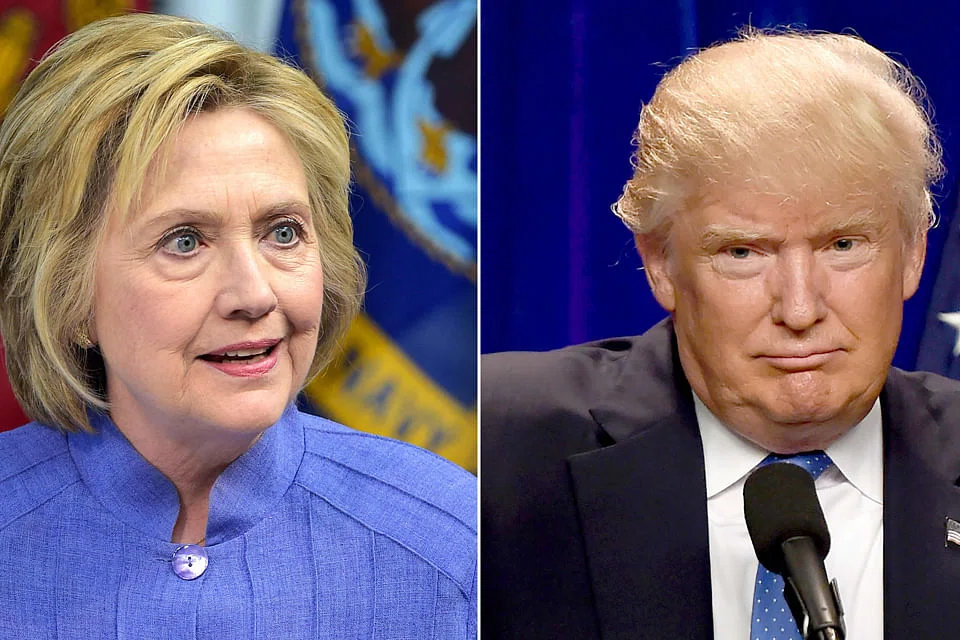
Pledges of upbeat and assured Hillaryism vs the rants of angry and despondent Trumpism, represent the latest efforts to sway the American voter
Washington
I was watching President Barack Obama address the Democratic National Convention (DNC) in Philadelphia, Pennsylvania, last week with a veteran journalist who has covered presidential election campaigns since the 1970s, and was hoping to pick his political brain and figure out what was going on and what was going to happen.
Didn't the 2016 presidential campaign remind him of the 1980 race to the White House, I wondered - pointing out that now, like then, the American economy was stagnant, wages weren't growing and the US was being humiliated by bad guys worldwide. The conventional wisdom then was that America was in decline and the Soviet Union and the radical Ayatollahs in Tehran were on the march. And there was no doubt that Americans were in a bad mood and very pessimistic about the future.
Former Hollywood actor Ronald Reagan - who was chosen as the Republican nominee and who was considered to be an intellectually lightweight candidate by the elites and the media - was challenging the then-Democratic President Jimmy Carter, marketing himself as a strong leader who would revive the economy, defeat the nation's global adversaries, and, yes, "Make America Great Again"!
Reaganism proved to be a winning electoral brand. The Republican candidate won the race, soundly beating Mr Carter who was perceived to be ineffective and weak. He was then re-elected in 1984, after declaring during the GOP convention and later during the election campaign that it was "Morning in America", a slogan that embodied his sense of confidence about the future of the country that eventually ended up winning the Cold War and ushering in the information technology revolution.
Isn't the former television reality show host, Republican presidential nominee Donald Trump, playing the role of Mr Reagan this election year, I asked? After all, he is the tough no-nonsense guy, who is underestimated by politicos and pundits, and who is blaming President Obama and his chosen successor, the Democratic presidential nominee Hillary Clinton, for the stagnant American economy and its eroding global influence, and pledging to, well, Make America Great Again!
You've got it all wrong, responded the reporter who had covered the Reagan versus Carter race. The Donald is not a Reagan political close. If anything, after watching the DNC and the Republican National Convention (RNC) in Cleveland, Ohio, the previous week, he concluded that President Obama - and by extension, the presidential candidate Clinton - were playing the role of candidate Reagan this year.
Mr Reagan exuded a sense of optimism about America and its place in the world while celebrating its values of openness and pluralism and hailing its global leadership role. He described the country as a "shining city on the hill" which thrived on national unity that welcomed new immigrants, and provided leadership and example to the world. America was great and he would make it even greater.
Compare that bright and hopeful message to the dark vision fostered by Mr Trump and those addressing the RNC this year. The Republican presidential nominee portrayed contemporary America as a dystopian nightmare, a country savaged by growing numbers of murderers and illegal immigrants (actually the numbers of both have been going down in recent years), comparing it to "a divided crime scene", a nation that was facing a very bleak future.
"This country is a hellhole," according to Mr Trump. "We are going down fast" - unless he gets elected in November and restore American strength by building "Yuge" walls to halt illegal immigrants and deport millions of them who were residing in the United States. Terrorism would end if Muslims would be barred from entering the United States. And the economy would grow, wages would rise and jobs would return to America by punishing US trade partners.
"What we heard in Cleveland last week wasn't particularly Republican - and it sure wasn't conservative," President Obama asserted during his address in Philadelphia on Wednesday. Instead, the Republican presidential nominee presented "a deeply pessimistic vision of a country where we turn against each other and away from the rest of the world", he said, adding that during Mr Trump's address in Cleveland there "was no serious solution to pressing problems, just the fanning of resentment and blame and anger and hate".
The Republican presidential nominee was "just offering slogans, and . . . offering fear", he warned. "We are not a fragile people, we're not frightful people."
In contrast, the vision for the future offered by the Democrats in Philadelphia sounded almost Reaganesque in its message and tone. In fact, President Obama referred to Mr Reagan's portrayal of America as a "shining city on a hill" while the First Lady Michelle Obama reiterated the same Reaganesque theme during her address on Tuesday. "Don't let anyone ever tell you that this country isn't great, that somehow we need to make it great again," she told the Democratic delegates. "Because this right now is the greatest country on earth."
And while Mrs Clinton clearly lacked the oratory skills of either Mr Reagan or President Obama, her message during her acceptance speech in Philadelphia on Thursday amounted to a powerful challenge to the furious and gloomy political narrative of Trumpism that dominated the GOP convention in Cleveland, as she promised that despite all the problems facing America and the world, "progress is possible", and warned that a President Trump would usher in "midnight in America".
In fact, the Democratic presidential nominee recalled Mr Reagan's optimistic message and contrasted it with the Trumpist theme several times during her address. She stressed that the Democrats were now the optimistic party that was seeking to lift up and unify America and accused Mr Trump of "taking the Republican Party a long way from 'Morning in America' to 'Midnight in America'".
Americans should not "let anyone tell you that our country is weak". "We're not", Mrs Clinton said. "Don't let anyone tell you we don't have what it takes. We do."
Mr Trump and the Republicans have argued that Democrats' politically correct multicultural agenda divides Americans into ethnic and racial groups. Mrs Clinton, during her address, refuted the argument by suggesting that Mr Trump's bigoted comments about Hispanics and Muslims were part of a strategy aimed at turning different ethnic, racial and religious groups against each other, while the Democratic Party's inclusive approach would help unify the nation.
The television images from the two conventions highlighted Mrs Clinton's argument. The delegates at the RNC were mostly white while the DNC showcased a more demographically-diverse party that included more African Americans, Hispanics, and Asian Americans.
And of course, that a woman who had broken the so-called "glass ceiling" would be running for the first time as a presidential candidate of a major party, allowed the Democrats to accentuate their message that inclusion was the more effective way to unify the country.
Moreover, the celebrities, actors and musicians who appeared at the Democratic show in Philadelphia - including Alicia Keys, Elizabeth Banks, Lenny Kravitz and Katy Perry - appealed to a younger and "cooler" America, to millennials, young urban professionals, and single women, whom Mrs Clinton is counting on to show up and vote for her on Nov 8.
The Donald and the Republicans are hoping that the disaffected, white blue-collar workers in the key Rust Belt states of Pennsylvania, Michigan, Wisconsin, and Ohio, who used to vote for Democratic presidential nominees and who are now attracted to the Republican presidential nominee's nationalist, protectionist and nativist message would tip the electoral balance in his favour.
The counter-strategy that Mrs Clinton and the Democrats launched in Philadelphia is based on the hope that many Republicans as well as Independent voters, especially educated and professional white men and women, who reside in the same Rust Belt states in, say, the city and suburbs of Cleveland; who detest the current Republican presidential nominee and his political message, would switch their vote this year to the more Reaganesque Democratic Party. That could offset the electoral impact of the Democrats who would now be voting for Mr Trump.
But it's not clear whether this counter-strategy is going to work. While the Trumpists are enthusiastic about their candidate and are expected to turn out to vote for him in November, many of the Republicans and Independents who dislike their presidential nominee, are telling pollsters that they don't trust Mrs Clinton and may end up staying at home or voting for a third-party candidate in November.
Moreover, while the Democrats are urging voters not to surrender to their fears and insisting that the economy would eventually improve, opinion polls indicate that close to 70 per cent of Americans believe that their country isn't moving in the right direction, and there is a growing sense of anxiety over the rise of international terrorism. They are among many voters who find Mr Trump's criticism of the failure by the current president and his successor to deal with these issues, very appealing. In a way, like Mr Trump and the Republican delegates in Cleveland, their mood is dark these days.






