A new structure is just the first step in tackling today’s media challenges
The Business Times’ new organisational structure places audience strategy and product development as elements equal to quality journalism in a successful media business

Wong Wei Kong
ON SEP 1, The Business Times (BT) started operating with a new organisational structure – breaking away from how the newsroom had worked for many years.
That it went into motion with little drama was because this was no sudden move. A small group of us gathered sometime in 2019, and started thinking how we should reorganise ourselves to grow as a digital product. And over the next 2-3 years, the pandemic notwithstanding, we began putting in the pieces that were needed.
One key piece fell into place in April this year, when BT went live with our new content management system (CMS). In any newsroom, the CMS is a critical operating system where journalists create, collaborate, edit and publish content across various platforms. How a CMS operates often determines the workflows and processes, even mindset, of a newsroom. A CMS may also be ideal for its time, but fall short when demands change. When a CMS becomes less than optimal, so too does the newsroom.
For some time, BT had pushed against the constraints of its previous operating system – which was optimised for the traditional print product. It forced journalists to work with different workflows, for print, and digital, for the same piece of content. What we needed was a unified CMS where a story can start off online, be enhanced and updated, and eventually go to print, if indeed it was curated for the print product, in one single integrated process.
Investing in the new CMS gave us such a tool. It allowed us to alter our workflows and processes, and make a decisive shift to a digitally-driven newsroom that also produces a high-quality print product.
The immediate feedback was encouraging. A newsroom survey we carried out after we launched the new CMS found that 79 per cent of our time was spent on digital content on average, up from 58 per cent a year ago. Some 69 per cent of the newsroom found it easy or moderately easy to perform tasks for digital, up from 49 per cent.
The new CMS allowed BT to move away from a print-centric workflow because most of the work is now digital-first. Only about 15 per cent of the newsroom is currently dedicated to print work. Previously, almost all journalists had a print component to their daily work. Interestingly, more also found print tasks easier; and we continue to put out a well-regarded print product daily.
Our enhanced ability to enrich stories as they develop also gave us the impetus to develop infographics, podcasts and videos to engage our audience across multiple touchpoints. For example, we can now embed a podcast in a story at the point it’s written, while still giving readers the option to listen to us on their podcast platform of choice, be it Apple, Google or Spotify.
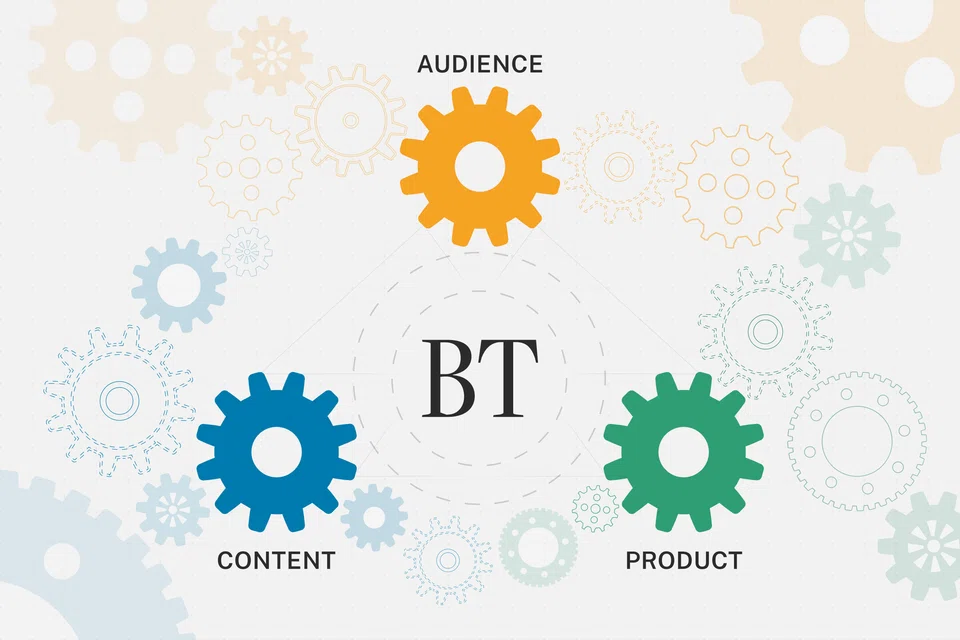
For the longer term, the shift to a digital-driven footing gave us the basis to reorganise ourselves as a consumer-facing digital product with 3 pillars: Content, Audience and Product.
This reflects how we think about our business. Our core offering is news and content, in all their permutations. But we need to also find an audience for this offering, convert them into loyal readers and subscribers, and retain them. And this is possible only if the product that reaches the customers, whether Web or app, lives up to their expectations in terms of delivery and user experience.
The changes depart from the old newsroom structure, which was essentially a news operation. While news is still our core, the new structure places audience strategy and product development as equally important elements and co-dependent with quality journalism. This new organisation reflects similar structures at other digital-focused media businesses.
While the new CMS provides a key foundational piece for our reorganisation, the more critical element would be the people leading our key pillars.
Content will be headed by Chen Huifen, as Executive Editor. Her expanded portfolio now includes graphics, video, podcast, social media and newsletters. This reflects our commitment to integrate our content production across platforms, and join up all the different pieces, so that everything we do is integrated and focused on achieving our key priorities and goals. Chen will be supported by Joan Ng, as News Editor, pulling together all our specialised sections covering Companies & Markets, Regional, Macro, ESG, Real Estate and Garage, our startups vertical.
Audience will be led by Chan Cheow Pong, as Associate Editor, Audience. Product will be helmed by Christopher Lim, as Associate Editor, Product. These 2 roles, in particular, bear some extra explanation, as roles that are relatively new to the newsroom.
Audience strategy focuses on you, people who use BT, looking at how to improve our relationship with you at all stages of your journey with us – whether it’s making sure our content can be easily found, or rewarding loyal subscribers for their longstanding trust in our journalism. Chan will look at all these aspects, as well as champion the use of data and analytics in BT to drive this strategy.
The product function, meanwhile, involves roles such as the product manager, who ensures the BT product meets customer needs, the product designer, who oversees the user experience, as well as the software engineers who are responsible for building and maintaining that experience. Lim will bring these roles together to ensure our website, apps and platforms deliver the best experience possible in support of our journalism.
One small but significant detail: we have deliberately removed “digital” from all leadership designations (for example, Lim was formerly Digital Editor) – because digital is our default across the newsroom, rather than a specialised, siloed responsibility.
The new organisational structure also provides more pathways for the people who work in BT. A journalist can seek out fresh challenges in audience work, for instance, and several have done so, or even be trained to become a product manager, of which there is always a shortage. The flow can invert too. Ultimately, we hope it will lead to a newsroom with more diverse skill sets and fresh thinking that will help us stay relevant as a product. Already, about 30 per cent of the newsroom now is primarily engaged in audience, product and multimedia roles.
Newsroom reorganisation is often a tricky exercise to execute, and the outcomes will not be immediately evident. Every newsroom will have to find its own way and cadence; and as journalists, we know very well that each newsroom is unique in its makeup. For us at BT, we have chosen a structure that we felt would work best for us.
Still, it is just the first step in a long journey. While organisation structure provides a certain framework to address our challenges, the hard work of winning and keeping audiences; improving our products; and finding, developing and retaining talent, remains to be done. Above all, the key leadership team needs to stay together and work as one body around which the newsroom can rally.
Off The Record is a monthly column by BT’s editors on the modern news industry from an insider’s perspective. We welcome feedback and suggestions at btnews@sph.com.sg.