

New tech may boost tracking of potential money launderers, information exchange

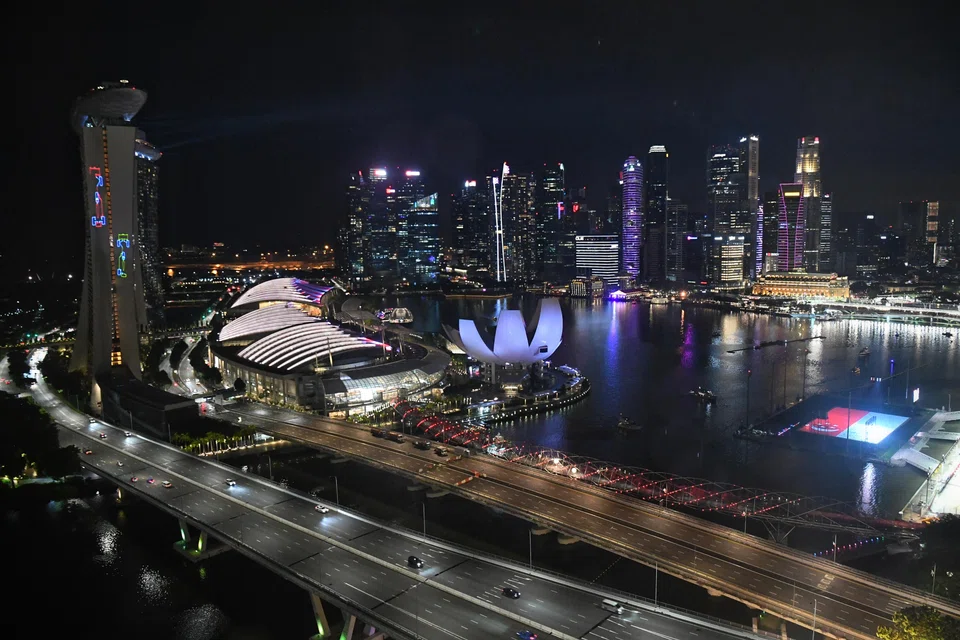
SUSPICIOUS transaction reports (STRs) filed by financial institutions are believed to have played a key role in triggering a multi-billion-dollar anti-money laundering bust in Singapore.
Home Affairs and Law Minister K Shanmugam said authorities started the investigations because “we had reason to believe that these people had committed offences in Singapore”.
He added that the police started looking into the matter based on STRs filed by financial institutions, as well as intelligence and other pieces of information.
On the one hand, the recent bust demonstrates that Singapore does have the necessary regulations in place to combat money laundering and terror financing.
Shanmugam said the fact that the Republic identified and took action against a sizeable network, and seized a very large amount of assets, “sends a clear message that we will act firmly against these kinds of illegal activities in Singapore”.
On the other hand, the scale of the case begs the question if more can be done to deter such financial crimes.
State prosecutors have so far seized S$1.8 billion in cash and assets from 10 individuals. These include at least 105 properties, 50 vehicles, S$123 million in cash, 250 luxury bags or watches, and 270 pieces of jewellery.
Several financial institutions have been identified as having banked the individuals charged, their related companies and associates.
Court proceedings, official documentation and business filings show DBS, UOB and OCBC’s private banking arm Bank of Singapore, as well as Credit Suisse, HSBC and Morgan Stanley are among potential creditors of companies whose shareholders and directors have been linked to the recent anti-money laundering bust.
The Monetary Authority of Singapore (MAS) has reportedly sent a note to the compliance heads of all financial institutions in the city-state to examine any suspicious or unusual transactions by a number of individuals from the beginning of 2020.
Singapore is sparing no expense to protect its reputation as a clean and trusted financial centre with a strong deterrence against financial crimes.
Speaking at the 2023 Forbes Global CEO Conference in Singapore on Monday (Sep 11), Deputy Prime Minister Heng Swee Keat said it is crucial to stay vigilant against money laundering and terror financing.
“We want Singapore to be a financial centre that people can trust,” he said.
Laundry list of requirements
MAS sets out guidelines, and regularly puts out notices and other guidance, on what it expects financial institutions to do to deter money laundering.
These include the need to identify and know their customers, such as beneficial owners; conducting regular account reviews; as well as monitoring and filing STRs when the need arises.
Under the Financial Services and Markets Act 2022, a financial institution that fails to comply with requirements in the anti-money laundering and countering the financing of terrorism (AML/CFT) notice is liable on conviction for a fine of up to S$1 million for each offence.
In the case of a continuing offence, a financial institution will be subject to a further fine of S$100,000 for every day or part of the day during which the offence continues after conviction.
The AML/CFT Industry Partnership, established in 2017, also brings together the financial sector, regulators, law enforcement agencies and other government entities to collaboratively identify, assess and mitigate key and emerging money laundering and terrorism financing risks facing Singapore.
These measures seem extensive. Relevant parties are clear on what they must do when hints of money laundering surface. Yet, several individuals might have managed to evade these checks and balances.
So, was there more that could have been done? Are would-be money launderers outsmarting regulations faster than authorities can keep up?
Information sharing ahead
STRs filed by financial institutions are seen as a key element of anti-money laundering safeguards, but are still far from perfect as a means of identifying potential red flags.
The total number of STRs filed reached 33,882 in 2020, according to figures from the Singapore Police Force. This was higher than the 32,660 in 2018 and 32,022 in 2019, but lower than the 35,471 in 2017.
This rise in the number of STRs filed annually could have been a double-edged sword – offering more information to catch potential instances of money laundering, while also creating more noise.
Earlier this year, MAS announced that it was developing a new digital platform, Cosmic, to improve the STR process.
Cosmic will allow financial institutions to “securely share with one another information on customers who exhibit multiple ‘red flags’ that may indicate potential financial crime concerns, if stipulated thresholds are met”.
The platform is expected to be rolled out in phases from the second half of 2024.
MAS said the sharing of information among banks on the platform will be voluntary in the initial phase of the launch, which is expected to last two years. It intends to make information-sharing mandatory thereafter.
In light of the money-laundering case – and with Singapore’s reputation on the line – perhaps the timeline for the Cosmic launch should be accelerated, and banks should be made to share such information from the get-go.
TRENDING NOW

Two Singapore-listed palm oil firms named in Greenpeace report on Indonesian plantation fires

Singapore Airlines flight returns to San Francisco after ‘unruly’ passenger incident

Singapore looking into which companies responsible for haze-causing fires: PM Wong

Deluge IPO 3.86 times subscribed ahead of SGX debut

