Next NYC mayor may be a model for the Democrats
His positions on policy issues reflect his more centrist politics and his support for working with the private sector in order to revitalise the city.
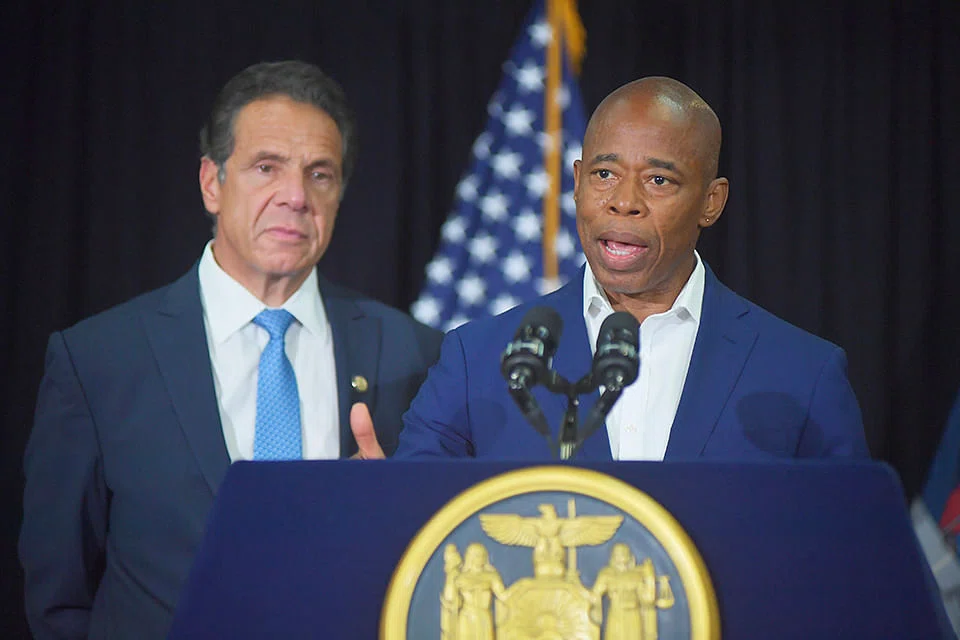
A LARGE majority of New York City residents identify as Democrats. That means that the person whom the members of the Democratic Party has chosen as candidate for mayor of New York - Eric Adams, 60, the former Brooklyn Borough president and a former police captain - is expected to become the winner in the general mayoral election in November, making him the city's next mayor and its second African-American mayor.
The New York City mayoral primaries to pick the nominees for the November election have taken place at a critical time for America's most famous city, as the Big Apple recovers from a deadly pandemic and an ensuing economic downturn. That has forced many businesses to close down and had emptied office buildings with some long-time residents fleeing the metropolitan area, thus raising major concerns about the future of one of the world's major commercial and financial centres.
Moreover, since the start of the pandemic the city has experienced some rise in violent crime, including a 97 per cent increase in shooting incidents and a 44 per cent jump in the number of murders. The incidence of burglaries increased by 42 per cent and car thefts by 67 per cent.
While the overall crime rate in New York remains lower than in other large cities, most public opinion polls indicate that a majority of New Yorkers feel unsafe in the city's streets these days, with rising crime at the top of their concerns. This in turn has helped expose a major rift between Democrats in the city including the mayoral candidates. That has happened against the backdrop of last summer's protests for social justice, led by the Black Lives Matter (BLM) movement that railed against police officers for their alleged mistreatment of Blacks.
SOCIAL-ECONOMIC PROBLEMS
Hence Maya Wiley, an African-American activist who represents the progressive wing of the Democratic Party, and who finished third in the primary race, embraced a left-leaning agenda that called for placing restrictions on the way the police operate and to cut its budget. Ms Wiley - who was supported by progressive star Representative Alexandra Ocasio-Cortes - also called for allocating more resources to dealing with social-economic problems that she blamed for the rising crime.
Mr Adams, on the other hand, has run for City Hall by promoting a tough anti-crime message. "Making our city safe" would be his main mission as mayor, he told reporters. It was all about "Safety, safety, safety", he insisted.
Moreover, he blamed the drive by his party's progressives like Ms Wiley to "defund the police" for the recent increase in homicides and other violence crime, and argued that their anti-police campaign tends to antagonise a majority of moderate voters.
The former police captain has been critical in the past of racism and brutality among officers in the New York Police Department (NYPD) and remains supportive of reforming the city's police force.
But New Yorkers, Mr Adams stated, continue to respect the police and recognise the need to empower it as part of any effort to crack down on crime. The "prerequisite for prosperity is public safety", he insisted.
As part of his policies to increase public safety, Mr Adams pledged to take steps that are bound to anger the left-leaning members of the Democratic Party that remain a powerful force in New York politics.
His critics on the left were unrelenting in their criticism of his message. "Eric thinks that the solution to every problem is a badge and a gun", fired Ms Wiley.
One way of getting guns off the streets, Mr Adams suggested, would be to bring back a plainclothes police unit, part of the so-called stop-and-frisk programme of temporarily detaining, questioning and at times searching civilians on the streets for weapons. The programme was criticised for using excessive force, especially against Black men, condemned as "racist" and was disbanded last year.
But here is where it gets really interesting: While left-leaning Democrats assert that their campaign against the police aims at fighting racism and protecting African-Americans, many Blacks - especially those living in poor neighbourhoods and who are facing rising violent crime - disagree.
In fact, a recent study conducted by political scientist David Shor for New York magazine discovered that Black and Hispanic voters tend to reject calls for defunding the police, as well as other items on the left-leaning "woke" agenda, on issues like immigration and same-sex marriage.
That may explain in part why support for Democrats among Blacks declined by two points in the 2020 general election while Hispanic support dropped by close to 9 per cent.
Ironically, as Mr Shor pointed out: "We've ended up in a situation where White liberals are more left-wing than Black and Hispanic Democrats on pretty much every issue: taxes, health care, policing, and even on racial issues or various measures of 'racial resentment' and other matters that dominate the so-called 'culture wars'."
It was, therefore, not surprising perhaps, that the only borough in New York City that Mr Adams lost (to Kathryn Garcia, a Hispanic government bureaucrat) was Manhattan, an area where White liberals constitute a majority of the Democratic vote.
At the same time, Mr Adams carried by a wide margin the boroughs with a large concentration of Black voters - such as the Bronx - and did well in Staten Island, a borough with many conservative white voters.
CENTRIST POLITICS
While much of the emphasis during the mayoral campaign was on Mr Adams' views on crime and police conduct, his positions on other policy issues reflect his more centrist politics and his support for working with the private sector in order to revitalise the city.
Hence as Brooklyn Borough president, Mr Adams was opposed to the campaign led by Ms Ocasio-Cortez and other progressives to force Amazon to abandon plans to open a second headquarters in Queens which could have provided thousands of new jobs there.
At the same time, Mr Adams also enjoys strong support from the city's powerful labour unions. His plans to fix New York's infrastructure, and his proposal to convert hotels and some of the city's empty office buildings to affordable housing are backed by the real estate industry.
In any case, his election victory in the ultra-liberal New York City is expected to provide a boost to the members of the Democratic Party's centrist wing who have argued that embracing the left-leaning agenda of the progressive wing could harm the party's chances of winning seats in the House of Representatives and the Senate in the 2022 midterm election.
According to politically-centrist Democrats like Terry McAuliffe, a former ally of President Bill Clinton who won the Virginia gubernatorial race last month, the attacks against the police alienated many potential voters during the 2020 races when the Democrats lost quite a few seats in the House. That could happen again next year unless Democratic candidates embrace Mr Adams as a model.