Niche focus could help Ant’s digital bank shine amidst gloom

Zooming into China-Asean cross-border flows could play to its strengths

Sharanya Pillai
Sharanya Pillai

Published Tue, Jun 14, 2022 · 05:50 AM
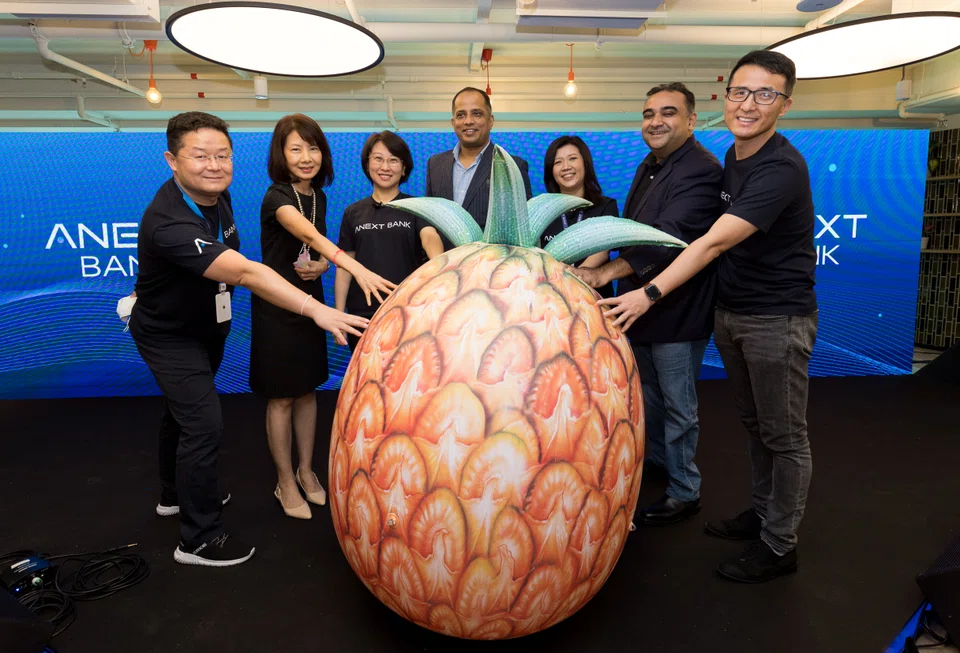
    • On Jun 6, Ant added to its regional presence with the unveiling of its long-awaited Singapore digital wholesale bank, Anext Bank.
    • On Jun 6, Ant added to its regional presence with the unveiling of its long-awaited Singapore digital wholesale bank, Anext Bank. Anext Bank

    HOPE of a revived listing of Chinese fintech giant Ant Group emerged last week, but regulators quickly denied the reports. In a way, this latest episode prolongs the uncertainty surrounding Ant since the axe fell 2 years ago on its planned US$37 billion listing.

    But when it comes to the tech giant’s aspirations in South-east Asia, the picture turns a lot clearer.

    The company had launched cross-border payments solution Alipay+ in 2020; in March, it named a new general manager for the region. This was followed by an announcement in April of an investment into Singapore fintech 2C2P, to add to its portfolio of South-east Asian fintech investments.

    A week ago, Ant took another big step towards building a regional presence, with the unveiling of its long-awaited Singapore digital wholesale bank: Anext Bank.

    Profitability can be elusive for a digital bank, what more in a climate that is increasingly showing signs of a looming downturn. But there are some pockets of opportunity. For one, Ant is in a prime position to bridge China-Asean cross-border transactions, chiefly among underserved small businesses.

    The new bank wants to target micro, small and medium-sized enterprises (MSMEs), with a focus on meeting their cross-border business needs. It will offer a dual-currency deposit account for these companies, with remote onboarding and daily interest.

    Priscilla Tjitra, associate director for Asia-Pacific banks at ratings agency Fitch, sees Anext tapping its strengths to focus on a specific slice of the market, rather than spreading itself out too thin.

    “They’re trying to target the underserved SME segment, but I don’t think they will just go to the open sea and cast their net and fish. They will start from a place they are familiar with; they have an ecosystem already developed,” she said.

    Anext will likely leverage e-commerce company Lazada's network, to provide financing to merchants on Lazada's platform. Lazada is owned by Alibaba Group Holding, while Ant is an affiliate of the Jack Ma-founded conglomerate.

    Tjitra added that by targeting the underserved MSME market, Anext could charge higher lending rates. It could also offer trade financing to merchants and grow a “decent” fee-based income, she added.

    “I’m referring to smaller ticket sizes of trade financing with more flexible terms. The business will be shorter term, so it will be very high-churn, very high volume throughout the year. But because it’s short term, the credit risk is also more manageable,” she said.

    Anext’s parent Ant has significant experience serving emerging-market SMEs. Ant’s China-based MYbank has a network across rural counties in China, and grew its customer base by nearly 70 per cent in 2020, to over 35 million SMEs.

    Will this experience translate in a more-fragmented South-east Asia? And what will its strategy be?

    At last week’s soft launch, Anext chief executive Toh Su Mei said the bank is “definitely not here to try to create a price war”.

    That’s a wise move — to put it mildly.

    According to a recent report by consultancy Simon-Kucher & Partners, fewer than 5 per cent of digital banks are estimated to have hit profitability, and one of the most common pitfalls is prioritising user statistics over actual monetisation.

    “The pure currency here is the number of users, and that’s essentially what is being bragged about in the media,” said Simon-Kucher senior partner Christoph Stegmeier. “For some, it was even the number of countries they are present in; so there was a race on who would be the first one to be present in 25 countries, which was another major pitfall.”

    Many also have a venture capital-driven mindset of breaking even in 5 to 7 years, which Simon-Kucher dubs as “highly risky”. Breakeven should instead be targeted within the narrower horizon of 3 to 5 years, Stegmeier added.

    Instead of vanity metrics, digital banks would be better off focusing on monetisation from the get-go. In this respect, Stegmeier said, looking for the right market niche is crucial.

    Unfortunately, success in Singapore for Anext may not move the needle much for Alibaba.

    Alibaba’s share price is the highest it has been in roughly 2 months, on speculation that China’s regulators are easing the pressure on the tech sector. Even so, the stock is still down more than 45 per cent over a year.

    Still, Singapore remains a key element in Ant’s South-east Asian expansion, particularly as new technologies open doors and bridge borders in global banking.