HOCK LOCK SIEW

Nio may have beefed up its balance sheet, but challenges are lingering

Tay Peck Gek
Tay Peck Gek

Published Thu, Jan 4, 2024 · 05:00 AM
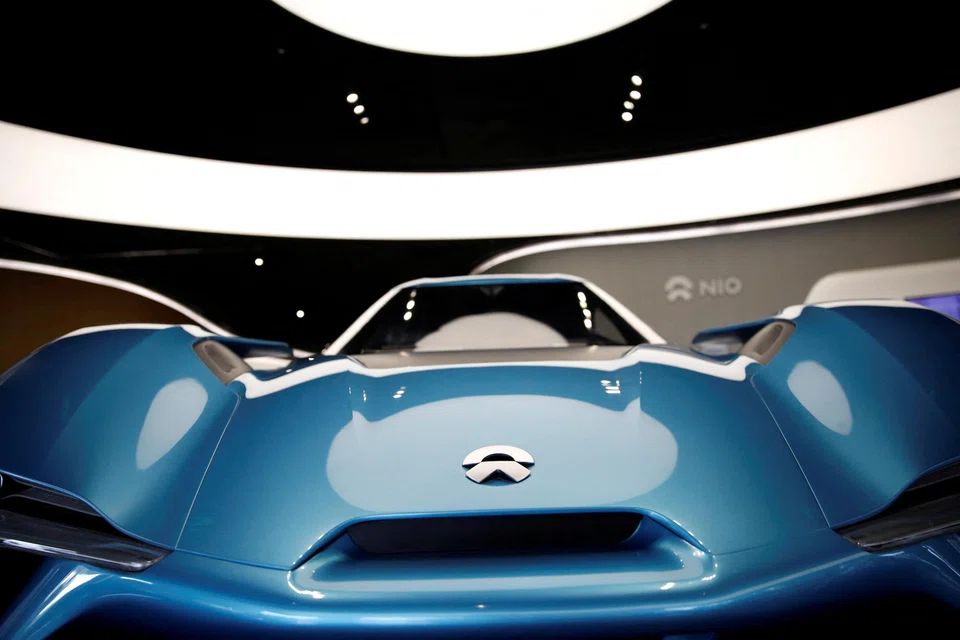
    • Above: The Nio EP9 in a Beijing showroom. The carmaker completed placing 294 million new shares at US$7.50 apiece, raising a further US$2.2 billion from Abu Dhabi-backed fund CYVN Holdings last week.
    • Above: The Nio EP9 in a Beijing showroom. The carmaker completed placing 294 million new shares at US$7.50 apiece, raising a further US$2.2 billion from Abu Dhabi-backed fund CYVN Holdings last week. PHOTO: REUTERS

    INVESTORS appear to be gaining confidence in Nio , with the China-based electric vehicle (EV) manufacturer attracting fresh funding to shore up its war chest. However, amid falling selling prices, slowing demand and subsidy cuts, it may be unrealistic to expect Nio to achieve profitability anytime soon.

    Last week, the company raised a further US$2.2 billion from Abu Dhabi-backed fund CYVN Holdings, with the completion of the placement of 294 million new shares at US$7.50 apiece.

    This followed CYVN’s move in July to invest US$738.5 million to subscribe to about 84.7 million in newly issued shares at US$8.72 apiece.

    The latest acquisition takes CYVN’s stake in Nio – which is listed in Singapore, Hong Kong and the United States – to 20.1 per cent.

    When CYVN’s latest equity investment was first announced on Dec 18, Nio’s share price shot up 10.5 per cent in two days.  

    But the counter is still far from its 52-week high of US$16.18. It closed at US$8.50 on Wednesday (Jan 3) – some 47.5 per cent below the peak.

    The counter lost 21.8 per cent last year, up to the announcement of the completion of the placement on Dec 27.

    On a positive note, the surge in Nio’s share price late last month shows investor confidence may have received a boost from the capital quantum and the investor’s stature.

    On the other hand, the fund-raising exercise goes to show the sheer amount of investment required to keep the wheels turning.

    Nio also sold US$1 billion of convertible bonds in September. It is unclear if the placement in December would be Nio’s last dilutive fund-raising.

    Operationally, the challenges are mounting for the EV maker.

    It sank deeper into the red in the third quarter of FY2023 to September, reporting a net loss of 4.6 billion yuan (S$868.7 million) on higher cost of sales and operating expenses. It had reported a net loss of 4.1 billion yuan for the corresponding quarter of FY2022.

    The wider loss came despite the premium EV maker achieving 75.4 per cent more deliveries, or 55,432 vehicles in total, in the third quarter.

    Nio’s vehicle sales margin was 11 per cent on sales of 17.4 billion yuan for the period.

    In comparison, rival Chinese EV maker XPeng chalked up a net loss of 3.9 billion yuan, with vehicle sales of 7.8 billion yuan and a margin of -6.1 per cent.

    Another peer, Li Auto, delivered a net profit of 2.8 billion yuan, with vehicle sales amounting to 33.6 billion yuan and a margin of 21.2 per cent.

    BYD – in its own league – posted record quarterly earnings of 10.4 billion yuan.

    Nio has projected revenue of up to 16.7 billion yuan (S$3.13 billion), and sales of 49,000 vehicles for the fourth quarter – below analysts’ average forecasts of 21.4 billion yuan in revenue from the sale of 59,426 units.

    It delivered 160,038 vehicles in 2023, up 30.7 per cent year-on-year – but fell short of its goal of shipping 250,000 EVs in the year.

    Notably, the number of automobile players in China has shrunk from over 500 to around 100. However, competition has not been blunted, with deep-pocketed technology players Huawei Technologies and Xiaomi having joined the fray.

    Xiaomi last week unveiled its first EV – a premium car to take on Tesla and Porsche. At the launch event, the company was unequivocal about its ambition to be among the world’s top five automobile makers.

    While demand for greener automobiles is already slowing amid state subsidy cuts and the low resale value of used EVs, Chinese manufacturers are facing stepped up protectionist measures in overseas markets.

    For instance, Germany recently abruptly withdrew the 4,500 euro (S$6,540) subsidy for the purchase of battery EVs (BEVs) that are fully electric. The grant cut is expected to lead to a significant reduction in BEV sales.

    To its credit, Nio is working on reducing inefficiency and cost. It has axed 10 per cent of its workforce and is considering spinning off non-core units.

    The premium carmaker is targeting its entry-level models for the European market, even as its rivals BYD and XPeng have reportedly ramped up deliveries in Europe.

    Nio’s strategy for Europe appears to be a wise one, as a relatively unknown name would need a mega branding budget to go head-to-head against the established European upmarket marques.

    However, it should also consider making inroads into other markets to build its name – as BYD has done. And it needs to quickly seize this opportunity before legacy automobile makers ramp up their EV offerings.