No honeymoon period for Truss as she deals with a packed in-tray
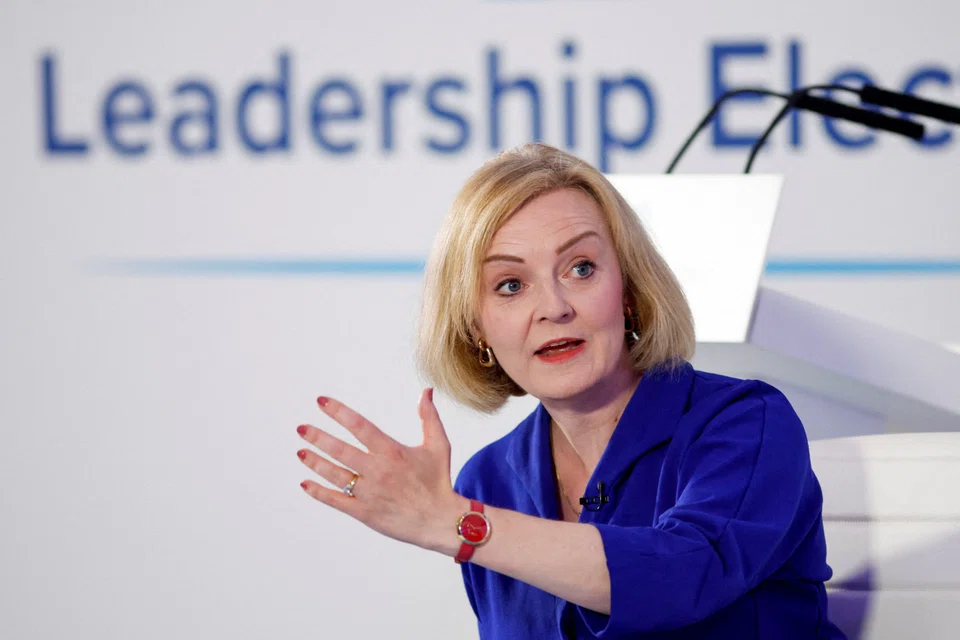
LIZ Truss formally became Britain’s new Prime Minister on Tuesday (Sep 6), and she will hold the first meeting of her new Cabinet on Wednesday against the most challenging economic and political backdrop since the 1970s.
Energy prices rising for consumers and businesses; the continuing war in Ukraine; a health service struggling to clear the Covid-19 backlog; inflation at over 10 per cent, and an economy falling into a recession; tough trading relationships with the European Union, China and beyond after Brexit – any of these challenges alone would be difficult to handle, but together it seems an almost impossible task for any world leader. Truss will have to make choices about what to prioritise, with her first term in office lasting for about 2 years as the UK must hold its next general election by January 2025 at the latest.
The Labour Party, led by Keir Starmer, is now significantly ahead in the polls and looking like a credible force once again. And for the first time in a decade, Labour leads the Conservatives when it comes to how they are viewed as being able to properly manage the economy.
The leadership election that began a couple of months ago saw Truss and former finance minister Rishi Sunak as the final 2 candidates. Over the course of the campaign, they traded insults that will leave a divisive legacy, one that is unlikely to heal quickly.
While most voters will not have taken much notice of the candidates’ disagreements or policy announcements, it is clear from the polling that the lack of government action over the summer months, especially to address the energy crisis, has eroded support for the Conservatives.
There will also be many unhappy Conservative Members of Parliament (MPs) on the backbenches – along with some ministers, undoubtedly – whom Truss cannot count on for enthusiastic support. That will inevitably make managing a busy legislative programme far more difficult. Added to that are the heightened expectations from the public that the many pledges made during the campaign period must be delivered, and speedily.
That is the unenviable backdrop facing Truss as she enters 10 Downing Street this week. But her government does have 1 important advantage over the opposition – and that is the ability to make major changes to taxes and spending, as well as the ability to introduce new laws. They will need to do so quickly if they are to begin to rebuild faith and trust.
There will be no honeymoon period for Truss and her Cabinet as they settle down to work. In the coming days, Truss is expected to announce the ways the government will address the huge increase in energy costs. At the top of her in-tray will be the package of measures to help households and businesses cope with this unprecedented rise.
Think tanks, pressure groups and a host of backbenchers have already touted different ideas – from across-the-board cuts in value-added tax, to energy price caps. None of the ideas proposed to date are capable of fully addressing the effect of current and future energy price rises.
Whatever the government ends up doing will end up disappointing some people, and it will inevitably be attacked by the opposition parties. But it is clear that a bold and significant initiative is required, something akin to the furlough scheme introduced at the start of the Covid-19 pandemic in 2020.
What matters is whether what is proposed is seen by the voters as a genuine and serious attempt to mitigate the impact of soaring energy costs in a significant way. If the Truss-led government fluffs its opening lines, there is little chance that it will be given a second chance.
There will be a number of key set pieces that will demonstrate the direction of the new Prime Minister, particularly the mini Budget that is likely to take place on Sep 21 to deliver the tax cuts that have been at the centre of Truss’ leadership campaign.
What the government does to reduce regulations, including in the vital financial services sector, or how it approaches relationships with key trading partners in Europe and Asia, will likely give a clear indication of the direction of travel by the new Truss administration. All of these are, of course, also opportunities to deliver positive solutions or changes that will face competition from the emergence of day-to-day issues that can drag down any government.
In the coming months, on top of the energy crisis, the pressures facing the British health service over the summer do not augur well for the expected increase in patient numbers over the autumn and winter months.
What the pandemic has revealed is how poor the government is at successfully tackling many different problems simultaneously. In the coming months, achieving what has proven impossible for Boris Johnson’s government will determine whether Truss’ term of office can extend beyond the next election.
The writer is the former chief executive officer of the Conservative Party, and currently the director of public affairs at Hume Brophy.