No looking back for exchanges after entering the Internet age
Bourses can prosper and expand only if they are constantly mindful of the potential of change in economics and world markets and willing to adopt innovations as necessary, says the founding father of futures markets
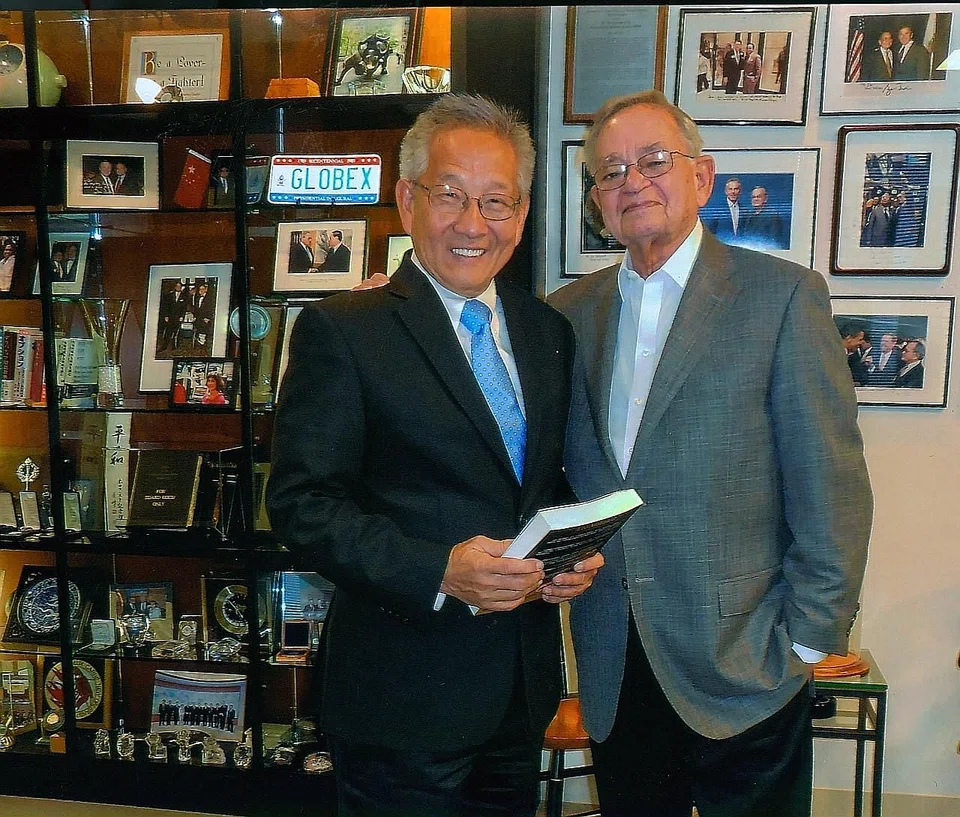
LEO Melamed has been described as the founding father of futures markets, a label that might sound like a bit of hype but is in fact not far off the mark. His role in developing the Chicago Mercantile Exchange (CME) as a premier futures market and in the setting up of the International Monetary Market (IMM) is the stuff of legend in financial markets, and the part he played in elevating Simex (Singapore International Monetary Exchange), now part of Singapore Exchange (SGX), into a world-class Asian market for derivatives deserves to be more widely publicised.
Now CME Group's Emeritus Chairman, he shares his thoughts on the past, present and future of futures trading with BT's R Sivanithy via an email interview.
RS: You were instrumental in Simex developing from a fledging organisation into a world-class futures exchange when you helped set up the historic CME-Simex link in 1983 to trade your Eurodollar contract. Also critical in the success of that link was the revolutionary mutual offset system. What made you pick Singapore?
LM: My quest was to find the right venue in Asia for the IMM Eurodollar (ED) futures contract in order to combat the very serious competitive threat posed by the Liffe (London International Financial Futures and Options Exchange) of Great Britain. There is some irony here since I was pivotal in helping the London futures exchange get started. My rationale was that the more futures exchanges that are initiated, the bigger the universe of users which is bound to be to the benefit of the IMM as well as futures markets generally. In other words, I welcomed competition.
I expected our ED contract to be a huge winner (as history proved I was very right.) Liffe, however, had listed an identical copycat IMM ED contract. Trouble was that London sits in rather a perfect time zone (remember, this was long before Globex) covering part of the Asian market zone, all of the European market zone, and part of the US market zone. On top of that, I was aware that Asia was awakening to futures and represented fertile ground for futures business.
A new futures exchange in Asia might very well also list a similar ED contract. So my idea was to "partner" with an Asian exchange, first, to promote the success of the ED contract; second, to deter the creation of a competitive start-up in Asia; and, third, to stem the potential growth of the Liffe ED contract.
So the issue was where in Asia and with whom could I talk about the revolutionary idea I wanted to sponsor. There were three natural venues: Tokyo, Hong Kong, and Singapore. Of course I visited all three venues and learned the following: Japan was still mired in a regulatory morass, with conflicting regulations and with government agencies fighting each other for jurisdictional turf.
In Hong Kong, which everyone thought was the most promising venue since it embraced a "free market" regulatory culture, however, I found it difficult to know who to talk to. There were British market officials, there were established Hong Kong market officials, and there were mainland China officials.
Everyone was anxious to do business with the CME but there was no central voice that I could deal with. In Singapore, I found the opposite. Although Singapore had little futures market experience, the community of traders, especially at the Gold Exchange, all spoke with one voice. Most important, the MAS (Monetary Authority of Singapore) was the only regulator involved and its voice was the law. In other words, Singapore represented the most unified venue and willing to try the outlandish idea I was proposing. More than that, Singapore officials, both in the public and private sector, were eager to make the deal. Thus, Singapore became my choice.
RS: It is often said that an organisation is only as good as its people. Who were the personalities that stood out during your visits to Singapore and your dealings with Simex?
LM: The personalities in Singapore with whom we dealt were well versed in trading and willing to give up their Gold Exchange in favour of a new Simex entity. I learned to like them all. Of particular note was Lim Ho Kee, who was then deputy chief at MAS, who impressed me with his full understanding of how a Mutual Offset System (MOS) would work. He was ready to embrace the risks involved in order to partner with the very prominent and successful CME/IMM. There were also many members of the Gold Exchange who impressed me with their zeal; among their leadership, Koh Beng Seng and Elizabeth Sam stick out in my memory. Finally, Ng Kok Song, who was chief of market operations at MAS, came on the scene. He quickly became the most authoritative voice in the creation of the Simex and understood the conditions I would require in order to gain approval from both the CME/IMM board as well as the CFTC (Commodity Futures Trading Commission). He understood that a revolutionary MOS system was a great risk for both of us but if successful could prove to put Singapore on the map. I was impressed with his acumen, his integrity, and his drive to make it all happen.
We quickly became the best of friends. Most important, Mr Ng had the confidence and support of the political (leadership), without whom we could not have done anything. Indeed, Mr Ng understood that for this venture to be launched, Singapore had to 1) accept the harsh margin requirements and financial guarantees the IMM demanded, and 2) it must adopt the international trading rules and standards the CFTC required.
RS: Looking at present-day Simex, now part of SGX, did you ever foresee it becoming Asia's largest provider of Asian equity derivatives?
LM: I knew that if MOS proved to work, we would have revolutionised the trading of futures by connecting two time zones and bringing business and respect to Singapore shores. I also was fully aware of the brilliance of the (then) Prime Minister, Mr Lee Kuan Yew, and his dream to make Singapore a financial centre.
Did I foresee that the Simex would someday become part of SGX and a centre for Asian equity derivatives? Of course not. But in a very real sense I understood that the success of our agreement would be fundamental to Singapore's future growth as a centre of finance in South-east Asia. Here is a portion of my 1984 congratulatory remarks to the members of Simex:
To put it as succinctly as I can, it is my fervent belief that not only will our revolutionary innovation prosper, not only will it be a model for the world to follow, it will prove to be the foundation upon which Singapore can build a financial infrastructure as it assumes a pivotal role in the markets of Southeast Asia.
RS: You are a great believer in not being trapped by "the tyranny of the status quo", ie that one should not rest on one's laurels but, instead, push boundaries in order to survive. Applied to exchanges, this means the need to constantly grow or risk demise. Indeed, the CME-Simex link was born from the competitive threat posed by London to your Eurodollar contract. Bearing in mind the need to grow and fend off competitive threats, what advice would you give SGX today?
LM: My advice to SGX today is no different than what has been the driving force in my life, the willingness to innovate and accept change and transformation as events dictate. Nobody can really predict the future. No one foresaw the Internet until it happened and changed nearly everything. Exchanges can prosper and expand only if they are constantly mindful of the potential of change in economics and world markets and willing to adopt innovations as necessary.
RS: When you started out, futures trading was exclusively via the open outcry system. Today, technology has taken over and the trading pit is a thing of the past. Even though technology allows faster and more efficient trading, do you think somehow, something has been lost in the shift?
LM: As history is witness, I was an early believer in the coming of a technological era that would sweep over world markets. As early as 1986 I visualised the advent of an automated transaction system for futures. Indeed, our embrace of Globex, albeit with a great deal of battle and pain, is central to the CME Group's overwhelming success. Sentimental resistance, a consequence of what Milton Friedman called the "Tyranny of Status Quo", should never be allowed to deter change. Clearly, technology forged enormous transformations everywhere. Yes, something was lost in the shift.
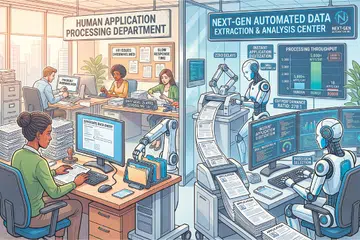
Yes, runners and floor brokers lost out. So did elevator operators, telegraph operatives, print setters, and on and on. It will not stop. People will continue to invent, innovate, and change. The Internet, artificial intelligence, big data, and improved analytics will continue to provide cheap computing power that will continue to displace humans in the workplace. But that is the beauty of the human condition. Jobs will be lost, but new ones will blossom. And of course something will be lost in that shift. But we are online with the world 24-7-365. We text, we Twitter, we email, we Google, we Yahoo, we Facebook, we iPad, we iPhone, we YouTube, we BlackBerry, we Android, and now we even Alibaba. We cannot go back to the way it was.
RS: One of the biggest problems in all markets is rigging and manipulation, something which was present when trading was by open outcry. Even with technology, it is still possible so how does the CME guard against these activities given the widespread dependence on high-speed trading to keep markets liquid?
LM: It is true that we face new problems in the marketplace as a consequence of new technologies. There is a fair debate going on whether advanced technological capabilities have brought about new forms of manipulation and market rigging. Indeed, the advance of artificial intelligence and robotics is bound to complicate this issue. But, let's face it, there was manipulation during the era of open-outcry as well. And before that too. We always had to be on guard and find ways and measures to deal with violators. And we did.
No different today. Rather than curse or prevent technological advancements, it is imperative that exchanges, brokerage firms, and regulators learn to apply modern tools with which to catch violators. What I am saying is that we innovate and produce advanced technological tools with which to seek and find would-be advanced technological manipulators. In simple language, I submit we fight fire with fire.