

No need to get excited about Trump's rhetoric
Much of his modus operandi as a businessman and now as a politician has involved bluffing
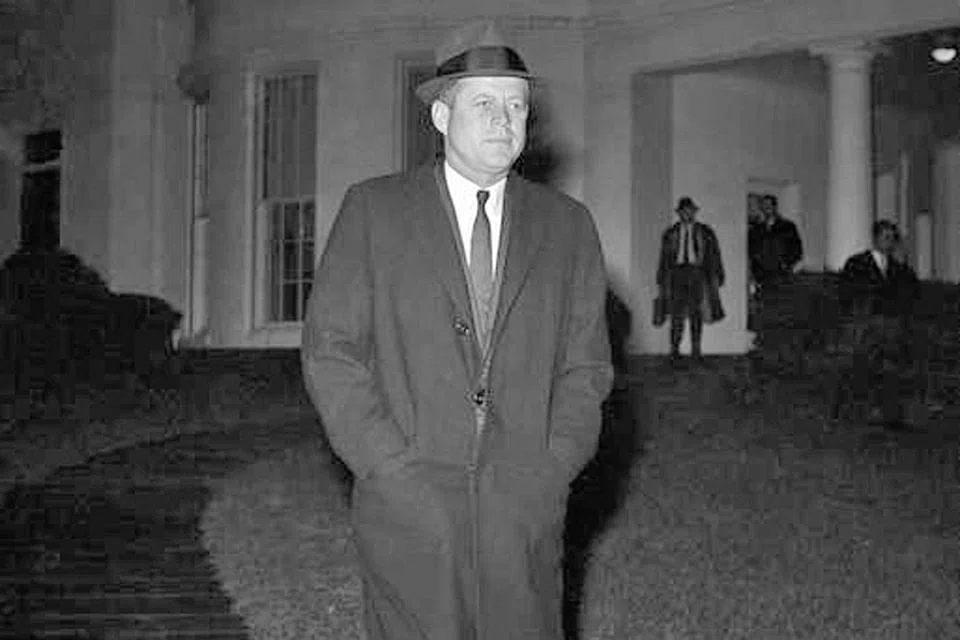
WHEN yours truly was an undergraduate student majoring in international relations sometime at the end of the last century, one wouldn't be granted a bachelor of arts degree, not to mention a PhD, unless he or she had read, reread and scribbled many notes on the pages of Graham Allison's Essence of Decision: Explaining the Cuban Missile Crisis.
In what has become by now a classic analysis of foreign policy making, the renowned political scientist from Harvard University used the 1962 Cuban Missile Crisis as a case study in governmental decision-making and, more specifically, in the way former US president John F Kennedy (JFK) and his national security aides and Cabinet members succeeded in managing, and eventually resolving, the nuclear crisis with the then Soviet Union.
For the millennials among my readers who may not be familiar with the most dramatic post-World War II international crisis that followed the discovery by US intelligence agencies of Soviet nuclear missiles on the Caribbean island of Cuba, here is a reminder: The United States and the Soviet Union were ready at that time to go to war, to exchange nuclear weapons and in the process to destroy the entire planet.
In the aftermath of the peaceful resolution of the Cuban Missile Crisis, generations of Americans - exposed to the never-ending stream of memoirs, histories and films about the crisis - were convinced that the main reason why the world didn't blow up in 1962 was the way that JFK handled and negotiated an end to the crisis.
Indeed, JFK was portrayed as the coolest of all human beings, a Man of Reason and a student of history who during the first months of his presidency had read Barbara Tuchman's The Guns of August, which detailed the way the great powers of the day stumbled into the bloody military conflict of World War I. JFK was intent on ensuring that a war that no one wanted would not happen again.
Forming a decision-making system that included the best and the brightest in the administration, led by a group of four-star generals joined by graduates of Harvard and other Ivy League institutions, who formed the Executive Committee or Ex-Com, JFK refrained from attending their deliberations so as to allow them to conduct a free-for-all debate. That supposedly should have resulted in policy recommendations that would help protect US national interests and avert a World War III. Which is what happens when an enlightened president and his intelligent advisers, the embodiment of the Rational Men, are in charge.
Now imagine what would have happened if an ignorant and boorish guy, with no policy experience, who lacks basic intellectual grounding in history and international affairs, and who relies for his advice on his young son-in-law, would be occupying the White House in 1962? We would probably have still been recovering from a nuclear holocaust. Or maybe not.
Indeed, in his Essence of Decision, Prof Allison challenged many of the earlier assumptions about JFK and the Cuban Missile Crisis and, in that context, the notion that presidents can and should make foreign policy decisions based on a series of cost-effective moves.
"Foreign policy has often been compared to moves, sequences of moves, and games of chess," noted Prof Allison. "If one were limited to observations on a screen upon which moves in the chess game were projected without information as to how the pieces came to be moved", he would assume that "an individual chess player was moving the pieces with reference to plans and manoeuvres towards the goal of winning the game".
But after studying the 1962 crisis, Prof Allison raised questions about the viability of what he labelled as the Rational Actor Model. According to this model, the government acts as a unitary rational actor to make decisions.
Instead, Prof Allison suggested that in reality what happens has very little to do with rationality. Things tend to be more messy, reflecting the personal, political and bureaucratic interests of the main players.
Or as he puts it: "The decisions and actions of governments are essentially intra-national political outcomes: outcomes in the sense that what happens is not chosen as a solution to a problem but rather results from compromise, coalition, competition, and confusion among government officials who see different faces of an issue; political in the sense that the activity from which the outcomes emerge is best characterised as bargaining."
Revising the Cuban Missile Crisis, one discovers a young and inexperienced JFK who was aware that his earlier foreign policy missteps were responsible for the developments that led to the crisis and was preoccupied with the way its outcome would affect his political fortunes. His foreign policy aides were smart, but he didn't pay too much attention to their advice, especially by those who encouraged him to risk a war with the Soviet Union.
Instead, JFK - who wanted to avoid a nuclear war at almost any price - relied on a relative, his brother Robert Kennedy, the attorney-general, as well as other outside players to communicate with the Soviet leaders and help fashion up a secret compromise deal and led to the de-escalation of tensions between the two superpowers.
One could imagine a similar scenario evolving today as President Donald Trump attempts to resolve the nuclear crisis with North Korea notwithstanding all the "fire and fury" rhetoric emanating from the White House and as pundits urging the "adults in the room" to rein in the "madman" in the Oval Office."
As Prof Allison recalled, some of the "adults in the room" in the JFK administration had advocated military escalation while the inexperienced JFK resisted their pressure and pursued a more cautious approach. Nor should one read too much into Mr Trump's belligerent rhetoric. In fact, one of America's most astute foreign policy presidents, Richard Nixon, proposed that American presidents need to embrace what he called the Madman Theory.
Leaders of adversarial nations needed to believe that Mr Nixon was irrational and volatile and would then avoid provoking the United States, fearing an unpredictable American response, believing that he had "reached the point where I might do anything" and that his aides were concluding that "we can't restrain him when he's angry, and he has his hand on the nuclear button".
We don't know whether Mr Trump is familiar with Mr Nixon's Madman Theory or with the advice provided by the Italian philosopher Niccolo Machiavelli that sometimes it is "very wise thing to simulate madness".
But we are aware that much of Mr Trump's modus operandi as a businessman and now as a politician has involved bluffing. Just recall the main campaign pledges he had renounced after being elected as president, from moving the American embassy in Israel from Tel Aviv to Jerusalem and revoking the nuclear deal with Iran to getting Mexico to pay for the wall on the southern border and labelling China as a currency manipulator. Concealing one's intentions and misleading the other side about them, or bluffing, can prove to be a very effective tool in politics, including in foreign policy.
Indeed, in his biography of Dwight Eisenhower, appropriately titled Ike's Bluff: President Eisenhower's Secret Battle to Save the World, historian Evan Thomas noted that the much-admired president was a specialist in bridge. Mr Eisenhower radiated warm sincerity and his emotions were easy to read. But he was actually a great bluffer, and not just at cards.
Being a bluffer is a perfect personal trait if you are in the business of nuclear strategy, Mr Thomas contended. Mr Eisenhower's basic policy throughout his presidency was known as Massive Retaliation, threatening to use nuclear weapons against aggression wherever and whenever it might occur. But he remained vague about what he might or might not do in crisis. His closest adviser, General Andrew Goodpaster, guessed that "Ike" would never use nuclear weapons, but others weren't so sure, and Mr Eisenhower wasn't going to tell them.
Mr Eisenhower managed, "by cleverness, indirection, subtlety, and downright deviousness, and by embracing the very weapon he could never use, to safeguard his country and possibly the rest of mankind from annihilation", Mr Thomas wrote. Which is probably the way every American president, including the current one, would want to be remembered.
TRENDING NOW

Grab CEO’s wife Chloe Tong on life with Anthony Tan and finding her purpose

8 public officers referred to police over property buys near unannounced MRT stations: Chan Chun Sing

DBS tops trades in smaller board lots on debut of revised SGX framework

Deal between tycoon friends sparks scrutiny of Philippine power sector

