

Nobel prize a shoo-in for Singaporean if applied economics were the focus
Committee for the Economics Nobel Prize, please take note: Applied policy work counts.
 Add BT as a preferred source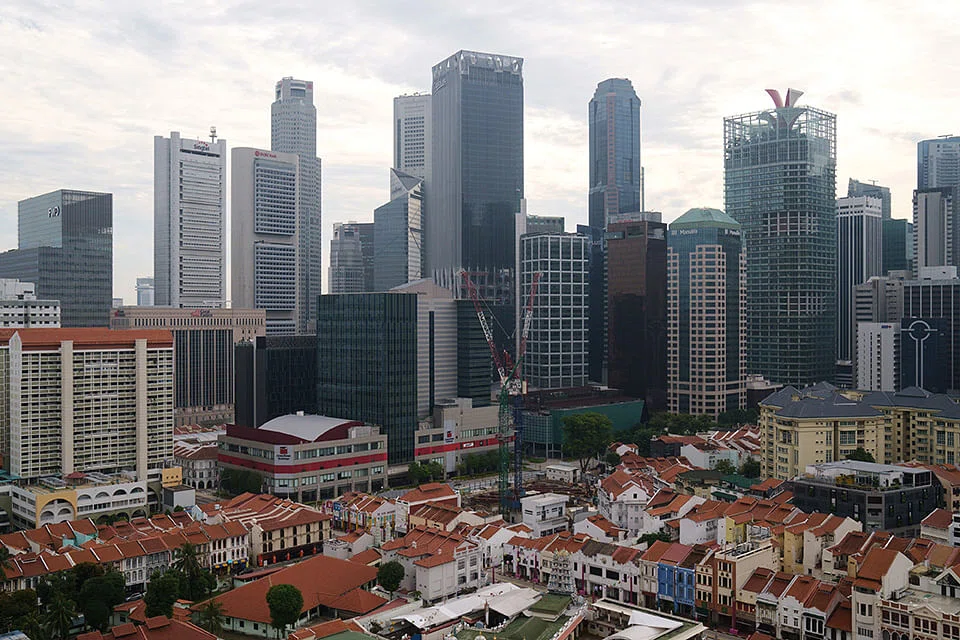
ANOTHER year has passed without a Singaporean winning the Sveriges Riksbank Prize in Economic Sciences, also known as the Nobel Prize in Economics. That keeps the Singapore streak alive: It has been 53 years since the prize was first awarded in 1969, and none of the 90 recipients - in some years the prize has been shared - has been a Singaporean. To be fair, several Nobelists have had post-facto ties to Singapore. For example, Michael Spence, who shared the prize in 2001, held an MAS Term Professorship at the National University of Singapore in September 2011, and Thomas Sargent, who shared the prize in 2011, taught at the Singapore Management University (SMU) between 2015 and 2018.
Moreover, Singapore is currently chock-full of distinguished economists. A number of economists based in the country are fellows of the Econometric Society, and econometrician Peter CB Phillips, one of the most cited economists in the world and a potential Nobelist, has long been affiliated with SMU. But still no Nobelist notch on the Singaporean belt - yet.
Although a few Nobelists have worked in economic history and in applied fields - development economics, most notably - the vast majority have been academic theorists and methodologists, and none has been known primarily for his or her activity in the public policy realm. Indeed, if people responsible for crafting effective economic policy were seriously considered by the prize committee, there would likely be no need for this piece, for the judges would almost certainly have chosen a Singaporean or two by now. Given the exceptional performance of the Singapore economy over the first 30 or 40 years after independence, how could they not?
Think about it for a moment. Although the simple "Third World to First" story, which depicted Singapore as a ramshackle colonial port town on the eve of independence, has been subject to considerable modification by scholars in recent decades, no one denies the fact that Singapore faced many serious economic challenges in 1965 nor that the economy performed extraordinarily well in the decades thereafter.
EMERGING ECONOMY
Cast adrift suddenly in a dangerous neighbourhood, Singapore in 1965 could best be described not as desperately poor - in Asia, only Australia, New Zealand, Brunei, Japan and Hong Kong ranked higher in per capita gross domestic product (GDP) - but as what would now probably be termed an emerging economy, one with some real assets, but with a plethora of problems. While GDP per capita in nominal terms was in fact a little over US$500 in Singapore 1965 (US$516) - placing the new nation behind Jamaica (US$553), but a bit above Jordan (US$511) and Mexico (US$495) - when recalculated in PPP (purchasing power parity) terms, GDP per capita was much higher: US$5,034 in 2005 international dollars. This said, with independence, both the economy and the country itself were on shaky ground.
At the time of its split with Malaysia, Singapore faced many challenges. Obviously, the newly independent country was tiny and its domestic market minuscule. Food, energy, and water had to be brought in from outside, there was little manufacturing, and only about 60 per cent of adults were literate (fewer than 43 per cent of females).The unemployment rate was about 9 per cent, the supply of housing was inadequate, and the country was riddled by ethnic and social strife, the two major "race riots" involving Malays and Chinese in 1964 being cases in point.
To be sure, Singapore had a terrific geographic location, which helps to explain its emergence as a major trade entrepot under the British, and at various points in time before 1819. But its status as a trading centre was endangered both by its fragile independence and by the British decision in 1967 to shut its military base on the island, which not only threatened Singapore's security in a tough neighbourhood, but also proved a shock to the local labour market and endangered Singapore's entrepot trade.
But, as is well known, Singapore, facing long odds, didn't just survive, but flourished over subsequent decades, creating one of the most dynamic and successful economies in the world. Growth in the quarter century after independence was particularly rapid, averaging more than 9 per cent annually, but the annual growth rate for the entire 50-plus years from 1965 through 2017 was still robust at 7.4 per cent. By the latter year Singapore was not only a "First World" country - as Lee Kuan Yew famously noted in the title of the second volume of his autobiography published in 2000 - but one of the wealthiest nation-states in the world.
By 2020 Singapore ranked second in the entire world in GDP per capita, measured in PPP terms in 2020. Although some economists believe that its ranking is inflated a bit by its status as a tax haven, no one questions the fact that Singapore is extremely wealthy and that its population enjoys one of the highest standards of living on Earth.
The rapid rise of post-independence Singapore owed a great deal to public policy. More to the point, absent the government's role in creating a stable and secure growth platform, in exercising macroeconomic prudence, and in devising and implementing economic and social strategies conducive to long-term development, Singapore's trajectory could have been far different. After all, many experts, circa 1960, believed that countries such as the Philippines, Burma, and Ceylon were better poised for growth than was the tiny island at the tip of the Malay peninsula.
This is not to say that the government's economic policies were perfect, nor that all of them were successful. The early dalliance with ISI (import-substitution industrialisation) is a case in point. But, by and large, the government and the principal policymakers and implementers in the first decades after independence deserve extremely high marks.
For starters, they stabilised the social setting via housing policies that significantly expanded home ownership, put into place a more consensual system of labour relations, and established Singapore's reputation as an honest and efficient state that upheld contracts and was friendly to private property. Moreover, after a bit of trial and error, they also found ways to jumpstart the economy.
How? In a nutshell, by leveraging Singapore's geographic position to excellent effect and committing the new nation to vigorous engagement with an expanding world capitalist economy. Initially, the strategy involved prudently investing monies derived from compulsory domestic savings, attracting FDI, improving infrastructure, and incentivising multinationals to set up manufacturing facilities in Singapore to take advantage of one of the country's assets: cheap labour. As time passed and capital - physical, financial, and human - was increasingly accumulated, Singapore's workforce became more skilled, the economy became (somewhat) more efficient, and the island nation's economic structure shifted towards higher value-added manufacturing (including oil refining), activities requiring more "brain work", and service-sector activities.
By the 1990s it increasingly possessed a "developed country" portfolio of advanced manufacturing, home-office business activities, and research and development (R&D), which activities are complemented today by advanced educational functions, biotech, high-end tourism, and activities subsumed under the acronym FIRE (finance, insurance, real estate).
Credit for Singapore's unlikely ascent is owed to many people, entities, and institutions. Broadly speaking, the PAP government - in power even before independence and still in power today - deserves praise for creating the overarching policy architecture and mechanism design under which Singapore came to flourish. That such architecture and design were marked by what Edgar H Schein has called "strategic pragmatism" underscores the fact that the PAP government and those that staffed the principal ministries, bodies, and boards (MOF, EDB, MAS, and others) responsible for economic policy were sufficiently open-minded, creative, and nimble to adjust successfully, often on the fly, to changing circumstances.
This institutional culture was inculcated and renewed by successive generations of governmental officials through what some economists and sociologists call "organisational learning", and the persistence of "strategic pragmatism" in the mindsets of public officials is not to be understated in considerations of Singapore's development narrative.
OUTSIZED ROLES
Within this culture, certain individuals played outsized roles, which roles cannot go unremarked upon. Although other policymakers made signal contributions - Lim Kim San and Howe Yoon Chong, for example - were there a Nobel Prize in applied policy economics, a very good case could be made that three men merit shares of the first award for their huge and varied roles in shaping and enabling Singapore's development: Goh Keng Swee, Albert Winsemius, and Hon Sui Sen, illustrious figures all.
Both Goh and Hon led numerous key governmental offices over the courses of their careers, while Winsemius, a Dutch economist, who initially came to Singapore in 1960 as part of a UNDP economic team, served as chief economic adviser to Lee Kuan Yew between 1961 and 1984. During that period he visited Singapore twice yearly on extended stays, and, when back in the Netherlands, continued his advisory role. Goh and Hon were natives of the Straits Settlements - Goh was born in Malacca and Hon in Penang - and both played key leadership roles in Singapore even before independence, and for decades thereafter.
Indeed, between the early 1960s and the late 1990s there were few economic policies and few economic institutions in Singapore that either Goh or Hon - or both, often working closely with Winsemius - did not powerfully affect. For example, Goh (who retired in the late 1990s) and Hon (who died in office in 1983) each served for a time as minister for finance and as chair of the Monetary Authority of Singapore (MAS), while Goh, who in 1972 won a prestigious international prize - the Ramon Magsaysay Award for public service - also served as minister of education and deputy prime minister, and was integral to the creation of the GIC and the DSO. For his part, Hon was also the first chairman of the EDB, and was closely involved in the establishment in 1968 of both DBS and Intraco.
See what I mean? It is difficult to envision how the robust long-term growth rates mentioned earlier - rates achieved without the quick gains possible by moving small-scale, under-employed, inefficient farmers out of agriculture as China has done over the past 40 years - could have come about without the key roles played by Winsemius, Goh, and Hon among others, all serving under LKY and other leaders of the PAP.
Members of the committee selecting the winners of the Sveriges Riksbank Prize in Economic Sciences, please take note. Applied policy work counts.
- The writer is Albert R Newsome Distinguished Professor of History and director of the Global Research Institute at the University of North Carolina-Chapel Hill (USA). He has lived and taught in Singapore and, before Covid, visited often.
Decoding Asia newsletter: your guide to navigating Asia in a new global order. Sign up here to get Decoding Asia newsletter. Delivered to your inbox. Free.
Share with us your feedback on BT's products and services
TRENDING NOW

Yeo’s, Tiger Beer and now Gardenia – flight of food manufacturing from Singapore might be just as planned
Not beyond compare: Genting Singapore’s weak hand is getting harder to hide

Johor property old hand KSL readies family handover amid market boom

DBS CEO Tan Su Shan ranks sixth globally on Fortune’s most powerful women list in 2026

