

Obama may need new spin on TPP
The US administration, which counted on Congress's backing for the trade promotion authority and the TPP trade agreement, is finding itself being forced into a political corner
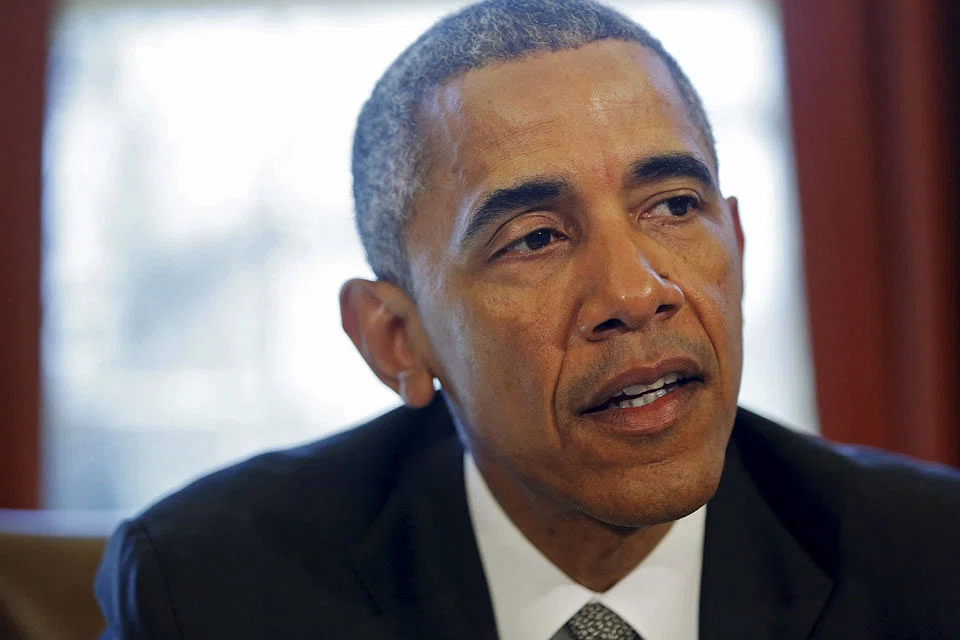
MOST Washington insiders had expected that by this time US President Barack Obama would have been granted the trade promotion authority (TPA, aka "fast-track" ) by Congress, allowing his administration to move ahead in concluding the negotiations over the 12-nation Trans-Pacific Partnership (TPP) trade agreement - the largest trade pact in history involving more than 40 per cent of the world's GDP - and bring it up for vote on Capitol Hill before lawmakers leave Washington for their summer recess in August.
You don't have to be a political expert or a trade analyst to figure out the reasons for the deadlines that the White House set for advancing its ambitious global trade agenda that includes, in addition to the TPP, a free trade accord with the European Union (EU), the Transatlantic Trade and Investment Partnership (TTIP).
It is expected that in the coming weeks, the leading potential presidential candidates - including Democrat Hillary Clinton and Republican Jeb Bush - would announce that they would be running for the White House in 2016, setting the stage for the presidential primary season that will officially commence early next year.
And everyone knows how this electoral game works. The voters who determine the outcome of the presidential primaries, especially in the states that vote first, like Iowa and New Hampshire, belong to the "base" of either party. They tend to be the kind of Republican or Democratic activists that adhere to ideological dogmas - members of the progressive wing of the Democratic Party and Republican Tea-Party followers - who notwithstanding their differences, share one thing in common: They tend to be suspicious of the political and economic "elites" and the globalisation process that Washington and Wall Street have been pushing forward in recent years, including free trade agreements that they regard as favouring Wall Street while hurting Main Street.
Progressives have been critical, in particular, of the power that the TPP would supposedly relegate to the multinational corporations while labour unions and consumer groups would be marginalised. Tea Partiers have been furious that the entire process allows the White House to determine the outcome of the trade negotiations while Congress is playing a secondary role. Hence it's not surprising that Democratic and Republican critics of the TPP are both worried that giving the president the TPA would prevent them from fixing the perceived flaws in the agreement and not even allow them enough time to read and understand it.
So the bottom line is that if the White House wants to get the TPP approved, it would need to do it before Progressives and Tea Partiers start flexing their muscles and forcing both parties and their presidential candidates to start moving in their direction on international trade, including on the TPP, and would be less disposed to giving President Obama the required TPA.
The result would be that many of those Republicans and Democrats who considered voting for the TPP would retreat and make it less likely that a vote on the TPA would take place before the 2016 congressional and presidential elections.
And there are growing concerns among supporters of the trade accord that that is exactly what would happen if the White House is unable to dominate the debate over the TPP sooner than later.
But the White House has failed to launch a forceful lobbying and public relations campaign in support of the TPP, the kind that it has been pursuing in trying to win public and congressional approval of the nuclear deal it has been negotiating with Iran.
Most Americans haven't been following the debate over the TPP (and the TTIP) that involves many technical aspects and that, in fact, has less to do with US competition and with imports of foreign manufactured goods into the United States - a topic that tends to ignite public interest - and more to do with getting US trade partners to adopt US-style intellectual property rules. To put it in simple terms: It's not so easy for the president to excite Americans by asking them to support his pledge to protect the interests of US pharmaceutical companies.
If anything, the Obama administration seems to have allowed the other side in the debate to get ahead of it on the issue of trade and is finding itself now playing defence.
The most recent example has been the leak of a key section of the negotiated TPP agreement to The New York Times (through WikiLeaks). The section of the TPP that was leaked was the "investment" chapter that included investor-state dispute settlement (ISDS) clauses that would allow foreign companies and investors to sue the US government for actions that were seen to undermine their interests. In practical terms, that would mean that these foreign companies would have the right to contest US government rules and regulations and even challenge court rulings before "tribunals" convened under the auspices of the World Bank or the United Nations (UN).
And according to the document, the companies and investors would also be able to demand compensation from the US government if the rules and regulations would prevent them from gaining "expected future profits".
POLITICAL AGENDAS
Opponents of the TPP on the political left and right were quick to take advantage of the leak and to spin the content of the document in a way that fits with their political agendas.
To progressive Democrats and other lawmakers and activists in President Obama's party, the leaks only helped confirm what they have been suspecting for a long time - that corporate interests (and not the promotion of free trade) have dominated the negotiations over the TPP.
Critics on the political left were furious when they learned that the tribunals that adjudicate these cases will be made up of private-sector attorneys who will rotate between serving on the tribunals and representing corporations that bring cases to be heard by the tribunals.
At the same time, many Republicans criticised the idea that these extra-judicial tribunals, operating under the supervision of the UN and the World Bank, could side with foreign-owned companies, and in what amounted to infringement of US sovereignty could use their authority to revoke rules and regulations that were adopted by US lawmakers on the national, state, and local level.
NEW MESSAGE?
At the end of the day, the Obama administration that counted on the backing for the TPA (and the TPP) by the majority of Republicans and more-than-expected Democrats in Congress is finding itself being forced into the political corner. It is facing the prospect of losing the support of quite a few Republican lawmakers; and it's still unable to draw more Democratic lawmakers to its side.
Hence the expectation in Washington that the White House may be forced to change its own spin on the TPP - instead of selling it as a agreement that would strengthen the American economy, it would now market it to Congress as part of a strategy to contain the economic and diplomatic power of China in the Pacific. The new message from the White House could be: Vote for the TPP - and strike a blow to China. Perhaps that would win the support of the majority of lawmakers.
TRENDING NOW

World’s largest offshore wind platform by Seatrium consortium on track to be completed by 2028

Is stamp collecting enjoying an analogue revival or are its best days over?

GovTech retrenches another 38 staff in second round of layoffs

MBS adjusted property Ebitda falls 20.6% in Q3 with fewer high-roller visits, weaker hold

