

Pandemic’s tapering brings opportunities for Singapore to attract global capital, talent
But Singaporeans must be willing to accept some uncomfortable truths
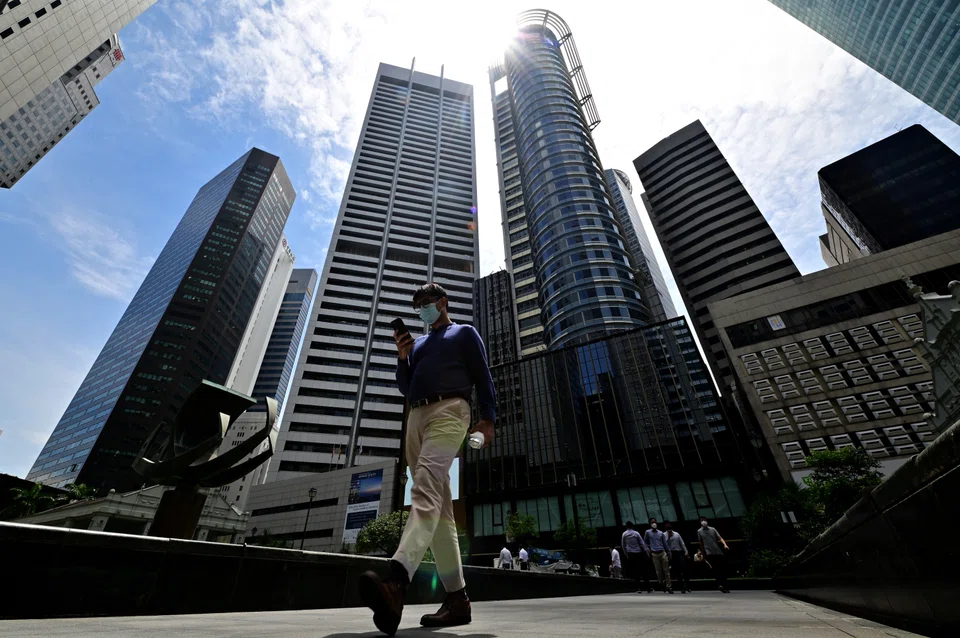

WE ARE at the pandemic’s tail end, and one of the last vestiges of the crisis – masks – have come off since Aug 29 (save in hospitals and on public transport). We have fared well, even by international reckoning. With few deaths from the virus, a high vaccination rate and a well-managed supply chain for essential goods and services, our nation is seen as a safe and secure place to weather future health emergencies, bring up families and do business.
Hong Kong used to be the principal Asian international financial centre, with Singapore a poorer cousin. Unfortunately, the political unrest in the Fragrant Harbour, plus its extended lockdown from the mainland’s zero-Covid policy, has corporates looking for alternative, or additional, bases for their capital and their listings in Asia.
Singapore has, at the same time, been working on enhancing its attractiveness. In capital markets, the Singapore Exchange (SGX) has rolled out initiatives to entice large corporates to list, or seek a dual listing, here. It also introduced a special purpose acquisition company (SPAC) regime ahead of regional markets, and has garnered 3 SPAC listings.
Private money has also received a red carpet reception. The Monetary Authority of Singapore (MAS) and the Economic Development Board established a family office development team to grow the sector. At end-2020, Singapore had an estimated 400 family offices. In the first 5 months of 2022, MAS approved more than 100 applications.
In June, the Financial Times reported that multibillion-dollar hedge funds, private equity firms and family offices from Asia, Europe and the United States are poised to move assets here, owing in part to the introduction of variable capital companies. It concluded that Singapore is providing stiff competition to low-tax jurisdictions amid concerns about the status of Hong Kong.
More recently, US Speaker Nancy Pelosi’s visit to Taiwan, and China’s subsequent strong negative reaction, soured Sino-US relations and heightened regional political volatility even more, adding a push for corporates and wealthy individuals in North Asia to look for a more secure location to park their assets and build their businesses.
Prime Minister Lee Hsien Loong, in his Aug 21 National Day Rally speech – Singapore’s version of a State of the Union address – announced more initiatives aimed at catapulting the country to new international significance. In addition to repealing Singapore’s anti-gay legislation (a law that was not being enforced in any event), which will signal the nation’s progressiveness, he reinforced Singapore’s position as a global city, including through new initiatives to attract foreign talent.
Challenges Singaporeans face
The picture appears rosy, but the transition to an international city will have herculean challenges.
First, we are still geographically tiny. Soon, 6 million residents will be rubbing shoulders and bumping bags on public transport. Increased demand for our limited real estate has already driven private residential prices up by 3.5 per cent in this year’s second quarter alone, with those in some parts of the central district up 6.4 per cent. More significantly, foreign money is snapping up prime property – which means that the new baby blue Bentleys and lime green Lamborghinis popping up in the choicest condominiums are driven by non-natives. This will lead to friction between the expatriate haves and the local have-less.
Second, the local workforce will face competition for jobs. The government’s new immigration policies will not favour expatriates over Singaporeans, but the optics of foreigners being given plum roles may nevertheless engender a visceral negative reaction.
Third, there are concerns over Housing & Development Board (HDB) flats coming to the end of their 99-year lease. With 80 per cent of Singaporeans living in subsidised public housing, and a quarter of the population being 65 years or older by 2030, many will be worried about this most important of all brick-and-mortar issues. The prime minister has promised continued access to affordable housing, in addition to existing schemes such as the Voluntary Early Redevelopment Scheme, but until details are announced, the falling lifespan of their leases will continue to worry the generations who built their assets on the store of value in their HDB homes.
Coupled with a runaway cost of living, these developments may be hard for some Singaporeans to accept.
We can embrace the prime minister’s vision of becoming a global city, or we can let others overtake us – leading to our economic irrelevance. So, the choice we face is thus not a choice at all.
Charting the way forward
Pursuing this vision is not without its risks. Having foreigners snap up all our best real estate and top jobs, without developing a vibrant economy for all to share, would be undesirable. It would hollow out our community.
Our response must be a robust and a bold one.
The vision requires us to put the building blocks in place, starting with accepting that being a thriving economy will involve frictions, inconveniences and stiffer competition for the best jobs. Our country will be a mishmash of multiple cultures and languages. Instead of just tolerating it, we should be proud that our multicultural history has prepared us to welcome residents from foreign lands. Walk on the streets of international cities such as New York and London and you will feel the energy that a dynamic and ever-changing populace brings.
We have no natural resources, save for our human capital. While we continue to build on our book smarts and leverage our access to the best education our strong dollar can buy, we must also tap the clear-eyed resilience built on our early years of being an underdog and be forward-looking.
That doesn’t mean being a doormat. If we perceive unjust treatment, say where a job has been unfairly given to a foreigner, we must feel empowered to call this out, rather than grumble in coffee shops or private chat groups.
As a highly digitalised society, with access to accurate and immediate information on latest developments, we must be alive to changes in the business environment and re-tool ourselves accordingly.
The government needs to partner us in these efforts. To be a world-class capital market, SGX needs more support, both in liquidity and in a more aggressive enforcement arsenal. We should also support worthy local businesses and quit the colonial hangover of “foreign is better”. Schools must continue pushing an innovative and risk-taking agenda even as they impart traditional academic teachings. Government aid in upskilling the workforce should be ramped up and applied in a targeted way for optimal outcomes.
In addition, we have to address gaps and stress points in our society, starting with the role of women in the home and in the workplace, to ensure they are as economically productive as possible. Women hold up half the sky, but they do a whole heck of a lot more of the housework and child-rearing.
The world is at an inflexion point. The centre of gravity is moving towards Asia, and specifically South-east Asia. Singapore needs to capitalise on our advantages now, while the world is still recovering from multiple crises. If we are successful, we will face a new set of challenges, including navigating the evolving geopolitical landscape and pressure from superpowers. But that is a problem for another day.
The writer is joint managing partner, TSMP Law Corp.
TRENDING NOW
Government to bring forward raising of retirement age, give employers more financial support to create flexi-load jobs

Indonesia stocks suffer worst plunge in nearly 30 years as MSCI proposes standalone status

If Europe goes to war, the fallout will be felt in East Asia
Natural gas to stay for the long haul beyond 2050: Singapore International Energy Week panellists

