

People understand statistics better than politicians think
 Add BT as a preferred source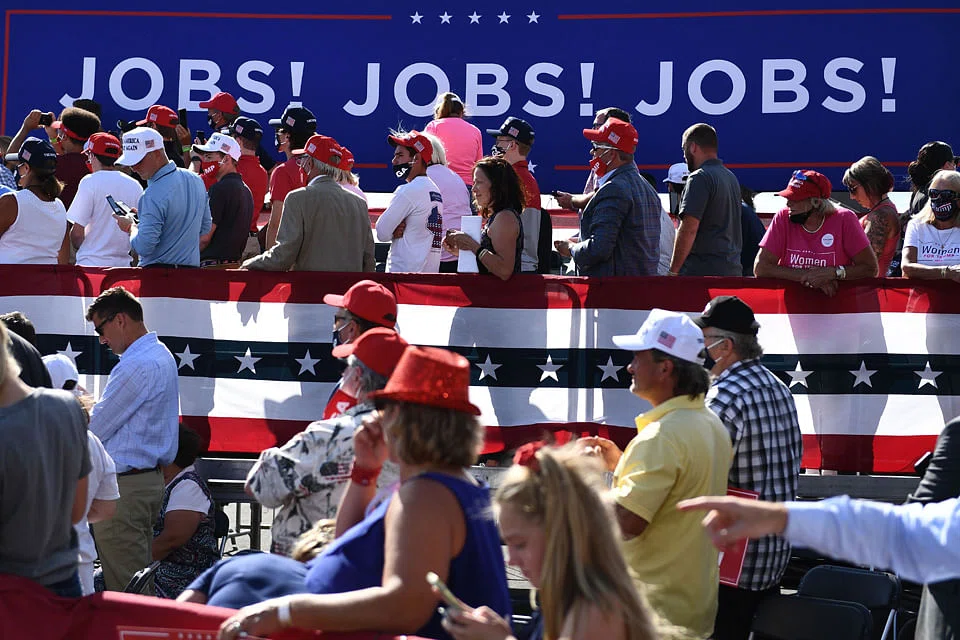
IN 2015. I took my reporter's notebook to Liverpool because statistics suggested it was enjoying a jobs boom. The unemployment gap between the northern English city and the national average had shrunk to the smallest in a decade. When I mentioned that fact to people I met, I might as well have said the grass was pink.
"It's certainly not our experience, I would say I've never seen poverty at this level," was the response from the director of the local Citizens Advice Bureau. A woman who ran a small cake business said: "My cynical side thinks straight away they've probably got zero-hours contracts somewhere - (they) are a great way of cooking the books."
I thought of that trip when I read a newly published study that uses an in-depth survey and focus groups to delve into the British public's understanding of economics. The headline findings are bleak. Large parts of the public have misperceptions about how economic concepts such as the unemployment rate are measured and they are "sceptical and cynical" about data.
One obvious response would be to blame inadequate education and worry that economic ignorance allows people to be duped by demagogues such as Nigel Farage in the UK and Donald Trump in the US.
Economic literacy classes in schools would certainly be a good idea, especially since most of those surveyed were "deeply interested" in the economy and regretted not understanding the details. But there is more to this story. The public live and breathe the economy every day. If their first response to a statistic such as the unemployment rate is to say "that doesn't feel right" (a common response in the focus groups) then perhaps it is the economists who are missing something.
Johnny Runge, lead author of the study for the Economic Statistics Centre of Excellence, said he found "people are really insightful in their understanding of the modern labour market. They understand the boundaries between employed and unemployed are blurred and have changed a lot. They start to question: Are these blurred lines captured in the statistics?"
Navigate Asia in
a new global order
Get the insights delivered to your inbox.
The official definition of unemployment only counts those who are out of work, looking for a job and available to start in the next two weeks. Most people surveyed did not realise that others who do not work (such as students, stay-at-home parents, and those who have given up job-hunting) are labelled "economically inactive" instead. Meanwhile, people who only work two hours a week are classed as employed, something the focus groups questioned: "Half an hour a day and Fridays off. To me that means unemployed," said one participant. "My criteria would be that they cannot possibly live on two hours' pay a week, so they're not employed," said another.
There was a sense among many participants that "a job" should mean "something you can live on". This helps explain the disbelief I was met with in Liverpool, where many of the new jobs were precarious and low paid. The advice bureau I visited had referred 667 people to free food banks in the previous year, of whom 319 were in work.
The public is correct that headline unemployment rates can underplay the severity of problems in labour markets. Last Friday, for example, the US unemployment rate fell from 6.9 to 6.7 per cent, but this was because a large number of people "dropped out" of the labour force statistics because they were not looking for work. In 2017, economists at the European Central Bank created a new measure of "labour under-utilisation", which included the underemployed and those who had become discouraged from job hunting. It was nearly twice as high as the unemployment rate in the euro zone.
MEASURE ACCURATELY
The lesson for economists here is not to tear up official statistical definitions, which exist for good reasons and are internationally comparable. It is to explain clearly and carefully what they do and do not mean, every time they are used (and that goes for journalists as well). It is also to measure accurately and report frequently on the trends that matter deeply to the public, such as the quality and stability of jobs.
Politicians could learn something, too. Cherry-picking the best statistics for their speeches does not persuade the public that all is well; it persuades them that they are being lied to. It is this disconnect between what people are told and what they see and feel all around them that makes them angry with elites and suspicious of experts. This is fertile ground for populists to exploit.
The public needs to understand economics better for democracy to thrive, but that is not enough. Economists need to understand the public better, too. FINANCIAL TIMES
Decoding Asia newsletter: your guide to navigating Asia in a new global order. Sign up here to get Decoding Asia newsletter. Delivered to your inbox. Free.
Share with us your feedback on BT's products and services
TRENDING NOW

Middle East-linked energy supply shocks put Asean Power Grid back in focus
Strengthening Asean’s economic resilience through RCEP’s 2027 review
How China’s young workers are securing their future even as AI disrupts job market, triggers pay cuts

US-China rivalry and the Kindleberger Trap: Why inaction – not escalation – is the biggest risk

