Port expansion critical - for both maritime sector and Singapore
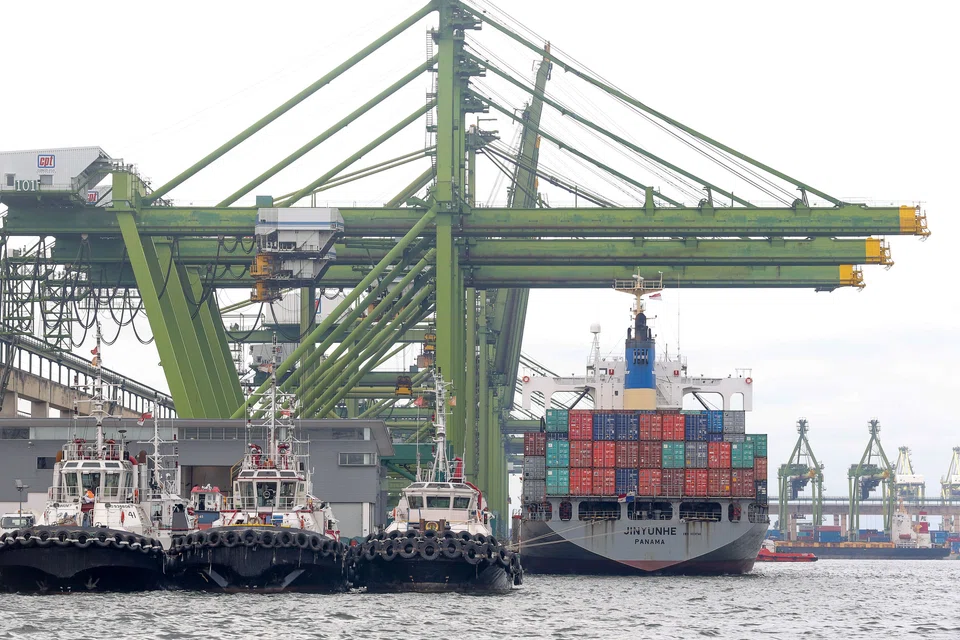
THE S$3.5 billion expansion project of Singapore's Pasir Panjang container terminal, which commenced on Tuesday, was a significant milestone, one that has been 10 years in the making. But even as the 15 new berths will add up to 15 million containers a year to Singapore's handling capacity from 2017, work on a bolder plan - to consolidate all of Singapore's port activities at a mega port in Tuas from 2027 - has already begun.
Indeed, while the island's geographical location made it a natural regional entrepot back in the 1800s, much foresight and deliberate investment calls have gone into Singapore's development since into a global port. These include the 1960s decision to build the first container port in South-east Asia, introducing an electronic system in the 1980s, deciding to expand the port beyond Tanjong Pagar to Pasir Panjang and then to expand Pasir Panjang again - with berths to serve ever-larger containerships. But the Tuas mega-terminal will be something else altogether. Certainly, the plan is to raise port capacity here further to 65 million containers or twenty-foot equivalent units TEUs - close to double what Singapore's port handled last year. But as it is being built from scratch, advanced technology, data analytics, autonomous vehicles and green technology will all be brought in to change the way the port is run, sharpening its competitiveness - and Singapore's. The government has laid out clear, bold plans. But it can and should do no less, given how essential the port is to Singapore's economy and how the many elements that could whittle down this advantage lie firmly out of Singapore's control. As Prime Minister Lee Hsien Loong put it on Tuesday, Singapore would "literally be sidelined" if it were not a major port, connected directly to the world's other major ports. "Because of the success of our port, the world is highly connected to Singapore and we are very integrated into the world," he said.
This cannot be taken for granted. Global warming and the North Pole's melting ice-caps are opening up new sea routes for ships that could erode Singapore's relevance as a global seaport - not to speak of the threat that rising sea levels pose to this low-lying island. Which is why Singapore applied for, and was granted, permanent observer status at the Arctic Council in 2013, along with China, India, Japan and South Korea.