

Powell strikes reassuring note as Fed takes worst-case scenarios off table
ROB CURRAN
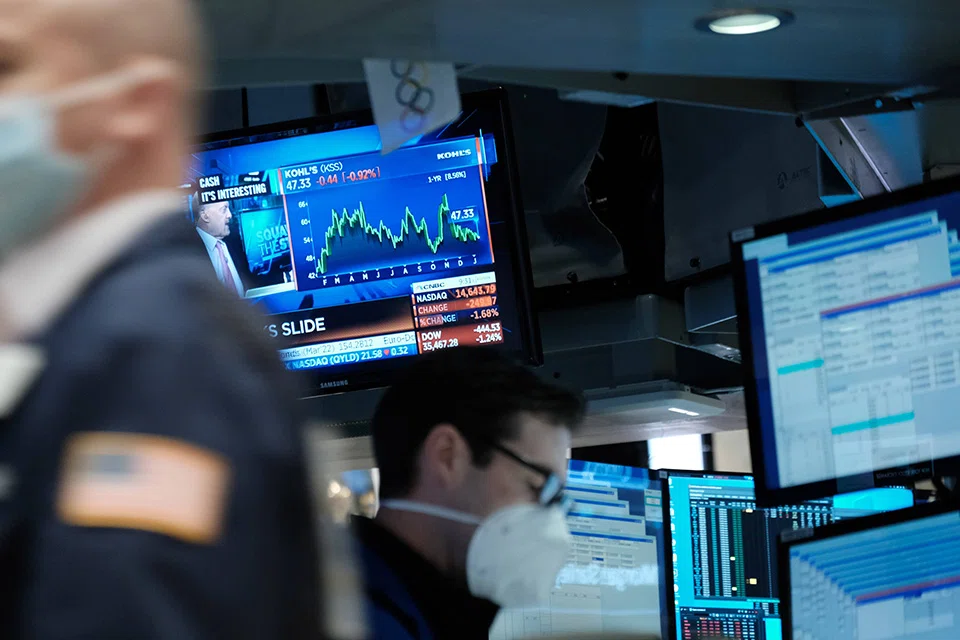
THE United States stock market surged on Wednesday after the US Federal Reserve’s near-nightmare policy decision stopped just short of a worst-case scenario.
The Dow Jones Industrial Average rose by more than 930 points and major indexes jumped by the most in 2 years, after the Fed hiked interest rates by 50 basis points – the first time since 2000 for a hike of that scale – but said an even bigger 75-basis-point hike was not on the table.
Underscoring the urgency of its inflation fight, the central bank also outlined a plan to begin selling off bonds in initial US$47.5 billion monthly increments to shrink its US$9 trillion balance sheet.
Before this 2.8 per cent rally, the Dow was down about 10 per cent for the year to date.
Federal Reserve chair Jerome Powell took a reassuring tone for the first time in months, arguing against the doomsayers. He vowed to fight inflation to the death, and warned there was a strong feeling at the Fed that more bumper half-point increases will have to be considered in the next two meetings, as part of the “expeditious” response. But he also sounded sanguine on economic prospects, countering arguments that recession was now inevitable.
Powell had confirmed gloomy market speculation when he pivoted abruptly to rate hikes in December, and again when he warned of a half-percentage point hike in April. This time, he threw cold water on the idea of a three-quarter-of-a-percentage point hike, which had been priced into Fed funds futures markets.
The Fed chairman seemed determined to project an image of a central bank that, far from letting events get ahead of it as critics had alleged, had its finger on the pulse and a plan of action in train.
Powell “introduced another facet to the press conference, and that is drawing in the average American”, said Quincy Krosby, chief equity strategist at brokerage LPL Financial. “He made some comments directly to the American people.”
"Inflation is much too high, and we understand the hardship it is causing," Powell said, looking earnestly into the camera in a manner more typical of a US president.
The inflation flames were sparked by the snapback in demand from pandemic lows in 2021, then fanned by supply-chain shortages. The price wildfire burned out of control when one of the world’s largest energy producers – Russia – invaded one of the world’s largest food producers – Ukraine.
Consumer price inflation is now running at 40-year highs, “with lingering upside risks from the Russia-Ukraine conflict and the lockdowns in China, and an extremely strong labour market”, as economists at brokerage Bank of America Global Research noted.
Powell pushed back on claims that the central bank had allowed the blaze of inflation to burn too long last year before acting, making it almost impossible to get under control before whole sectors of the economy burn down.
To be effective against inflation, some economists say the Fed will have to tighten credit to levels so restrictive that mortgages and other loans will become unaffordable, bringing the pandemic housing boom to a painful end.
Powell argued that the strength of business expenditure and consumer demand should enable the economy to absorb rate hikes without undergoing a recession. There would likely be a “soft, or softish” landing, he said, in a press conference following the policy statement.
But he acknowledged it would be a tricky situation to navigate, and the unusual qualification “softish” suggested the risk of a Fed-induced recession remains. As LPL Financial's Krosby put it: “His position seemed steadfastish.”
Energy prices surged again Wednesday after the European Union unveiled a plan to ban Russian oil imports. The war in Ukraine is still horrific, and still disrupting global food and fertilizer supplies. Earnings reports suggest another round of chip and component shortages are hurting results.
There are still plenty of things for equity traders to worry about. Yet maybe, for a meeting or two at least, the Fed is no longer one of them.
“We believe the Fed has pivoted to an appropriately hawkish stance and is likely done surprising markets for a while,” said the economists at Bank of America Global Research, in a note to clients. "We recommend focusing more on the data flow going forward, especially around labour and inflation.”






