Pressure is on new Mapletree Reit to shine, given financial hit for its sponsor in the merger

Leslie Yee
BACKED by its strength in managing listed real-estate investment trusts (Reits) and private real-estate equity funds, Temasek’s privately held Mapletree Investments has consistently achieved return on equity (ROE) in excess of 10 per cent — outperforming many listed property groups.
Mapletree posted net profit of S$1.96 billion for the financial year ended Mar 31, 2022, up 6.2 per cent year on year. The group delivered a record year of recurring earnings at S$810.2 million, up 27.9 per cent from the previous financial year.
But Mapletree appears to have hit trouble with the merging of Mapletree Commercial Trust (MCT) and Mapletree North Asia Commercial Trust (MNACT) via a scheme of arrangement.
While the proposed merger received approval from unitholders of MCT and MNACT, Mapletree looks to be taking a big hit financially, as MCT’s unit price has fallen since the announcement of the proposed merger on Dec 31, 2021.
Mapletree’s pain
At the time of the announcement of the proposed merger, Mapletree held stakes of 32.6 per cent in MCT and 38.1 per cent in MNACT.
MCT’s unit price has fallen 8.5 per cent since the merger announcement: from S$2 as at Dec 27, 2021, to S$1.83 as at Jul 13 (Wednesday). This means a lower value of Mapletree’s stake in MCT.
Over the same period, the unit price of large-cap commercial Reit CapitaLand Integrated Commercial Trust (CICT) rose 6.5 per cent.
The proposed merger has MCT buying all the units of MNACT for a consideration of either all scrip (being new MCT units), a mix of scrip and cash, or all cash.
Under the all-cash option, MNACT’s unitholders will receive S$1.1949 per MNACT unit held. This is superior to MNACT’s unit price of S$1.11 pre-announcement.
Mapletree will take the scrip-only consideration of 0.5963 new MCT unit per MNACT unit held. Based on MCT’s unit price on Jul 13, this translates into a value of just over S$1.09 per MNACT unit held. Thus, Mapletree sees value erosion on its MNACT stake relative to the value pre-announcement.
MCT is making a preferential offering — open for application between Jul 12, 2022 and Jul, 20, 2022 — of nearly 1.02 billion units at S$2.0039 per unit to raise S$2.04 billion for the cash component of the scheme consideration. Mapletree is undertaking to subscribe for up to the entire preferential offering.
Based on where MCT is trading, possibly hardly any unitholders, besides Mapletree, will subscribe for the issue. Based on MCT’s unit price of as at Jul 13, 2022, Mapletree may lose as much as S$177 million from taking up new MCT units under the offering.
Overall, Mapletree may be taking a hit of over S$380 million from the creation of the merged entity — to be named Mapletree Pan Asia Commercial Trust (MPACT).
Perhaps the legacy of MPACT’s birth is to sound the death knell on Reit mergers.
The equities market could be giving a thumbs down to Reits consolidating, despite arguments that greater scale brings benefits, such as more following by institutional investors, higher debt capacity, better portfolio diversification and more competitive funding.
Whether Mapletree’s support in the birthing of MPACT pays off, and how investors take to future mergers among Reits, will hinge on how MPACT performs operationally and in the stock market.
Room for optimism
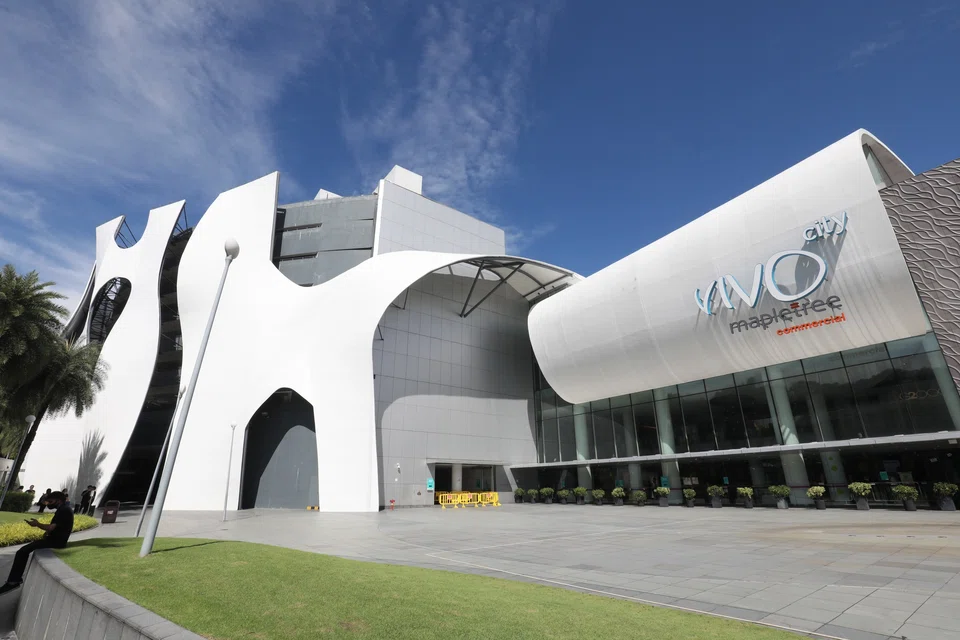
Despite its difficult birth, MPACT may flourish. Its portfolio will include best-in-class Singapore assets such as Mapletree Business City and VivoCity, which should benefit from the flight to quality in the Singapore commercial property space. These assets sit in the heart of the Greater Southern Waterfront, which will transform into a new major gateway and location for urban living along Singapore’s southern coast.
The outbreak of the Omicron variant of Covid-19 in January led to the authorities in Hong Kong imposing unprecedented restrictions on social activities to slow the spread of the virus. But these restrictions have since been relaxed. Prospects are therefore better for the retail-centric Festival Walk in Hong Kong’s Kowloon Tong, which will be a key asset in MPACT’s portfolio.
MPACT will have over S$17 billion of assets under management and is set to be among Asia’s 10 largest Reits by market capitalisation. The trust will have exposure to 5 Asian gateway markets, namely Singapore, Hong Kong, China, Japan and Korea.
MPACT’s focus on Asia arguably makes more sense than the geographic mix of bigger pre-dominantly commercial Reits such as CICT and Hong Kong-listed Link Reit. CICT’s property portfolio is spread across Singapore, Germany and Australia, while Link owns assets in Hong Kong, China, Australia and the United Kingdom.
Focusing on major Asian cities can bring greater operational synergies for MPACT. Perhaps there are synergies from serving retail tenants in Singapore and Hong Kong, and sharing best practices between the 2 markets.
Also, investors who seek a commercial property proxy in Asia may be drawn to MPACT.
The merged entity will pay its manager using a formula that pegs the management fee to distributable income and distribution per unit (DPU) growth. Investors will likely be happy that the manager’s interest is directly linked with growing DPU, as long as the manager pursues such growth without taking on excessive risks.
The stakes are high. MPACT’s manager needs to work the assets hard and passionately push its investment story so that its unitholders, including Mapletree, can prosper. Do a great job, and more Reit mergers may follow.
The door may not be shut on a potential merger of Mapletree Industrial Trust and Mapletree Logistics Trust.
The writer owns units in MCT.