

Problem with analysing the 'Obama Doctrine'
His critics have yet to explain how they would have dealt with foreign policy challenges, except by recycling parts of the bankrupted Bush Doctrine and sounding even more confused
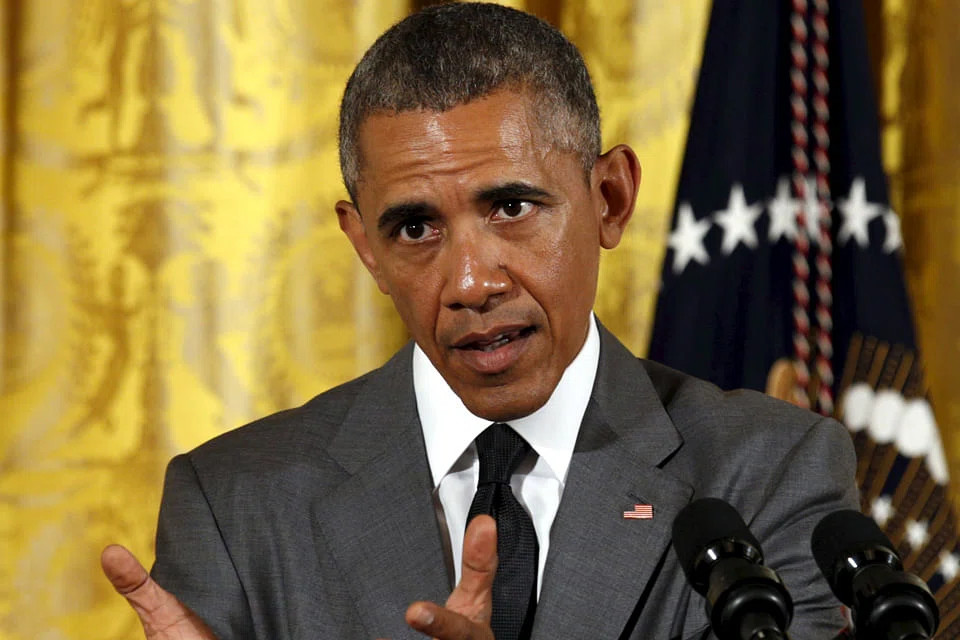
POLITICAL scientists have embraced the notion that every modern American president had a foreign policy "doctrine". Some of the most famous include the Truman Doctrine, the Nixon Doctrine, the Reagan Doctrine and, more recently, the Bush Doctrine.
We seem to take it for granted that every US president has had a unique and coherent foreign policy strategy that reflected his perception of American national interests and the country's place in the world, and that, in turn, was a product of his vision of history and personal temperament.
A foreign policy doctrine aka Grand Strategy "assumes certain national goals, ends, or interests", identifies "existing challenges or threats to those interests", and "selects and recommends the particular policy instruments or means by which challenges are met and national goals pursued", according to George Mason University professor Colin Dueck. Which bring us to the question: Applying the above definition to President Barack Obama's foreign policy during his two terms in office, is there an Obama Doctrine?
Or to put it in more concrete terms - Is there a conceptual framework that brings together and explains the following policies: the US drone strikes; the ousting of Libya's Muammar Gaddafi; the decision not to intervene in the civil war in Syria; the evolving nuclear deal with Iran; the US response to Russia's invasion of Crimea; the "pivot" to East Asia? Or perhaps Mr Obama doesn't think about foreign policy in strategic terms and just muddles through from one international crisis to another?
Asking whether there is or isn't an Obama Doctrine goes beyond the debates in Washington's think tanks. Against the backdrop of the two recent major military victories by the Islamic State in Iraq and Syria (ISIS) - taking over Ramadi, the capital of Iraq's Anbar province, and Palmyra, a key strategic city in Syria - there seem to be growing concerns in Washington that American foreign policy is now in a mess.
The world no longer trusts the United States to exert its will in international politics and America's adversaries are asserting themselves and challenging the US, critics contend. And they suggest that the current White House occupant is responsible for that.
The tendency among these critics, especially among Republicans, is to propose that if you want to know why the US is losing control over events in the Middle East or is supposedly "appeasing" Iran, Russia or China, just analyse the Obama Doctrine, which is alive and well and explains everything that is wrong with American foreign policy. Indeed, one of these critics, Prof Dueck, in his new book, appropriately titled The Obama Doctrine (not followed with a question mark), makes exactly that argument, that Mr Obama does indeed have a grand strategy. And as he puts it, that strategy "is one of overarching American retrenchment and accommodation internationally, in large part to allow the president to focus on securing his liberal policy legacies at home".
Prof Dueck and other conservative critics suggest that Mr Obama's personal disposition and political convictions have shaped a quite coherent foreign policy doctrine that puts emphasis on international gestures and goodwill, combined with the gradual retrenchment of America's military power abroad, accommodation of international rivals and focus on domestic goals.
The result, according to the critics, is that leading international powers such as China, Russia and Iran, as well as the ISIS, have interpreted the Obama Doctrine as one of US disengagement from the world, creating a power vacuum that they are trying to fill.
WEST POINT SPEECH
There are many problems with this analysis, the chief one being that Mr Obama has never stated that his foreign policy goals were that of retrenchment and accommodation so he could focus resources and time on domestic programmes. In fact, he never suggested that he even has a grand strategy a la Obama Doctrine.
The closest that Mr Obama came close to enunciating a "doctrine" was at the start of his second term in office, when he delivered a commencement speech at West Point that aimed to lay out his foreign policy vision. What he said amounted to a challenge to the Bush Doctrine or the grand strategy of his Republican predecessor in office, which was based on the assumption that the US had the right and the obligation to take unilateral pre-emptive action against those who were perceived to challenge its national security.
In many ways, the Bush Doctrine violated traditional American foreign policy principles and ended up serving as basis for one of the worst strategic disasters in American history. In his West Point speech, Mr Obama basically argued that he would re-embrace the foreign policy principles that have guided all the US presidents in the post-1945 era with the exception of his Republican predecessor.
"When issues of global concern do not pose a direct threat to the United States, when such issues are at stake, when crises arise that stir our conscience or push the world in a more dangerous direction but do not directly threaten us, then the threshold for military action must be higher," Mr Obama told the graduating cadets at West Point. "In such circumstances, we should not go it alone," he stressed. "Instead, we must mobilise allies and partners to take collective action."
This set of principles - a more judicious use of military force and instead a reliance more on diplomacy and US alliances - didn't amount to a full-blown doctrine, but more of a repealing of the Bush Doctrine. That followed the four years during his first term in office when Mr Obama was trying to clean up the mess that George W Bush and his advisers had made in Iraq and the Middle East, and to repair relationships with governments around the world.
Supporters of Mr Obama may approve of the flexible and pragmatic - or non-doctrinaire - qualities of his foreign policies in general, and in particular of his response to civil war in Syria, the Russian incursion and China's territorial disputes with its neighbours. At a time when the international system was going through major changes and the American public expressed opposition to new US military deployments, his efforts to resolve the crises in Syria and Ukraine - as well as the nuclear crisis with Iran - through diplomatic means seems to be cost-effective in terms of US interests.
But then less than a month after the West Point address, Mr Obama began sending military advisers to assist the Iraqi army as Islamic militants seized the Iraqi city of Mosul and began moving closer to Baghdad. He also ordered US air strikes to stop the ISIS advance and, after the group beheaded American journalist James Foley, he called for a "common effort to extract this cancer".
MAIN WEAKNESS
And here lies the main weakness with the Obama Non-Doctrine. When the policy tends to be mostly reactive as the president adjusts his strategy in response to events, some perceive his approach to be confusing and haphazard, which could send the wrong message to both friends and foes that wonder whether the leader of the only remaining superpower knows what he is doing.
Mr Obama could be faulted for failing to enunciate his foreign policy goals in a more a coherent way and to explain some of the contradictions between some of his policies. For example, he could have made it clear that one of the reasons he has resisted being drawn into a new war in the Middle East has been his commitment to shifting the US geo-strategic focus to East Asia. That is clearly not a sign that he is disengaging from world affairs.
But his Republican critics denouncing his non-existent doctrine have yet to explain how they would have dealt with the foreign policy challenges facing the US, except by recycling parts of the bankrupted Bush Doctrine, and sounding at times even more confused than the president.
TRENDING NOW

JPMorgan, BlackRock among those making bid to manage CPF savings
Asean’s biggest trade problem is no longer tariffs. It is friction

As Indonesia picks new vice-president to succeed Gibran, investors see risks and opportunities

US chips curb could slow down Asean data centre growth; Malaysia, Thailand at higher risk: analysts

