

Race to become UK’s next prime minister has an ‘Alice in Wonderland’ feel to it
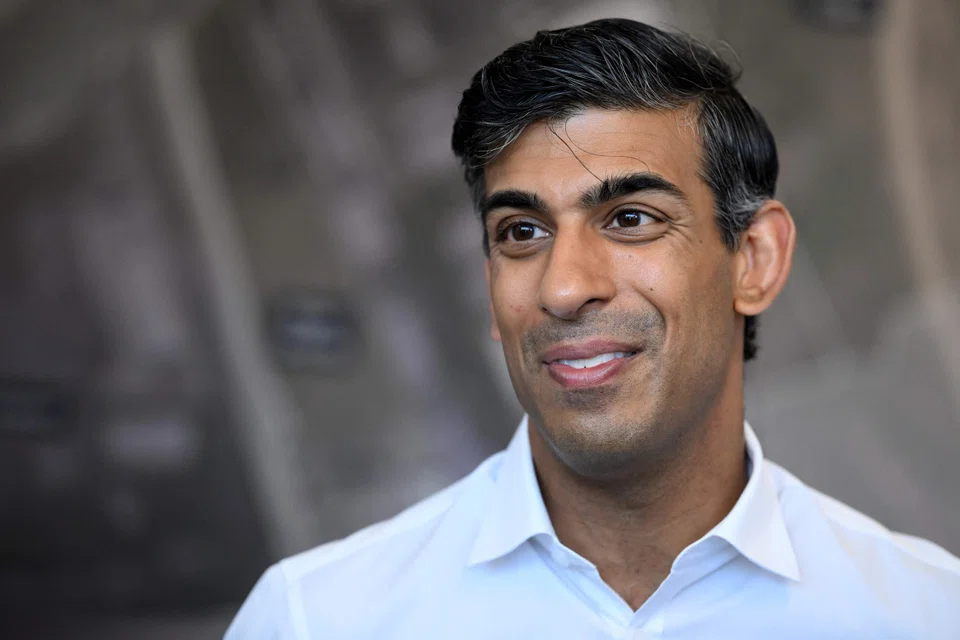
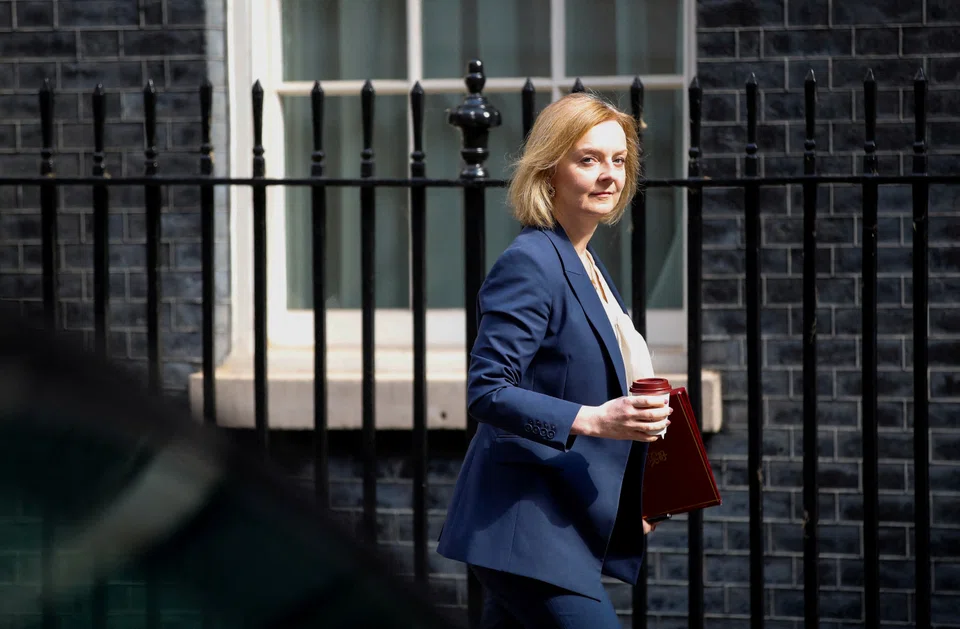
BRITISH Conservative MPs on Wednesday (Jul 20) selected the final 2 candidates in the race to replace Boris Johnson as prime minister, with the contest having an “Alice in Wonderland” fantasy land feel about it.
Foreign Secretary Liz Truss (a “Remainer” in the 2016 Brexit referendum) is seen as the “continuity candidate” to Johnson by the latter’s supporters. Meanwhile, former chancellor of the exchequer Rishi Sunak (a long-time Brexiteer who was formerly Johnson’s closest ally) is now being criticised by some Conservatives, especially friends of the disgraced premier, as being too left-wing.
The Conservative leadership contest has 2 phases. The first, which has now ended, was when the party’s MPs decide which 2 candidates should reach the final stage from an original cast of 11. On Wednesday, Sunak won 137 votes while Truss secured 113. Penny Morduant, a junior trade minister and former defence secretary who bagged 105 votes, was eliminated.
Now, the party’s less than 200,000 membership will make the final choice before the winner is announced on Sep 5. The Conservative members, which amount to about 0.3 per cent of the UK population, are disproportionately old (44 per cent are over 65), white (97 per cent), and geographically skewed toward London and Southern England (54 per cent). The fact that this is not very representative of the UK population makes the result even more unpredictable.
Unlike in 2019, when Johnson was the clear favourite to win the Conservative leadership from start to finish, there is still no overwhelmingly strong frontrunner in 2022. While Sunak has won the most support from Conservative MPs, various polls indicate that he could get beaten by Truss now that the wider party membership gets to vote. As such, the result is too close to call.
In 2 of the 3 Conservative leadership elections that got as far as a ballot of party members in recent decades, the candidate who won the most votes among MPs eventually went on to win the membership vote. The most recent example was in 2019, when the final ballot of MPs ended with Johnson in front on 160 votes (51 per cent of the total, far higher than Sunak in 2022), while then-foreign secretary Jeremy Hunt won 77 (25 per cent) and then-environment secretary Michael Gove won 75 (24 per cent).
There was a similar pattern in 2005 when David Cameron came top of the final ballot of MPs with 90 votes (45 per cent). He was followed by David Davis on 57 (29 per cent) and Liam Fox on 51 (26 per cent).
The exception came in 2001, when former finance minister Ken Clarke won the most votes among MPs but then lost the ballot of members to then-shadow defence secretary Iain Duncan Smith. The 2001 contest was notable for the close result of the final MPs ballot, in which Clarke won 59 votes (36 per cent), the lower profile Smith 54 (33 per cent) and former defence secretary Michael Portillo 53 (32 per cent). However, Smith then won the members’ vote with 61 per cent, with Clarke pulling in 39 per cent.
At this early stage, Truss is the modest favourite, but Sunak could definitely still win in the coming weeks if he outshines her in the upcoming leadership debates around the country. The winner will be revealed on Sep 5 after a postal ballot conducted by party members.
With the Conservative MPs broadly split in 3 broadly equal groups today, Sunak and Truss will now try to secure an endorsement from Mordaunt, who remains an influential figure among party members. Mordaunt is likely to receive a significant Cabinet role in the next Government.
So far, the leadership contest has hurt the national image of the Conservatives with significant intra-party infighting. The opposition Labour Party will also be relieved that an ‘outsider’ candidate like Mordaunt has not been selected as they would have had the most chance of ‘shaking up’ the political landscape in a way that Truss and Sunak may not be able to as established, senior Cabinet ministers for the last few years.
Labour has also been adding up the cost of the policy pledges of the Conservative candidates and claimed these amount to £330 billion (S$550.5 billion) of unfunded spending commitments. This includes the estimate of the £38 billion of tax cuts that Truss has promised to introduce if she wins power, including reversing next April’s increase in corporation tax costed at £14.5 billion.
It is too early to assess the full policy implications of the leadership contest which won’t become clearer till at least next month. One of these is tax cuts, however, with Sunak favouring fiscal prudence, while Truss has said she wants an early, significant personal tax cuts too, including scrapping April’s rise in National Insurance, introduced by the government while he was still at the Treasury.
Sunak has rubbished these proposals, saying tax rises are needed to repair the public finances after the pandemic and accusing Truss of peddling “something-for-nothing economics”. He has said he wants to lower the tax burden, but this should only be done when inflation, currently running at its highest level for 40 years, has been brought under control.
Ultimately, party members will take a long hard look at both candidates and decide who is best placed to beat Labour at the next election.
Some say Truss lacks charisma and is widely seen as robotic. Sunak, meanwhile, recently received a fine over the Downing Street ‘partygate’ issue so he also is tarnished in the eyes of some voters. He has also been criticised over the tax affairs of his wife Akshata Murty, the daughter of Indian billionaire N R Narayana Murthy.
Neither Truss nor Sunak is likely to have the electoral success that Johnson enjoyed in 2019. The Conservatives have a very tough choice to make in the coming weeks as the person they pick will almost certainly lead the party into the next general election in 2023 or 2024.
The writer is an associate at LSE IDEAS at the London School of Economics.
TRENDING NOW

Who is Leo KoGuan, the Singapore-based billionaire backing Nvidia’s Jensen Huang?

Demand, tech capabilities position Apac and AI as Skyscanner’s next growth frontiers: CEO Bryan Batista

Higher rates, weaker spending: Is the Philippines entering stagflation?

South-east Asia has lost Nvidia’s best salesman

