
Realism about foreign policy realism
Biden's challenge is to avoid war without abandoning Ukraine or the values that sustain US soft power.
 Add BT as a preferred source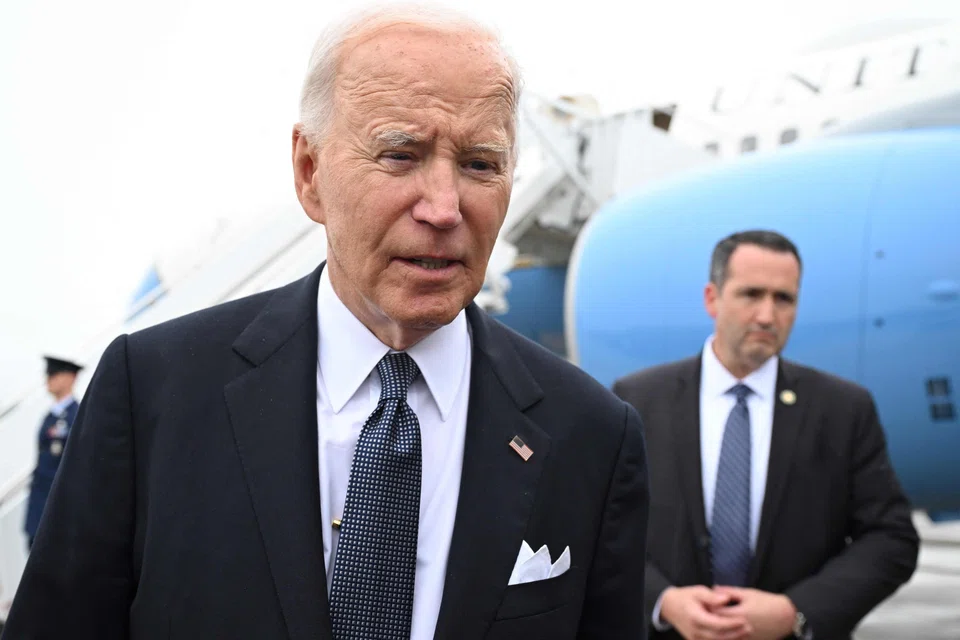
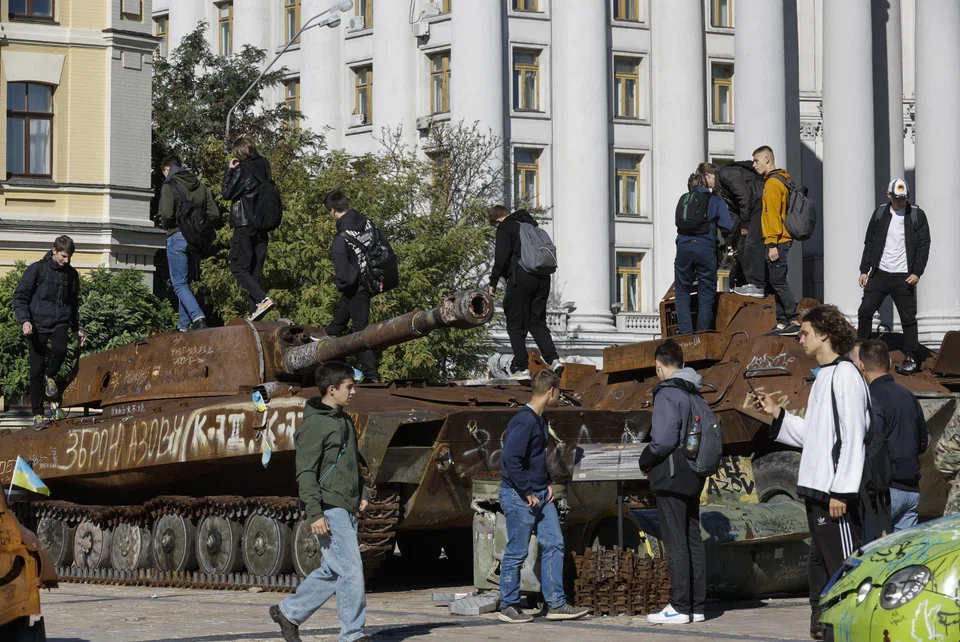
WAS the current crisis in Ukraine caused by a lack of realism in US foreign policy? According to some analysts, the liberal desire to spread democracy is what drove the North Atlantic Treaty Organization's (Nato) expansion up to Russia's borders, causing Russian President Vladimir Putin to feel increasingly threatened. Viewed from this perspective, it is not surprising that he would respond by demanding a sphere of influence analogous to what the US once claimed in Latin America with its Monroe Doctrine.
But there is a problem with this realist argument: Nato's 2008 decision (heavily promoted by the George W Bush administration) to invite Georgia and Ukraine eventually to join the alliance can hardly be called liberal, nor was it driven by liberals. In making such arguments, realists point to the aftermath of World War I, when then-President Woodrow Wilson's liberalism contributed to a legalistic and idealist foreign policy that ultimately failed to prevent World War II (WWII).
Accordingly, in the 1940s, scholars such as Hans Morgenthau and diplomats such as George Kennan warned Americans that they must henceforth base their foreign policy on realism. As Morgenthau explained in 1948, a "state has no right to let its moral disapprobation of the infringement of liberty get in the way of successful political action". Or, in the words of the University of Chicago political scientist John Mearsheimer: "States operate in a self-help world in which the best way to survive is to be as powerful as possible, even if that requires pursuing ruthless policies. That is not a pretty story, but there is no better alternative if survival is a country's paramount goal."
Justifying choices
In a famous example of this approach, former UK prime minister Winston Churchill in 1940 ordered an attack on French naval vessels, killing some 1,300 of Britain's allies rather than letting the fleet fall into Hitler's hands. He also authorised the bombing of German civilian targets. Many observers justified these decisions when Britain's survival was at stake, but condemned the February 1945 fire-bombing of Dresden, because victory in Europe was assured at that point. Churchill could invoke the necessity of survival to justify overriding moral rules in the early days of the war, but he was wrong to continue to do so later, when survival was not in doubt.
In general, such dire straits are rare, and most leaders are eclectic in selecting the mental maps with which they navigate the world. Hence, when former US president Donald Trump was asked to explain his mild reaction to the murder of Saudi journalist Jamal Khashoggi, he said, "America First! The world is a very dangerous place!"
Navigate Asia in
a new global order
Get the insights delivered to your inbox.
When realists describe the world as if moral choices do not exist, they are merely disguising their own choice. Survival may come first, but it is hardly the only value worth upholding. Most of international politics today is not about survival at all. The smart realist might not urge Nato to extend membership to Ukraine, but nor would he support abandoning that country altogether.
After all, a smart realist knows about different types of power. No president can lead at home or abroad without power; but power is about more than bombs, bullets, or resources. There are 3 ways to get others to do what you want: coercion (sticks), payment (carrots), and attraction (soft power). A full understanding of power encompasses all 3 aspects.
If others associate a country with certain moral positions, that recognition confers soft power. But because soft power is slow-acting and rarely sufficient by itself, leaders will always be tempted to deploy the hard power of coercion or payment. They must bear in mind that, wielded alone, hard power can involve higher costs than when it is combined with the soft power of attraction. The Roman Empire rested not only on its legions but also on the attractiveness of Roman culture.
Necessary but insufficient
In the Cold War's early days, the Soviet Union enjoyed a good deal of soft power in Europe, because it had stood up to Hitler. But it squandered this goodwill when it used hard military power to suppress freedom movements in Hungary in 1956 and in Czechoslovakia in 1968. The US, by contrast, combined a military presence in Europe after WWII with aid to support European recovery under the Marshall Plan.
A country's soft power rests on its culture, its values, and its policies (when they are seen by others as legitimate). In America's case, soft power has often been reinforced by the narratives that its presidents use to explain their foreign policies. John F Kennedy, Ronald Reagan, and Barack Obama, for example, framed their policies in ways that attracted support both at home and abroad, whereas Richard Nixon and Trump were less successful in winning over those outside the US.
In a world of sovereign states, realism in crafting foreign policy is unavoidable. But too many realists stop there, rather than acknowledging that cosmopolitanism and liberalism often have something important to contribute. Realism is thus a necessary but insufficient basis for foreign policy.
The question is one of degree. Since there is never perfect security, an administration must decide how much security will be assured before it incorporates other values such as freedom, identity, or rights into its foreign policy. Foreign-policy choices often pit values against practical or commercial interests, such as when the US decides to sell arms to authoritarian allies, or to condemn China for its human-rights record. When realists treat such trade-offs as similar to Churchill's decision to attack the French fleet, they are simply ducking the hard moral questions. But President Joe Biden cannot ignore the issue. His diplomatic challenge today is to find a way to avoid war without abandoning Ukraine or the values that sustain America's soft power and network of alliances. PROJECT SYNDICATE
The writer is a professor at Harvard University and the author, most recently, of Do Morals Matter? Presidents and Foreign Policy from FDR to Trump.
Decoding Asia newsletter: your guide to navigating Asia in a new global order. Sign up here to get Decoding Asia newsletter. Delivered to your inbox. Free.
Share with us your feedback on BT's products and services

