

Reit mergers: Time for regulators to wake up
MAS, SGX RegCo should critically examine the narratives used to justify Reit mergers as well as the concerns investors are now raising

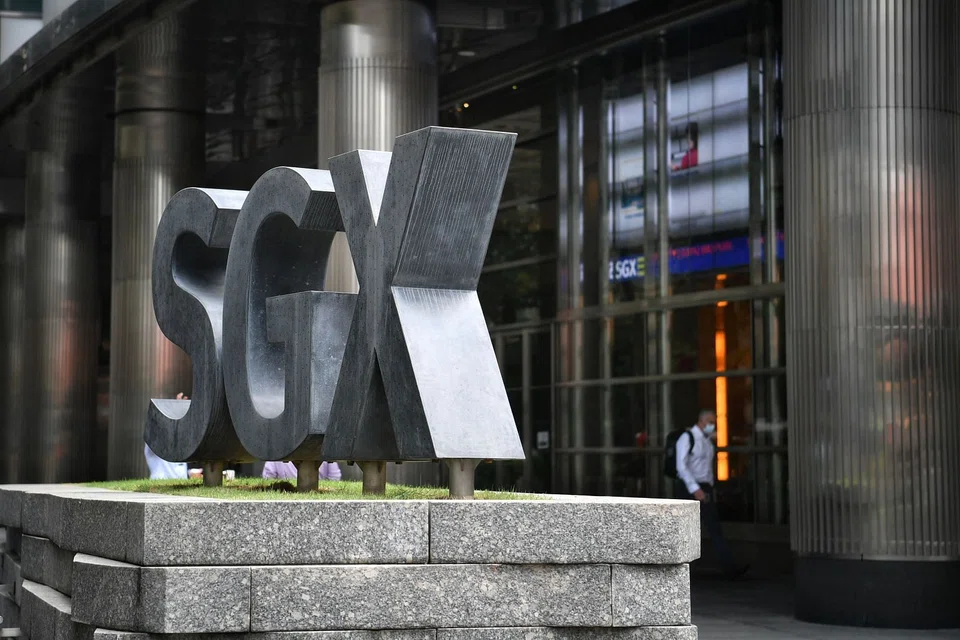
SINGAPORE Exchange Regulation (SGX RegCo) recently laid out its expectations for the independent valuation of assets - including businesses - that are done in the course of transactions involving publicly listed companies.
Among other things, SGX RegCo provided a checklist of specific disclosures that listed companies are obligated to make. It also said directors should determine if the key assumptions and estimates are reasonable. The directors must also disclose material uncertainties, and ensure the valuation report's conclusions are acceptable.
SGX RegCo even called on corporate boards to take note of two emerging trends - the growing significance of intangible assets of companies with disruptive technologies and business models; and the increasing importance of environmental, social and governance (ESG) factors.
"SGX RegCo is reviewing if the listing rules should be further strengthened to raise the standards of business valuations, in line with our previous review for property valuations," the frontline market regulator said in a column on March 1.
Many investors might wonder why Singapore's regulators haven't given similar attention to the increasingly contentious issue of mergers of real estate investment trusts (Reits) that have common sponsors.
Ironically, the problem with these transactions is not that there is a lack of confidence in the valuation of the underlying assets of the Reits involved. The main contention is that the prices at which units of the merging Reits are exchanged do not reflect the value of their assets.
The fact that the managers of the merging Reits are owned by the same sponsor groups also makes it hard to convince investors that the terms of these deals are the result of genuine arm's length negotiations.
It's harder still when the managers themselves tell investors they have not shopped around for alternative deals because the objective of these mergers is not to maximise the immediate valuation of their units. These transactions, the managers argue, are mergers and should not be seen as the sale of the target Reit or its underlying assets.
But if the goal of each manager is not to get the highest possible price for their respective Reit's units under the deal, then what are they trying to maximise? What is the basis of their negotiations?
What is the point of ensuring that valuations of corporate assets are properly done if independent directors do not insist they are taken into account when deals are proposed?
Disgruntled investors
This past week, activist investor Quarz Capital Management called on the Monetary Authority of Singapore (MAS) to intervene in the proposed merger of Mapletree Commercial Trust (MCT) and Mapletree North Asia Commercial Trust (MNACT).
Under the proposed deal, unitholders of MNACT are to exchange each unit they own for 0.5963 of a new MCT unit; or 0.5009 of a new MCT unit plus S$0.1912 in cash. Since the merger was unveiled on Dec 31, MCT has suffered a significant sell-off versus MNACT.
In a letter dated Mar 17, Quarz grumbled that the deal now effectively values MNACT at an 11 per cent discount to its net asset value (NAV).
Quarz added that in precedent Reit mergers, the target Reits were priced at or above their respective NAVs even though most of them had traded below NAV prior to the offers.
Furthermore, MCT will subsume MNACT by issuing new units priced at a 9 per cent premium to its NAV. So, even though MNACT will contribute 43 per cent of the NAV of the merged entity, MNACT's unitholders will end up holding less than 35 per cent of the merged entity's units.
In addition, unitholders of MNACT will suffer an approximately 11 per cent decline in NAV per unit, and an 8-9 per cent dilution in distribution per unit (or DPU).
Quarz also pointed out that some 25 per cent of MNACT's properties had been purchased within the last 4 years at close to their respective valuations. Moreover, the bulk of these assets were sold to MNACT by its sponsor, Mapletree Investments.
By recommending the merger, the manager of MNACT is essentially telling its unitholders to sell these same assets at an 11 per cent discount to MCT.
Quarz said in its letter to MAS that it wants the regulator's "support to protect unitholders' interest by ensuring that the MNACT manager fulfils its fiduciary duty".
Specifically, Quarz wants the manager of MNACT to push for better merger terms; or, for there to be a "robust and transparent" solicitation of offers for MNACT's assets from third parties.
Sceptical proxy advisers
The manager of Ara Logos Logistics Trust (ALog Trust) also came under fire recently for a lack of transparency around its plans to merge with ESR-Reit.
In January, proxy advisory firms Institutional Shareholder Services (ISS) and Glass Lewis recommended that unitholders of ALog Trust vote against the proposed merger - partly because the terms were not compelling, but also because the manager of ALog Trust had not shopped around for alternative deals.
The terms of the merger were subsequently revised in favour of ALog Trust's unitholders, which prompted ISS and Glass Lewis to support the deal. But their revised recommendations were hardly ringing endorsements of the merger.
Glass Lewis said it continued to take issue with ESR-Reit issuing new units at "above-market value" to acquire ALog Trust.
ISS said it remains concerned about the merger "given that the deal will be made with a related party without considering alternative transactions". Moreover, unitholders of ALog Trust are still not getting an attractive premium under the revised terms, ISS added.
MAS and SGX RegCo ought to critically examine the narratives Reit managers weave to justify these mergers as well as the concerns that are now being raised by investors, and determine if more heavy-handed regulation is required.
In theory, investors can express their disgruntlement by voting against these mergers. But MAS and SGX RegCo should look into why the thinking of independent directors on the boards of Reit managers is not aligned with that of proxy advisory firms that serve institutional investors.
It is all very well to push for more rigour and transparency when it comes to valuing corporate assets. But this won't count for much unless independent directors strive to ensure investors aren't shortchanged by opportunistic or unfair deals.
The writer owns units in Mapletree North Asia Commercial Trust.
TRENDING NOW

From legacy to launch: Francis Yeoh and Yeoh Pei Xien on family unity and YTL’s next‑gen ventures

Things to know about DBS’ incoming chairman Anthony Lim

Wealthy Indonesians snap up government bonds as yields near 8%: OCBC

From local AI partnerships to global opportunities: How MNCs help Singapore firms scale

