

Republicans' Senate win shows divided America
Legislative and policy gridlock likely to dominate Washington in the last two years of a lame-duck President Obama
Washington
IT was the most expensive midterm election campaign in American history. But despite the US$4 billion - yes, that's 4 billion! - that Republicans, Democrats and a few Independents poured into the 2014 races, and the high political stakes that were involved - the battle for control of the Senate; 36 governors' contests; close to 50 competitive races for the House of Representatives - a large number of Americans were not following the campaign and many of them failed to show up for the vote on Tuesday.
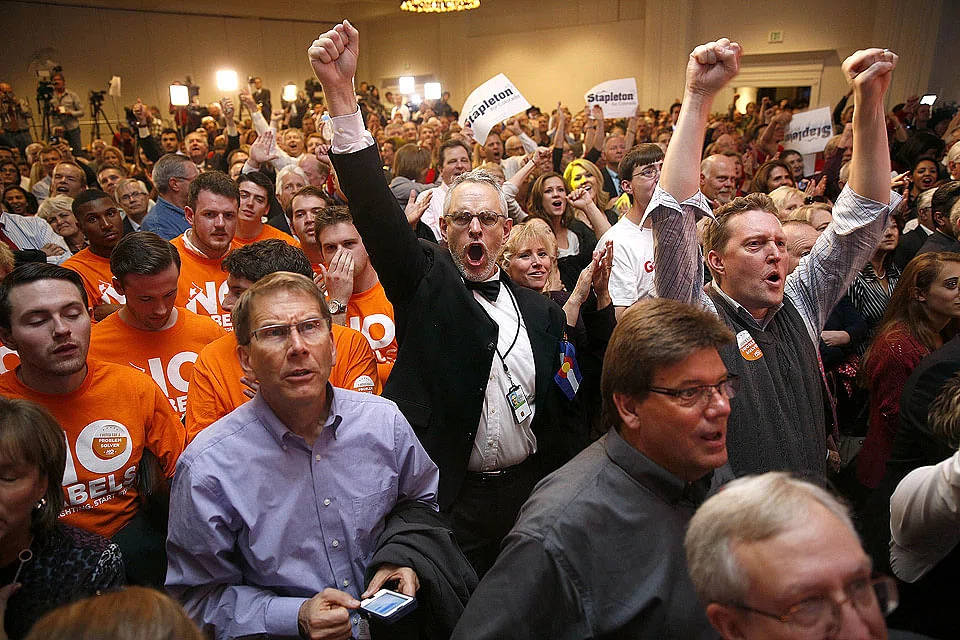
But those Americans who did bother to cast their ballots helped produce a shift in the balance of power in Congress in the direction of the Republicans - the Grand Old Party (GOP) regained control of the Senate and strengthened its hold over the House - that would make it more likely that a legislative and policy gridlock would dominate Washington in the last two years of a lame-duck President Barack Obama. Americans also demonstrated in their voting patterns that the country remains deeply divided between the Red (Republican) and Blue (Democratic) states and districts.
In a way, the outcome of the midterms underscored long-term electoral trends that in turn reflect the demographic changes that have been re-shaping the American political system for several years. These changes have created a deep political split between two diverging American Nations that highlight generational and ethnic differences: Two Americas that share the same territorial bed - but dream different political dreams.
President Obama's victories in the presidential races of 2008 and 2012 revealed the growing power of a new emerging Democratic coalition that included African-Americans; Hispanics; young voters; single women; educated professionals. Members of these groups tend to reside in large urban areas, especially on the east and west coasts of the country, and subscribe in general to more liberal, secular, and tolerant positions on political and cultural issues.
These constituencies - in particular, the expanding Latino electorate - helped provide President Obama with a margin in victory in 2008 and 2012 even in states that traditionally tended to lean to the Republican side or to "swing" between the two political parties: Colorado, Iowa, New Hampshire, North Carolina and Virginia.
But on Tuesday the Republicans succeeded in winning the Senate races in three of these states - Colorado, Iowa, North Carolina. These victories, together with the win in the Senate race in Georgia - where Republican David Perdue beat Democrat Michelle Nunn - created the conditions for political earthquake in the Senate that provided the GOP with a majority in that legislative chamber.
The Democratic losses in Tuesday were explained in part by the low turnout by members of the Democratic coalition. Young voters, blacks and Hispanics don't usually go out to vote by large numbers when it comes to congressional and gubernatorial elections that don't take place on presidential elections years.
At the same time, the Republicans could still count on Tuesday on the electoral backing of members of their coalition, including the majority of white voters, especially older men; married women; and religiously observant Protestants, Catholics and Jews. As in previous elections, the GOP's strongest electoral base was concentrated in rural areas and the mid-western and southern parts of the country, with the party's supporters endorsing a more conservative, nationalist and traditional set of values.The members of a core pro-GOP constituency, older white voters, include many retirees who have more free time on their hands and tend to show up by larger numbers in the voting booths during midterm elections.
And in general, it is easier to energise voters who are affiliated with the party out of power in the White House to get out and vote for congressional candidates affiliated with the opposition party as a way of sending an angry message to the occupant of the White House.
The failure on the part of the Democrats to energise their supporters and the enthusiasm projected by Republican voters explains in part why the GOP was able to win the Senate, make new gains in the House (at least 10 more seats) and win in several gubernatorial races. Hence Ms Nunn in Georgia won about 70 per cent of the votes of the blacks in the state but that was not enough to overcome the electoral strength of Mr Perdue who received more than 70 per cent of the white vote.
The Republican Senate victories in Arkansas (where Tom Cotton defeated incumbent Democratic Senator Mark Pryor), in West Virginia (where Republican Shelley Moore Capito was elected as Senator), in Kentucky (where Senate Minority Leader Mitch McConnell was re-elected), and in Montana, South Dakota, Idaho, and Wyoming were expected and reflected the GOP's continuing consolidation of power in the South as well as in rural states where conservative white voters have a clear demographic advantage. And despite a strong challenge from an independent candidate, Republican Pat Roberts succeeded in holding on to his Senate seat in Kansas.
But the reason that the Republicans were able to make gains in the Senate were their victories in the races in Colorado and Iowa (states that Mr Obama carried in 2008 and 2012) and North Carolina which he won in 2012 - and where demographic trends seemed to be favouring the Democrats.
Colorado, in particular, was once seen as a state that, with its large number of educated professionals and Hispanics, could be transformed into a permanent Blue (Democratic) state. But the Democratic Senate candidate, Mark Udall, couldn't rally behind him the voters that supported Mr Obama in the last two presidential elections, while his Republican rival, Representative Cory Gardner, could count on the backing of the conservative white electorate. Similar trends were also evident in the Senate races in Iowa and North Carolina that the Democrats lost.
But the Democratic losses on Tuesday reflected more than just a shaky Democratic coalition. According to the exit polls, many of the un-affiliated independent voters who cast their ballots for Republican candidates wanted to send a message of dissatisfaction with the leadership and policies of the current Democratic White House occupant.
Indeed, opinion polls show that President Obama continues to get low public approval ratings of around 40 per cent, and that despite the signs of an accelerated economic recovery, most Americans are displeased with the Obama administration's record on the economy and have strong reservations about President Obama's handling of foreign affairs, including his response to the growing instability in Iraq and Syria.
The Republicans have also exploited the growing public fear over the possible spread of the Ebola virus into the United States and accused the White House of not doing a more effective job in dealing with this medical crisis.
But it's important to recognise that much of the anti-Obama attitudes among independent voters may not necessarily translate into strong support for the Republicans, and that young voters, blacks and Hispanics could be reenergised to support the Democratic presidential candidate in 2016, when the Democrats would be in a stronger position to compete with the Republicans in both the presidential and congressional races that year.
And while the conventional wisdom in Washington is that Mr Obama would be turning into a lame-duck president in the next two years as he finds it difficult to advance his agenda in a face of a stronger and less accommodating Republican-controlled Congress, a contrarian view is that President Obama - if he makes the right moves - could actually be in a position to achieve some policy successes, especially in the global arena.
One of the policy areas where President Obama may have more room to manoeuvre is global trade where the strongest opposition to his initiatives came from his own party. Protectionist Democrats have resisted pressure from the White House to provide President Obama with a trade promotion authority legislation, or TPA, which allows the president to submit a trade agreement to Congress for a straight up or down vote without any amendments.
But the GOP and its allies in the business community have traditionally been proponents of free trade policies, and Republican lawmakers in the House and the Senate could provide the White House with the majority he needs in order to pass a TPA legislation. Which means that in this case at least, the Republican wins could be translated into a policy victory for Mr Obama.
TRENDING NOW

Nvidia reinstates Jensen Huang as CEO; Trump says move poses no national security risk

Indonesia’s coal tycoon Low Tuck Kwong replaced as Bayan Resources president-director

Nvidia surges 33% after reinstating Jensen Huang, reviving AI trade; stocks soar in US and Europe

Consider lowering homeownership barriers for some non-resident foreigners

