Resetting the climate agenda for 2020
Singapore, on its part, will update its climate pledge before the November COP26 summit in Glasgow to guide its policies over the longer term.
MAJOR economies resisted calls for bolder climate commitments at the United Nations summit in Madrid last December, aggravating fears that the world will not act in time to stop rising global temperatures disrupting people, economies and ecosystems. Research published during the talks showed that emissions have increased by 4 per cent since the Paris Agreement was signed in 2015, and cuts of more than 7 per cent a year are required to avoid catastrophic levels of global warming.
The aim of national climate pledges made under the Paris Agreement in 2015 is to limit global warming to well below 2 degree Celsius above pre-industrial levels, specifically to limit warming to just 1.5 degree Celsius, the target that scientists say is necessary for preventing the worst climate impact on our ecosystem. The Paris Agreement has been weakened by a move by the United States to begin withdrawing from the Agreement. If other big economies fail to agree on more meaningful climate action soon, the slim hopes of averting catastrophic temperature rises will all but evaporate.
Like all small island states, Singapore is vulnerable to the effects of global warming and has called for more collaborative global and regional efforts to address the existential challenge of climate change at a time when multilateralism is strained.
Singapore, on its part, will update its climate pledge before the November COP26 summit in Glasgow to guide its policies over the longer term. This comes about five years after Singapore made its first climate pledge to reduce its emissions intensity by 36 per cent from 2005 levels by 2030 and stabilise its emissions with the aim of peaking around the same year, under the Paris Agreement in 2015. Despite contributing about 0.11 per cent to global emissions, in terms of per capita emissions, Singapore ranks 27 out of 142 countries, higher in comparison to China, Indonesia and the United Kingdom. Singapore has a role part to play in the global battle against climate change.
It remains to be seen how Singapore intends to make the pledge more ambitious as the reframed target will have policy implications on various sectors, namely the energy, transportation and financial sectors.
In the energy sector, the shift towards renewable energy sources will have to be ramped up. Solar panel installations in Singapore have increased from 30 to about 3,000 in the last 10 years. Singapore aims to increase its solar energy production to 2GWP (global warming potential ), which represents 4 per cent of current electricity demand, by 2030. Singapore will have to continue to find ways to get around its land scarcity and high cloud cover to harness the maximum potential of solar energy by utilising inland and offshore water bodies and residential roof tops effectively to place solar panels.
With renewable energy a minuscule portion of its current energy mix and the limitations on solar energy capture, Singapore will have to also explore other energy options such as utilising regional power grids. The feasibility of alternatives such as hydrogen and carbon capture and storage technology, which uses gas to produce electricity, will have to be evaluated and considered more seriously to transit to a more climate-resilient economy and a low-carbon future that would be reinforced in a revised climate pledge.
CRUCIAL TRANSITION
In the transport sector, the extension of the public transportation and park connector network will be crucial in transiting to a greener, car-lite nation. More peak-period journeys will have to be facilitated by walking, cycling or public transportation. Singapore's public bus and train fleet must also transit towards being powered by cleaner fuel sources. The Vehicular Emissions Scheme (VES) could see more incentives to nudge vehicle buyers to uptake cleaner vehicle models such as hybrid and electric cars. The infrastructure support for electric vehicles will also have to be greatly improved to facilitate uptake of these vehicles.
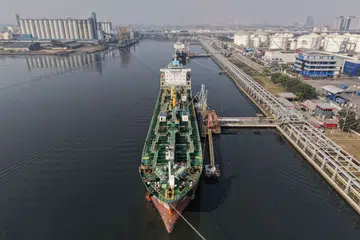
A thriving maritime industry makes it imperative for Singapore to work on reducing ship sulphur emissions significantly and promote the adoption of engines and bunkers that use low-carbon fuels such as liquefied natural gas (LNG). Emissions in the aviation industry will have to decrease significantly by phasing out ageing airplanes and replacing them with more fuel-efficient models such as the Boeing 787 and Airbus 350 jets which provide increased fuel productivity of about 25 per cent. Transitioning to an aviation fuel portfolio that is predominantly based on biofuels will significantly aid in reducing emissions.
As a financial hub, Singapore has issued more than US$4.4 billion of green bonds to date. This figure is expected to increase significantly as it attempts to circularise its economy and seek alignment with a revised climate pledge with more targeted financing for green investments and development projects. Singapore remains the only country in South-east Asia to implement a carbon tax. A revised climate pledge could see a steeper progressive increase in the current carbon tax of S$5 per tonne of greenhouse gas emissions. This revenue would need to be used to further support small and medium-sized enterprises (SMEs) in enabling them to transit to a low-carbon industry through emissions reduction and offset projects. A tax on household emissions could be a possibility, given Singapore's relatively high per capita emissions and low household recycling rates as it seeks to move to a zero-waste nation.
As Singapore prepares to enhance its national climate action plans, business leaders from the various sectors will have a critical role to play in challenging the government to match their own climate ambitions and hold them accountable to the national climate performance. Besides civil society and individuals, Singapore's revised climate change pledge before the make-or-break COP26 must extensively canvass the views of corporates across all sectors. It must be consultative, inclusive and resonate with stakeholders who will then be able to take ownership of the pledge to ensure that it is seen through. Industry-level frameworks will have to be in place to monitor and measure performance relative to the revised climate pledge with mitigation actions implemented should targets not be met.
2018 marked the year of climate action for Singapore. 2020 will be an even more decisive year for Singapore and the world as it marks the first time since the Paris Agreement that nations will gather to take stock of their climate performance and assess what more needs to be done to ensure that global warming is limited to below the dangerous threshold of 1.5 degree Celsius.