

A return to 'normalcy' in the form of a new Roaring 20s?
But Joe Biden, America's incoming commander-in-chief, must recognise that presidential leadership requires more than just bringing back the good times.
 Add BT as a preferred source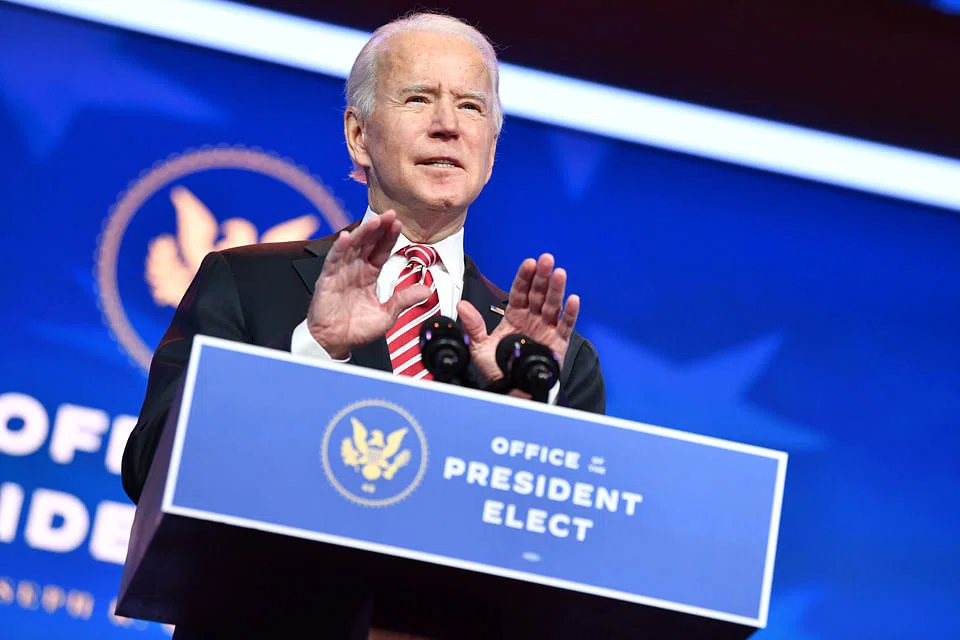
AMERICAN presidents have inspired their nation and the world, and in many cases changed history with the words they have uttered and that we continue to quote today, from Abraham Lincoln ("That government of the people, by the people, for the people, shall not perish from the earth"), through Franklin Delano Roosevelt ("The only thing we have to fear is fear itself") to John F Kennedy ("Ask not what your country can do for you, ask what you can do for your country").
But only one modern American president, Warren Harding, actually invented a word that has entered into dictionaries: "Normalcy".
There are no national airports, research institutions or battleships named after the 29th American president for a very simple reason: president Harding - who entered office in 1921 and died while serving as president in 1923 - was not a great president.
When he ran for the presidency in 1920, the handsome politician from Ohio was actually quite popular among voters and, most important, he was able to capture the spirit of the American people in the aftermath of two horrific national experiences - the US participation in the Great War (1914-18) and the deadly Spanish Flu (1918-19). Americans were then mourning the deaths of many of their countrymen in the war in Europe and a global epidemic.
It wasn't only the loss of lives that devastated the country. America was also in the midst of economic and social changes that ignited fierce political debates about the US' place in the world, including an isolationist backlash and strong opposition to its entry into the League of Nations, and pressures for reforms, marked by the rise of the progressive movement.
In a way, Americans were exhausted on many levels after eight years during which a powerful and controversial president, Woodrow Wilson, left the nation more politically divided and angry.
Navigate Asia in
a new global order
Get the insights delivered to your inbox.
The former Senator from Ohio ran for the presidency by promising Americans to return to the way things used to be before World War I and the pandemic, to the good old days when much of the focus of public life was on just getting along. If president Wilson recalled an old angry prophet, president Harding would remind you of your friendly neighbour.
Hence candidate Harding's campaign slogan for the 1920 election was a return to "normalcy", coining a new word as opposed to the more accepted "normality", which was a pledge to restore the spirit of the nation before it entered the Great War and as it was recovering from the Spanish Flu.
As Mr Harding put it in an address during the 1920 campaign: "America's present need is not heroics, but healing; not nostrums, but normalcy; not revolution, but restoration; not agitation, but adjustment; not surgery, but serenity; not the dramatic, but the dispassionate; not experiment, but equipoise; not submergence in internationality, but sustainment in triumphant nationality."
Now fast-forward 100 years later, and once again Americans have elected a president who has pledged a return to normalcy. Well, President-elect Joe Biden has not employed the word that president Harding coined, but if you deconstruct his election addresses and media interviews, it is not difficult to figure out that he regards normality as the preferred state of the American political mind.
Which makes a lot of sense after four years during which a disruptive and unhinged White House occupant has driven Washington into policy chaos and divided the nation into hostile political tribes, while igniting racial tensions.
Joe, the ageing president-elect, reminds Americans of a kind uncle who brings them presents as opposed to Donald, the crazy uncle who turned every family gathering into mayhem.
Mr Biden is someone with a lot of experience whom you can trust, who isn't pretending to lead a revolution, or to drain the swamp or change the way Washington does its business. Instead as the country recovers from another deadly pandemic, he wants to turn back the clock to the pre-Trump age of, well, normalcy.
"The American people want their government to work, and I don't think that's too much for them to ask," Candidate Biden said during his speech announcing his candidacy in Philadelphia in May 2019. "I know some people in DC say it can't be done. but let me tell them something, and make sure they understand this. The country is sick of the division. They're sick of the fighting. They're sick of the childish behaviour.
"There isn't a single person among you, or anywhere in this country, who could get away with that in their jobs," he stated. "All they want is their president, their senators, their representatives, to do their job; just do your job!"
Not only has President-elect Biden rejected the pressure from the progressive wing of his party to promote revolutionary change, he embraced instead a plan for evolutionary reform. He has also selected to serve in his administration old-timers who have been around Washington for years and who represent the kind of political status-quo that President Donald Trump had pledged to terminate in 2016.
Not unlike President Harding in 1920, President-elected Biden recognises that Americans are sick and tired of what is happening in Washington, which has been dominated by the television reality-show president and Tweeter in Chief and his never-ending media and political campaign when not a minute goes by without a new scandal in Washington.
From that perspective, the last "normal" president was George H W Bush, a low-key elderly statesman, a gentleman and World War II veteran, who was respected by Republicans and Democrats alike, and who surrounded himself with people who looked and behaved like him, who rarely showed up in the gossip columns and who rejected all forms of radicalism, intent on maintaining the status quo.
Since Bush I left office, Americans have seen Washington under a series of young presidents turn into a centre of political and personal drama as they strive to change the country and the world or represent that themselves: The young, exciting but morally challenged Bill Clinton; Bush II who launched long and costly military crusades in the Middle East; the first African-American President; and then Trump the Disrupter.
And now after long and bloody wars in the Middle East and economic recessions, President-elect Biden is promising Americans to leave all of that behind and get back to business.
Under president Harding, America did return to normalcy, entering what came to be known as the Roaring Twenties, with the economy growing and prosperity spreading as the country recovered from the wartime devastation and pandemic. There was a boom in construction and growth of consumer goods, including vehicles and electricity, and in the process the United States was transformed into the richest country in the world.
But President Harding himself proved to be a weak leader. His administration was mired in several scandals and he failed to deal with some structural economic and social problems that confronted the country, including growing inequality, while embracing a more isolationist stand on foreign policy issues.
As he prepares to enter office next year, President-elect Biden would have to recognise that even if a return to normalcy in the form of a new Roaring Twenties, a trend that Americans would applaud, would prove to be a viable option, presidential leadership requires more than just bringing back the good times.
The Roaring Twenties were after all followed by the Great Depression of the 1930s and another world war into which the US was drawn.
Decoding Asia newsletter: your guide to navigating Asia in a new global order. Sign up here to get Decoding Asia newsletter. Delivered to your inbox. Free.
Share with us your feedback on BT's products and services
TRENDING NOW
Malaysia’s 8th richest man Jeffrey Cheah wants Sunway business to last 10 generations
Middle East-linked energy supply shocks put Asean Power Grid back in focus
Inside Indonesia’s trial of Gojek co-founder: How a Google laptop deal became a multitrillion-rupiah case

Say ‘yes’ to that work stint abroad and roll with the challenges: Sun Life’s Jessica Tan

