Rewarding Singapore's sports champions: why the money matters
Loh Kean Yew's Badminton World Federation win has sparked a debate on financial payouts - or lack of it - to athletes
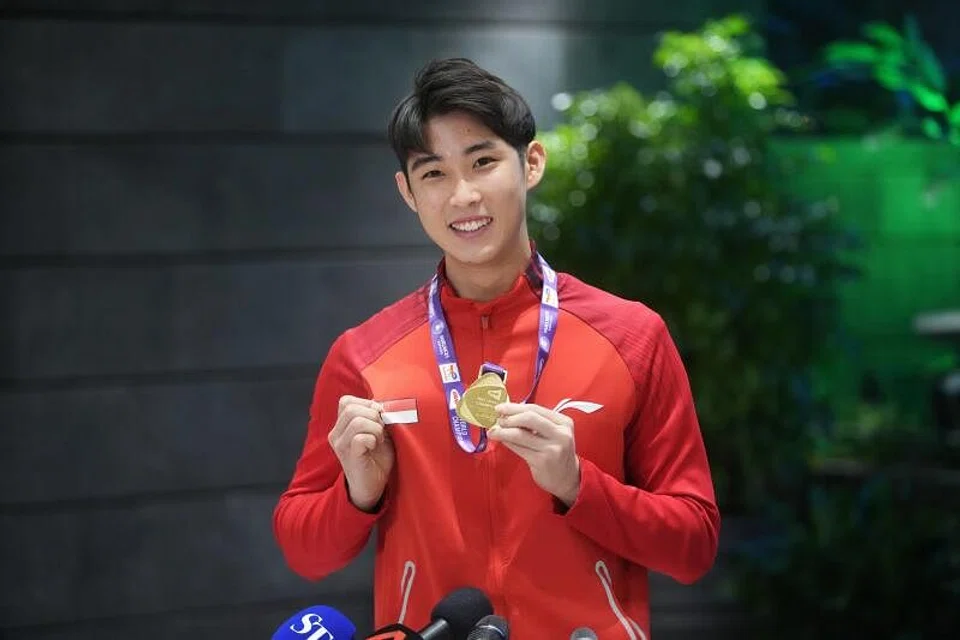
WHEN Loh Kean Yew won the Badminton World Federation World Championships in 2021, I, like many other Singaporeans, was transfixed by his performance.
His speed, power and athleticism were mesmerising, in particular his ability to dive for drop shots at the net and return the shuttlecock while also springing up to regain his stance in the middle of the court, all seemingly in one fluid motion.
I must confess I am terrible at badminton, as I am with most sports that involve rackets and/or balls. But I am an ardent Team Singapore supporter and followed Kean Yew's journey closely last year, which tracked from a solid showing at the Tokyo Olympics to winning a progression of smaller tournaments before culminating in Singapore's first world champion in the sport.
His result stood out in what was a purple patch for Singapore athletes in 2021, ranging from a credible showing at the Tokyo Olympiad, to world-leading performances in a variety of sports including bowling, cycling and cue sports, to a semi-final result at the Suzuki Cup by our footballers.
Without a doubt though, Kean Yew's win was among the stand-out Singapore sports stories of 2021. And hence the outcry when it emerged that he would receive no reward for becoming world champion, beyond digital pats on the back and plaudits on social media and an open-top bus tour of the country on Boxing Day.
In particular, the lack of a monetary incentive was pounced upon as a key reason for the lack of more sporting success stories.
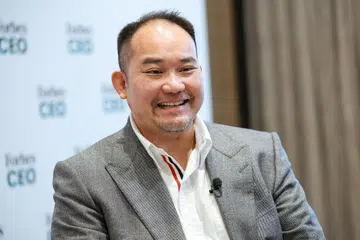
It fell to corporate leaders to step up, banding together to pool S$50,000 for the shuttler, with one businessmen also crowdfunding over S$130,000 from the public.
These responses raise a few questions - why is there no reward for such results when Olympic medals (and those from other major games such as the South-east Asian, Asian and Commonwealth Games) have cash incentives; what impact do these incentives actually have; and how can the system be improved to ensure more sporting results for Singaporeans to cheer about in the future?
WHY NO MONEY?
Currently, the main source of monetary incentives for Singaporean athletes who achieve superlative results at international competitions is the Major Games Award Programme (MAP) administered by the Singapore National Olympic Council (SNOC).
The Tote Board is the primary sponsor of the programme, with contributions from the private sector as well.
The awards vary in amount in the respective Games represented, and there is also a variation between awards for individuals and teams. The awards are taxable, and it is mandatory for all athletes to plough back a percentage of the monies to their National Sports Association for "future training and development".
Athletes can be rewarded for up to a maximum of three individual gold medals won at the SEA Games, up to two individual gold medals won at the Commonwealth and Asian Games, and for the first individual gold medal won at the Olympic Games.
There is no such system in place for competitions outside of these major games. It is clear that the focus is on incentivising athletes to dream and win big in competitions that are the global benchmark for sporting excellence.
Given the space that sports occupies in the national psyche and list of priorities in Singapore, it is understandable that not every result in every competition in every sport can be rewarded financially by national schemes. If nothing else, it would be hard to work out reward levels given the vast differences in competitions for different sports, and virtually impossible to budget for such a scheme in advance.
WOULD IT MAKE A DIFFERENCE?
That raises the question of just how important such rewards actually are.
The much-vaunted million-dollar pay-out (pre-tax) for a Singaporean Olympic gold medal has made headlines for years in global sporting circles, not just for the quantum, but also in the way it is structured - as a reward at the end of a sporting campaign rather than front-loaded incentives.
It is worth pointing out that the government has support schemes in place to help worthy athletes along their journey, once they have been assessed as having the potential to excel. These range from hundreds of dollars per month, to thousands, depending on results and potential.
None of this is as sexy as the million-dollar prize, but even that can be a double-edged sword. A multiple British Olympic gold-medallist once remarked to me that the scheme was akin to asking someone to drive from A to B, and promising to provide petrol money once the journey was completed. He had received a token reward each time he won a gold medal (and a knighthood along the way), but the funding he received in each Olympic cycle easily surpassed a million dollars.
WHAT THEN DO LARGE FINANCIAL PAY-OUTS MEAN TO ATHLETES?
If you were to ask any athlete striving to don national colours and excel, financial rewards are unlikely to be the first motivation they would name. Personal drive and the pride that comes from representing one's country would come first.
When I was a national athlete, I had unfulfilled dreams of becoming a professional, or the equivalent, for non-mainstream sports like fencing and triathlon, and getting paid to train and compete. This unfortunately is the lot of the Singaporean athlete, lacking as we do a sporting culture akin to what we see in other countries like the US and Australia, where sports is a national passion and drives whole industries which can then support professional athletes.
As such, my focus when it came to the financial aspect of my sporting career was to not end up in too much debt as a result of paying for equipment, travel and competition expenses. I did retire in the red, but thankfully not in a way that set me back too much.
I suspect that this applies to the vast majority of athletes in Singapore. Things have definitely improved over the past decade, thanks to increased state support. But it is the rare athlete who can claim to make a living from training and competing, much less an entire lucrative career.
Some sports psychologists might say that aiming purely for a golden payday can distract an athlete from the task at hand. But there's no denying that the financial pay-offs for gold medals at major games represent a useful way for athletes to offset expenses and ensure that their desire to represent the country does not burn too large a hole in their pockets.
WHERE DO WE GO FROM HERE?
With government support available, albeit limitedly, for aspiring champions with potential and desire, and significant cash rewards awaiting those who medal at designated events, what more needs to be done to continue the momentum we have built up in 2021?
It has been heartening to see the outpouring of support - both moral and monetary - for Kean Yew in the wake of his world championship win. Stakeholders such as the government, media and national sporting bodies should build on this by continuing to profile him and other athletes so that they become household names and draw broad-based support throughout their sporting journey.
This would then hopefully draw in corporate support in the form of sponsorship of events, athletes, and teams.
At the same time, I believe there is space for monetary incentives akin to the MAP for major games to be extended to other significant world championships. These would need to be considered on a case-by-case basis, given the multitude of different sports, each having their own tiers of competitions.
A growing number of Team Singapore athletes are competing and winning at the highest levels of international sport, and such latitude would go a long way in signalling that such efforts and results are valued by all of us.
With a number of major events lined up in 2022, including a trifecta of SEA, Asian and Commonwealth Games, and champions like Kean Yew and others poised to fly our flag high again on the global stage, now is the time for all stakeholders to come together to ensure that our athletes are well-supported and rewarded when they do us proud.
Nicholas Fang is a former national athlete and sports administrator. He was a Nominated Member of the Singapore Parliament and Team Singapore's chef-de-mission at the 2015 South-east Asian Games. He co-founded sports consultancy Novastella and is a non-executive independent director of the Singapore Sports Hub.
READ MORE: