

Rising private-hire car population, surging trips a roadblock to Singapore’s car-lite goal?

Tay Peck Gek
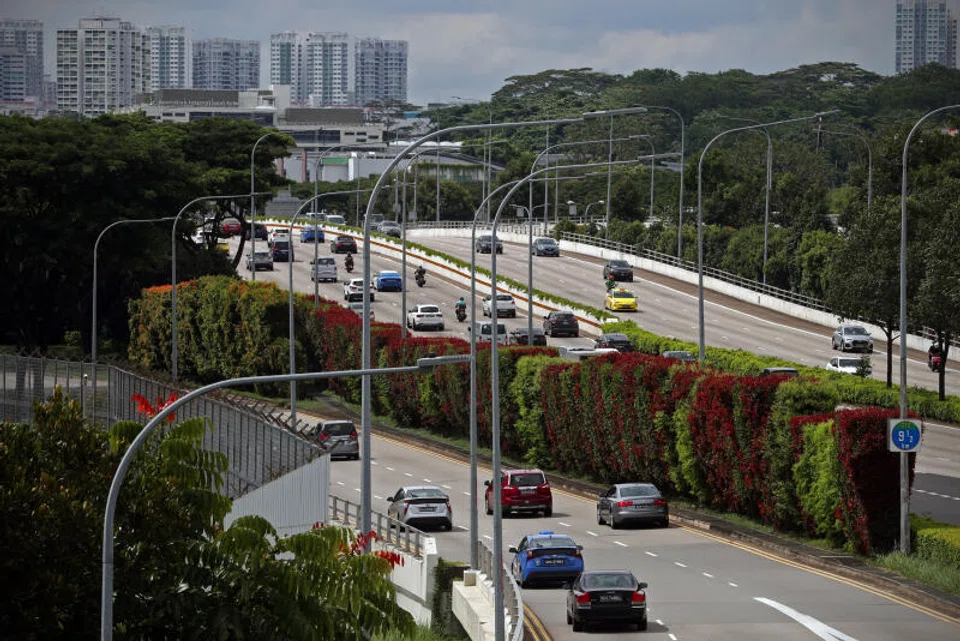
SINGAPORE’S ambition to transform into a car-lite society is becoming increasingly costly.
Against the backdrop of a zero-vehicle-growth policy, the limited supply of certificates of entitlement (COEs) has sent the premiums sky-high.
Car dealers have pointed the finger at private-hire vehicle (PHV) operators, accusing them of sucking up the COE supply in the course of building up their fleets, hence the stratospheric price levels for the document that gives one the right to own a car.
But Acting Transport Minister Chee Hong Tat said PHVs are unlikely to be the main factor driving up COE prices. In fact, demand from car-leasing companies has fallen, he said in Parliament on Monday (Nov 6).
Nonetheless, data from the Land Transport Authority (LTA) points to an increase in PHVs on the road over the past few years.
Amid escalating COE prices, the total vehicle population dipped in the first nine months of this year – falling by a marginal 0.1 per cent, or 1,182 units, to 994,564.
Apart from motorcycles, PHVs are the only vehicle type that went up in number in the year to September.
While the car population shrank by 6,682 or 1.2 per cent to 573,650, the PHV population rose by 6,128 or 8.4 per cent to 78,760 as at September. In 2022, the PHV population had grown 6.8 per cent.
Meanwhile, taxi numbers – which have been in decline in recent years – fell by 359 units or 2.5 per cent to 13,725 as at September.
Rise of PHVs
LTA does not provide a breakdown for self-drive and chauffeured PHVs in the monthly statistics.
According to the annual statistics for 2022, the self-drive PHV population climbed 13 per cent to 26,155 units; chauffeured PHVs – that is, those used for ride-hailing services – rose 3.6 per cent to 46,477.
It has to be noted that, based on LTA regulations, cab operators are allowed to expand their fleets by only up to 2 per cent per annum, subject to meeting certain standards.
Another point of interest is that the proportion of self-drive PHVs has steadily risen from 30 per cent of the total number of PHVs in 2020, to 34 per cent in 2021, and then to 36 per cent in 2022.
It could be argued that self-drive PHVs bring the cost of driving down to a more affordable level per trip, and helps make private transportation available to those who would otherwise be priced out of owning a car.
Self-drive PHVs would also contribute to the city-state’s car-lite dreams. With each vehicle being shared by more people and making more trips, it could help control the total vehicle population.
However, this would do little to alleviate traffic congestion, which could in turn reduce economic productivity.
Most car owners are likely to be using their vehicle to shuttle between home and the workplace, or to send their children to school. Their cars would likely be idle for the rest of the day.
Shared vehicles such as self-drive PHVs, on the other hand, are likely to make multiple trips a day.
In short, a smaller vehicle population may not actually mean fewer cars spending less time on the road.
Loophole for vehicle ownership?
Similarly, chauffeured PHV drivers who rent their vehicle from ride-hailing operators are taking advantage of the more affordable cost on a daily basis, as the upfront cost has been taken care of by the operators.
There is also an opportunity for them to own the vehicle that they rent.
The rental arm of one ride-hailing operator says on its website that it has a solution for those who want to own a car but are unable to fork out the 30 per cent to 40 per cent of the car price for down payment. (That translates to more than S$40,000 in today’s environment.)
The driver gets to own the vehicle after the completion of the lease contract of five to seven years – the usual tenures of auto loans.
Also, there is no impact on the driver’s total debt servicing ratio (TDSR), the portion of a borrower’s gross monthly income that goes towards repaying the monthly debt obligations, the rental arm added. The debt obligations in a TDSR calculation would include the amount outstanding car loan, and a borrower’s TDSR should not exceed 55 per cent of his gross monthly income.
Under this arrangement, those without adequate financial means would still be able to have a car at their disposal by renting from the ride-hailing operator.
So many PHV drivers are renting from ride-hailing operators to avoid significant upfront expenses and because they need to defray rental cost. However, with a car in hand, some may not want to be ride-hailing drivers.
This could explain Grab’s complaints of “an industry-wide driver-supply crunch”, which has driven it to acquire Trans-cab – despite an increase in chauffeured PHVs in 2022.
Cheng Shih-Fen, an associate professor of computer science at the Singapore Management University, found in a study that taxis clock, on average, significantly higher hours than chauffeured PHVs.
He also observed that significantly more ride-hailing drivers logged very short hours in 2021, compared to before the pandemic – resulting in much lower working hours per driver. More recent data was not available.
But – whether you call it a loan, rental or any other name – the lease that PHV drivers take out from ride-hailing operators to enter into car ownership is a financial obligation. If the driver is unable to complete the contract, there are financial consequences.
The authorities should tighten the use of such contracts to be in line with the existing financing rules, to level the playing field as well as ensure financial prudence.
And we should also question: With more PHVs on the road, are we truly car-lite?






