Robust measurement of emissions important
While it is necessary to become net-zero by 2050, being aware of carbon intensity of existing commodities is a crucial first step.
 Add BT as a preferred source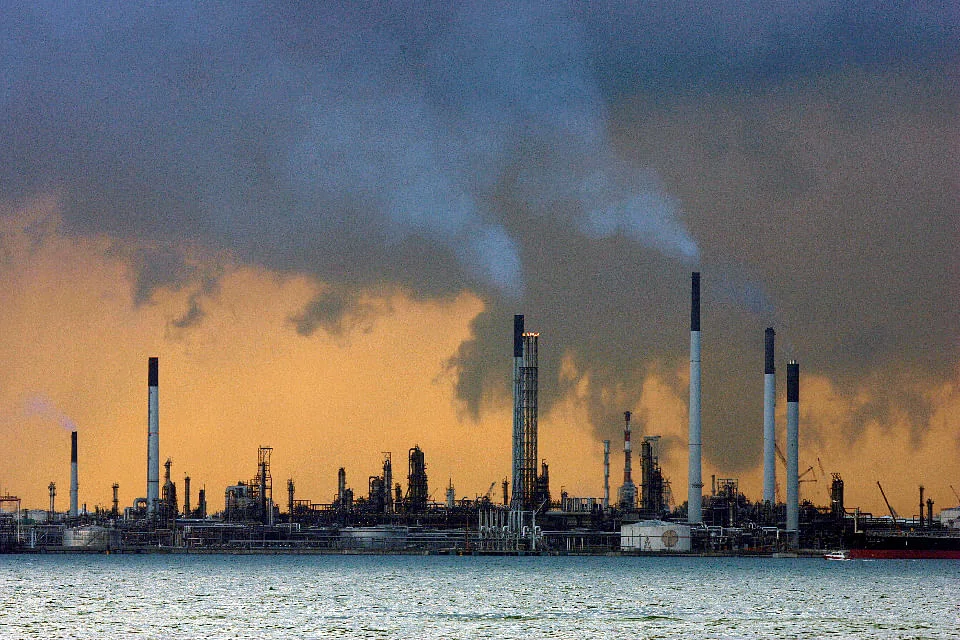
GIVEN the urgency to tackle climate change, it is clear the world will need to use every tool in the kit. Well-established carbon offset markets, both voluntary and mandated, have an important role to play, with Singapore-based exchanges driving innovation alongside the nation's pioneering moves in carbon-neutral LNG trading.
Equally important will be the robust measurement and management of carbon emissions at source, including the measurement of the carbon intensity of hydrocarbons.
Global demand for voluntary carbon credits to offset carbon emissions has grown sharply since the start of the Covid-19 pandemic, as the need to pursue aggressive decarbonisation has become ever more urgent.
Voluntary carbon credit markets, which have been around since the Kyoto Protocol days, are one of the ways that commodities markets have looked to manage and offset the greenhouse gas emissions. Recently, this has led to an increase in "carbon-neutral" trading - wherein a company or organisation looks to offset the emissions generated across the lifecycle of a fuel with credits sourced from the voluntary markets - first with LNG but branching out into other fossil fuel commodities including naphtha, LPG and, increasingly, crude oil.
Asian buyers have led the way in the purchase of carbon-neutral commodities. Since the beginning of 2021, refiners in India, South Korea and China have been buying carbon-neutral crude oil, even if they have had to pay a premium for them.
Singapore itself has been an early mover in the carbon-neutral LNG space. Pavilion Energy has in the last year signed two LNG contracts, one with Qatar Petroleum and the other with Chevron, both of which require each LNG cargo to be accompanied with details on emissions measurement. It imported Singapore's first carbon-neutral LNG in April this year.
VOLUNTARY CARBON MARKETS
Unlike traditional commodities markets, there is no central hub or repository to trade voluntary carbon credits. Even though the market has been around for 20 years, the vast majority of activity is still conducted on an over-the-counter basis. While this has been an effective way to manage trading up until now, it is unlikely to allow for the scaling up of investment necessary to meet the urgency of the current climate crisis.
Singapore is moving quickly to use its status as an established trading and financial hub to tame some of the chaos currently seen in the voluntary carbon market space.
Singapore Exchange (SGX) has proposed making climate-related disclosures, including reporting on greenhouse gas emissions, mandatory for companies in their sustainability reports from Jan 1, 2023 - a move that will help the city-state establish its carbon credit marketplace and help it better price actual carbon-related costs within the ecosystem.
SGX is one of the backers of Climate Impact X, Singapore's carbon market to be launched by the end of 2021, together with state investor Temasek, DBS and Standard Chartered.
Climate Impact X could potentially play a vital role in overhauling the voluntary carbon market, which is fragmented and often criticised for not being robust enough to meet what is a lofty goal - to cap the world's CO2 emissions.
Singapore is aiming to bring about much-needed standardisation and transparency to the carbon sector and help discover a reasonable carbon price across Asia's diverse national boundaries. It is uniquely positioned to bring structure to this market given its track record in building a commodity trading hub and allowing various market forces like banking, finance, policy and trade to coalesce at a single location.
CARBON INTENSITY OF CRUDE OIL
While a robust voluntary carbon market has an important role to play, comprehensive and immediate action to manage and reduce emissions generated by human activity will require a complete rethink about how we look at the carbon intensity of those things that we rely on every day such as oil.
A key question facing the industry is how effective carbon offsetting really is in the absence of emissions savings throughout upstream production and, critically, how to effectively measure that.
This is where the carbon intensity of the crude oil production process can become an attribute of the crude itself, like the weight of the crude and how much sulfur is included.
The industry sees this as the end goal but getting to a point where carbon intensity is thought of as an attribute of a crude oil cargo will take a sea change from the market.
Carbon intensity is the calculation for how many kilograms of carbon are emitted in the production of one barrel of crude.
As a first step to add transparency to carbon intensities for different crude grades around the world, S&P Global Platts has begun to work on what an upstream calculation will look like and will begin publishing monthly calculations that measure the carbon intensity of the crude produced at 14 different crude fields, many of which make up a large proportion of those used by Asian refiners.
To further increase understanding, Platts will also publish daily carbon intensity premiums - that show how much more a refiner has to pay for a crude with a relatively higher carbon intensity for each one of these 14 fields.
Singapore is one of the world's biggest refining hubs and one of the largest suppliers of refined products within Asia, along with an integrated petrochemicals production complex and one of the largest marine fuel supply ports in the world.
The move towards carbon-neutral petroleum fuels, while dependent on demand economics within Asia, is only a matter of time, as the city-state's Singapore Green Plan 2030 picks up momentum. The plan aims to strengthen Singapore's climate change commitments under the UN's 2030 Sustainable Development Agenda and Paris Agreement, through activities like using cleaner, lower-carbon energy and increasing energy efficiency.
When looking at the bigger picture and all that is necessary to become net-zero by 2050, being aware of carbon intensity when it comes to existing commodities is just the first step, but one that is absolutely necessary.
- The writers are from S&P Global Platts. Paula VanLaningham is global head of carbon, and Mriganka Jaipuriyar is head of news, Asia. The 37th Asia-Pacific Petroleum Conference (APPEC) is taking place both virtually and in-person at the Marina Bay Convention Centre from Sept 27-29.
Decoding Asia newsletter: your guide to navigating Asia in a new global order. Sign up here to get Decoding Asia newsletter. Delivered to your inbox. Free.
Share with us your feedback on BT's products and services