Russia’s Far East focus underlines warming ties with China
WHILE much of the world’s attention is on Ukraine, President Vladimir Putin’s ambition of restoring Russia’s international prominence goes well beyond Europe.
In resource-rich Africa, for instance, Moscow is looking to restore the influence that the Soviet Union had there. Meanwhile, in the Americas, Russia took part in August in war games in Venezuela, the home of the world’s largest proven oil reserves. Yet another example of Putin’s desire to assert power is the Russian Far East and Asia Pacific. The Russian leader has had meetings with successive Japanese prime ministers to try to foster joint economic activities in the disputed islands off Japan’s northernmost main island of Hokkaido. In coming days, Russia will double down on its focus on this Far East region, both geopolitically and economically. On Sept 1, Moscow will launch military drills there and the Sea of Japan involving more than 50,000 troops, over 140 aircraft and 60 warships, including a big contingent from China.
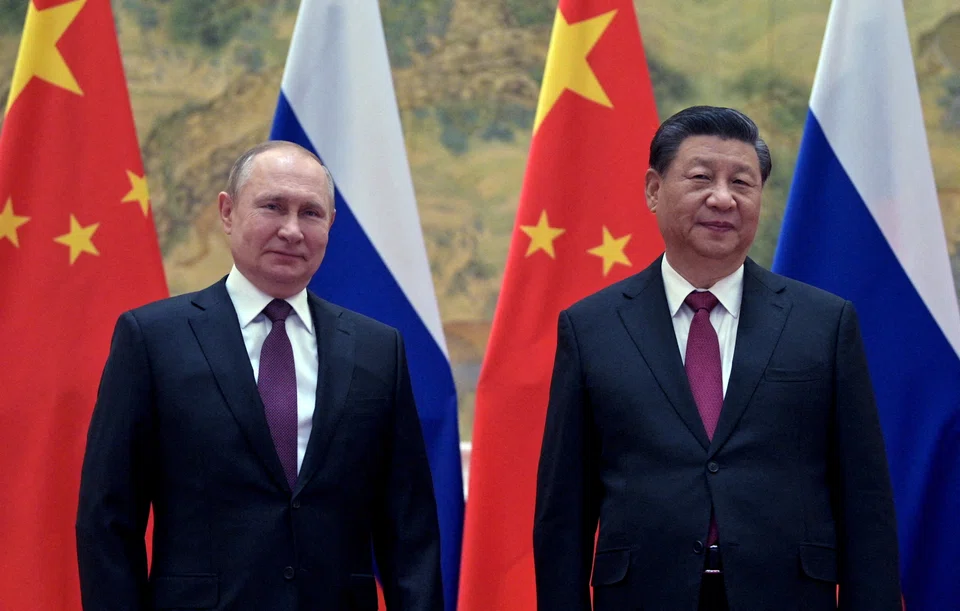
Economically, Moscow also hosts from Sept 5–8 in Vladivostok the Eastern Economic Forum. This is designed to support the economic development of Russia’s Far East and to expand international cooperation with Asia-Pacific, including China and the Association of Southeast Asian Nations (ASEAN). Across these various economic and political fora, one of the consistent themes is the growing warmth of Russia-China ties under Putin and Xi Jinping who regard each other as their closest allies in world politics. The security side of this relationship is widely commented on, but what is less well understood is the extensive economic dialogue.
There are bilateral plans for numerous cooperation projects including a new method of inter-bank transfers, and a joint credit agency that seeks to create a shared financial and economic infrastructure that will allow them to function independently of Western-dominated financial institutions. China and Russia are also among the states involved in creating alternative fora to the World Bank and International Monetary Fund, including the New Development Bank which will finance infrastructure and other projects in the BRICS states. Moreover, in the energy sector, the two states have signed a US$400 billion natural gas supply deal which will see a roughly 2000-mile gas pipeline from eastern Siberia to northeast China. And they have agreed to construct a second major gas pipeline from western Siberia to China’s Xinjiang province. The boost to the bilateral economic cooperation agenda has helped enable work toward stronger, common positions on key regional and global issues too, from Ukraine to Taiwan. China has pointedly refused to criticise Russia’s action in Ukraine, blaming the United States and NATO for provoking Moscow. Russia, in turn, has backed China amid the tensions with the United States that followed the recent visit to Taiwan by US House Speaker Nancy Pelosi. Putin has drawn parallels between US support for Ukraine and Pelosi’s trip to Taiwan, charging that both are part of US efforts to foment global instability.
Although the national interests of Russia and China are far from uniform, it is therefore likely that Putin and Xi will continue to work closely together not just to further bilateral interests, but also hedge against the continuing chill in US and wider Western ties. And while this is underpinned by a growing bilateral economic and political dialogue, it is their personal closeness that also appears to be driving the rejuvenated relationship that may now only warm further into the 2020s, and possibly even the 2030s, if both remain in power.