Sats must manage carefully its debt load as it looks to resume dividend payments

Tay Peck Gek
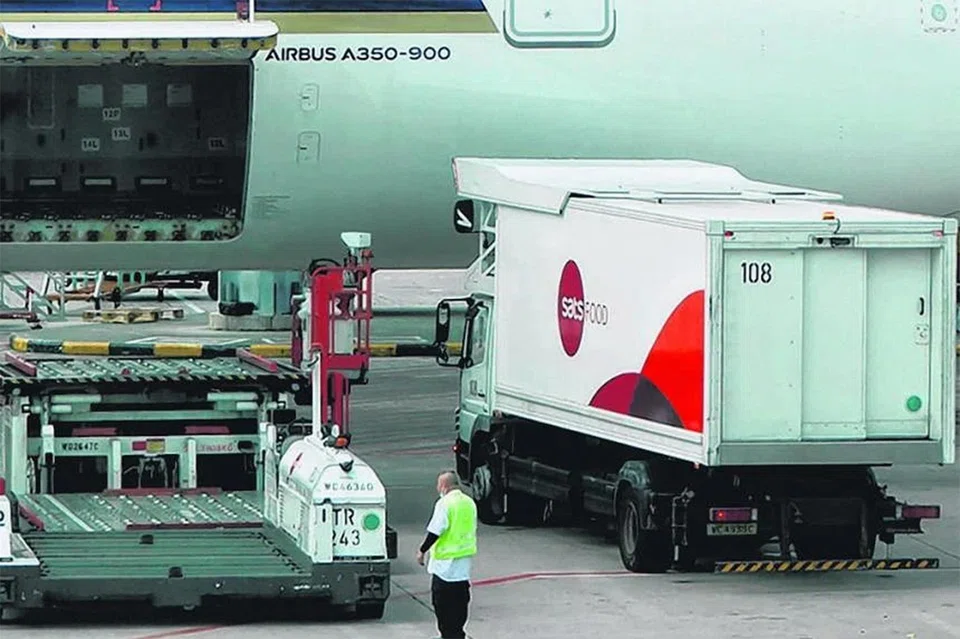
INVESTORS hoping for Sats to resume its dividend-paying days may have a while to wait.
This is not because prospects are bleak for the in-flight caterer and ground handler.
The company had, on Nov 26, filed notice that it has recorded three consecutive years of losses, but it may not be far from turning the corner.
Of more concern is its heavy debt burden, and what that will mean for its share price yield.
From 2016 to 2019, Sats shares traded at a dividend yield of around 3 per cent to 4 per cent. It has not paid any dividends since end-2019, however.
The company has said it would restore dividend payments only when it becomes profitable, as it wants to conserve cash to fund its operational and working-capital requirements, as well as to reduce leverage.
Sats posted a net loss of S$7.8 million for the first half ended September, but managed to eke out a profit of S$22.2 million for Q2. This marked its first quarter of profits without government relief since the Covid-19 pandemic struck in early 2020.
However, improvement in Sats’ profit and loss statement may be overshadowed by its balance sheet.
The company recently announced that it had established a US$3 billion multi-currency debt issuance programme, aimed at raising funds for purposes such as the refinancing of existing borrowings, the financing of potential acquisition and investment opportunities, and for working capital and capital expenditure.
The group’s total liabilities – including debts and lease liabilities of S$4.2 billion – stood at S$5.9 billion as at end-September. Of the total liabilities, S$1.7 billion will become payable within a year. Its debt-to-equity ratio is 1.66 times.
Sats’ debt load climbed after the takeover of global air cargo logistics player World Flight Services (WFS) at an enterprise value of 2.3 billion euros (S$3.1 billion). This figure includes provisional goodwill of S$2 billion, as the final goodwill figure is still under assessment.
The acquisition was funded by a S$700 million term loan, an S$800 million rights issue and a drawdown of S$320 million cash from internal reserves. Sats also had to assume the burden of WFS’ bonds of 1.1 billion euros, which it redeemed earlier this year by taking out loans.
This column earlier noted Sats had updated the pro forma FY2022 net profit and earnings per share in its circular for its S$800 million rights issue with numbers lower than those in its initial announcement on the WFS acquisition.
Sats’ reason was that its finalised funding structure included the S$700 million debt, which increased interest expense; this, in turn, reduced the pro forma net profit in the circular.
It said then: “In view of the cash-generative nature of the businesses, Sats is confident that it will be able to deleverage and meet its debt commitments, with the potential free cash flows that will be generated from the combined businesses.”
Perhaps it is still early days, but those cash flows have not surfaced.
Sats’ operating profit, as well as earnings contributions from associates and joint ventures, amounted to S$120.1 million for H1 FY2024 – only just enough to cover its interest expense on borrowings, which has gone up from S$10.7 million to S$120 million.
Also, its free cash flow was a negative S$20.7 million for H1 FY2024 – meaning net cash from its operating activities was inadequate for capital expenditure. In Q1, free cash flow was a negative S$10.7 million.
As at end-September, Sats had a cash pile of S$515.9 million.
The group said in its results presentation that cash flow would be optimised for 3Rs: repayment of debt, reinvestment (capital expenditure), and resumption of dividend.
Meanwhile, in the circular Sats published for its new debt issuance programme, it disclosed that a putative class-action suit was filed in August 2023 against a WFS entity in the United States, alleging a list of labour violations relating to matters including overtime and wages. No claim amount was mentioned in the document.
WFS deemed it unlikely for the courts to certify a class-action suit and for the alleged claims to prevail, the circular said. It warned, however, of a potential “material adverse” effect on Sats’ cash flows and financial condition if all the claims succeed and maximum monetary compensation is awarded.
With an already-high debt level, little free cash flow, and a contingent liability, Sats may offer better assurance to its shareholders if it clarifies whether the new facility is mostly to refinance existing loans or to take on more debt.
Shareholders should take into account the impact of any further loans to be taken by Sats. Even if the debt is issued in the form of perpetual security, which is deemed as equity by accounting standards, it is, in substance, still a liability.