Seatrium’s inclusion in the STI in June changes previous assumption about index methodology

Raphael Lim
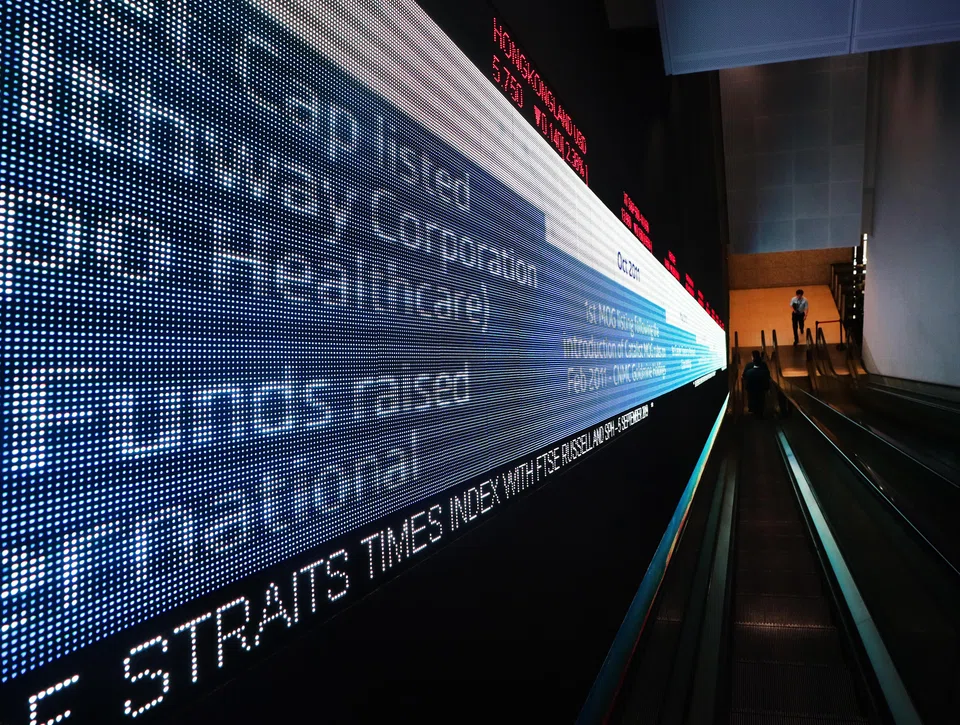
SEATRIUM’S inclusion in the Straits Times Index (STI) this month surprised several market watchers, and changes what many previously assumed about how the index is reviewed.
Its addition as an index constituent – at the expense of Keppel DC Reit – was not unexpected.
Analysts had previously flagged that its large size following the conclusion of a deal made it a potential STI candidate. Seatrium was previously known as Sembcorp Marine. Its market capitalisation ballooned following its acquisition of Keppel Offshore and Marine (KOM).
But the wording of the index ground rules gave many the impression that the inclusion would take place only in September, instead of the June 2023 quarterly review.
Market capitalisation
Seatrium has emerged as one of the largest stocks on the Singapore Exchange (SGX) following the acquisition of KOM from Keppel Corp in February.
The deal was settled through the issue of new shares, which raised the total issued share capital of Seatrium to 68.2 billion shares, from 31.4 billion shares.
The counter’s market capitalisation grew from around S$4.2 billion in mid-February, before the acquisition, to S$8.6 billion on May 22, according to Bloomberg data.
Seatrium’s market capitalisation in May ranked it above Mapletree Logistics Trust, which was the 20th-largest STI counter with a market capitalisation of S$8.3 billion.
Analyst Brian Freitas of Periscope Analytics, who publishes on Smartkarma, noted that Keppel DC Reit – the smallest STI counter – was ranked 35th among eligible securities.
According to the STI ground rules, a company is inserted into the STI at the quarterly review if it rises to 20th position or above when eligible securities are ranked by full market capitalisation.
A company in the STI will be deleted at the quarterly review if it falls to 41st position or below when the eligible securities are ranked by full market capitalisation.
Timing
On its market cap ranking alone, Seatrium would qualify for STI inclusion.
At the same time, the STI ground rules also specify that the STI is “reviewed on a semi-annual basis in March and September”.
The rules also point towards other instances for additions.
One is the fast entry threshold. If a new listing is very large, it may be included on the STI.
If, however, there is a new issue that is not large enough to meet the fast entry threshold, it may be added to the STI at the June and December review.
Specifically, the rules say: “In June and December, a review is applied to the STI for new issues not large enough to qualify as fast entrants since the previous March or September review. New issues will be reviewed with the existing constituents of the STI based on data from the close of business on the Monday four weeks prior to the review effective date.“
As Seatrium was not a new listing, its inclusion in June had come as a surprise.
Meanwhile, Keppel DC Reit’s market capitalisation did not fall below the 41st position in end-May. Even if all the existing STI constituents were ranked in June, the counter would not have been scheduled for deletion on account of it hitting the exclusion criteria.
Market watchers who track index changes were therefore not expecting these changes to take place.
In response to queries from The Business Times on the index methodology and Seatrium’s inclusion, FTSE Russell said the STI is reviewed semi-annually in March and September. This is when all SGX-listed securities are screened based on the eligibility criteria in conjunction with Section 4 and Section 5 of the Straits Times Index Ground Rules.
“In addition to the March and September semi-annual review, at the June and December quarters, a review is applied to the STI for any new issues that are not large enough to qualify as fast entrants since the previous March and September, and a re-ranking of the existing constituents of the FTSE ST All Share Index is done, to reflect any size movement to ensure the constituents remain relevant to their designated size segment,” FTSE Russell said.
“In the June and December quarters, liquidity screening applies only to new issues, not to the existing constituents of the FTSE ST All Share Index.”
Clarifications needed in ground rules?
Based on this explanation, it may be a good idea for the STI ground rules to be updated to clarify that it is not just new issues and existing constituents of the STI that are reviewed in June and December.
Freitas, the analyst, said his understanding of the existing methodology differs.
“Seatrium’s inclusion makes no sense, given what is stated in the methodology,” he said. “Maybe FTSE’s understanding is different, in which case they need to change the methodology books.”
The STI is the headline index of the FTSE ST Index Series, a family of indices created by Singapore Exchange, FTSE Russell and SPH Media Trust, which publishes The Business Times. The index is managed by FTSE Russell, which is responsible for the daily calculation, production and operation of the STI.
TRENDING NOW
Grab CEO’s wife Chloe Tong on life with Anthony Tan and finding her purpose
Once staunchly pro-China, Malaysian Chinese businesses are now distancing themselves from Beijing
Crystal Jade Fine Dining faces charge for failing to file income tax return on time
UOB found ‘grossly negligent’ over Stamford Land rights issue advice, to pay S$1.9 million