

Seeing value in non-property businesses owning property

THE return on equity (ROE) is a key metric that investors in listed equities focus on. Investors contribute equity to a business and entrust management to use the equity to generate returns. ROE improves when net profit, which is the numerator, is higher, and when the amount of equity, which is the denominator, is lower.
The orthodox theory is that businesses should lease their operating premises instead of sinking equity into owning their facilities, as this can help improve ROE. Could this theory be wrong?
Singapore’s corporate history has numerous examples of businesses which made bonanzas from owning properties that were used for operations. Food and beverage (F&B) group Fraser and Neave’s factory in River Valley was redeveloped into condominium units, serviced apartments and a mall cum office building. The former factory, located in the Bukit Timah area, of another F&B group, Yeo Hiap Seng, today houses condominium developments.
Singapore Press Holdings had sites in River Valley and Thomson, which used to house operations, and become condominiums. Singapore Post completed the redevelopment of SingPost Centre in Paya Lebar in 2017, doubling the retail space to around 25,000 square metres (sq m).
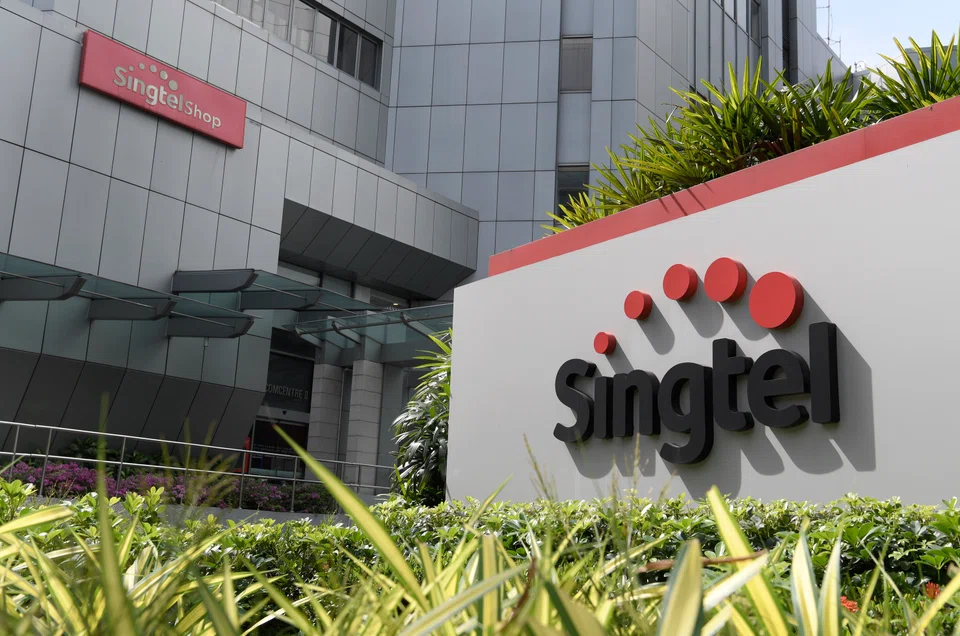
Recently, telco announced that it is entering a 51:49 joint venture with real estate group Lendlease to redevelop its Comcentre headquarters in the Orchard Road vicinity.
The new development, with estimated gross development value of S$3 billion upon completion, is expected to have a total gross floor area of over 110,000 sq m, comprising Grade A office buildings, a retail component and Singtel’s existing Orchard Exchange that houses telecom infrastructure. Singtel expects to occupy about 30 per cent of the total space in the new development, which is slated to be completed in 2028. Singtel sees the new asset delivering long-term recurring revenue for the group.
It is not just big companies that can reap good gains from owning their premises. Owners of strata retail shops at Tanglin Shopping Centre, which used their shops to carry out retail trade, had much to cheer from the successful en bloc sale of the property for S$868 million, which is about 10 per cent above the reserve price.
Holding operating premises on a company’s balance sheet at cost under property, plant and equipment can hurt ROE. Gains in the value of such properties are not captured in the balance sheet, and equity tied up to own premises that are entirely used by the owner generates zero rental return.
Ownership benefits
However, owning one’s factory or shop gives security of tenure. An F&B outlet that trades well will not be at the mercy of an opportunistic landlord, who may want to hike rental substantially when the outlet’s lease expires. An owner of an office unit can invest in fitting out the premises, without fearing that such costs may be wasted if the tenancy lease is not renewed.
Financially, there are two reasons why it can make sense for non-property businesses to own property in Singapore. Firstly, having funds tied up in physical property here can pay off via capital appreciation.
If the economy grows, people get richer and businesses expand, demand for physical spaces to live, work and play in will increase. Also, some properties may potentially enjoy an uplift in value from intensification in use or repurposing for more optimal use.
As a gateway city, Singapore draws much investor interest from institutions and wealthy families. In a world fraught with geopolitical tension, the safe haven premium that physical assets here enjoy may grow.
Secondly, tying up capital in owning property can be seen as buying insurance. Businesses have to navigate cycles and megatrends. When times are good, it may be wise for a business to channel some funds into buying its own operating premises or investment property, and be more circumspect with rewarding management and shareholders via higher bonuses and dividends respectively.
When a business hits a rough patch, whether due to a down point in the business cycle or unfavourable structural change, owning property gives options. Perhaps, a business can sell its property to keep lenders and shareholders happy. Such a move can help a business tide through a difficult patch in the business cycle, or buy time while it restructures to ride on new megatrends.
Potential for value unlocking
There are listed groups from various sectors that may reward or surprise shareholders by unlocking value from their property holdings. In December 2021, retailer Isetan (Singapore) said that its exercise to gather interest from target investors to buy its space at the Wisma Atria shopping mall on Orchard Road did not yield a positive outcome. The group is continuing to explore options that may lead to a better yield from the property, including any possible future sale.
Isetan used to operate a department store at Wisma Atria, but now uses the strata space it owns there to generate rental income. Other properties held by Isetan include freehold office space at Havelock Road and freehold warehouse space at Kallang Pudding Road.
A Nissan service centre sits on a property along Bukit Timah Road that Tan Chong International owns. Might this property one day become a prime condominium development?
Recently, Tan Chong sold property located at 798 and 800 Upper Bukit Timah Road to City Developments (CDL) for S$126.3 million. Subject to planning approval, CDL plans to redevelop the 179,007 square feet site into a residential project with over 400 units.
Banking group OCBC owns property assets such as its headquarters at Chulia Street. Besides property that is part of property, plant and equipment, OCBC holds investment property with a net carrying amount of S$801 million as at Dec 31, 2021, which has a market value of S$2.8 billion.
For non-property businesses such as Singtel, Isetan and OCBC, getting the core business right is an imperative. Securing optimal outcomes for properties that such groups hold can always be a sweetener for investors.
For an emerging business that is starting to generate good cash flow and profit, deciding whether to buy one’s own operating premises or investment property is invariably tricky.
Tying capital up in owning a property, whether for own use or investment, is costly, as the capital may be more productively deployed elsewhere. Still, putting money into owning property can come in handy on a rainy day.






