SGX RegCo gets tough on companies dragging feet on board renewal, executive pay disclosure
Local market regulators should ensure the issues surfaced by the Noble case are also fully addressed

A FUND manager once cheekily suggested to me that the unwillingness of many companies to disclose the exact remuneration of their chief executives, for fear this might make it easier for competitors to poach them, ought to be a major concern for investors.
After all, it is the most successful companies that pay top dollar for talent. “I wouldn’t want to be invested in a company that underpays its employees,” the fund manager said.
Competition for top executive talent is a real challenge, of course. And, the best senior executives aren’t usually short of employment options.
Yet, Singapore-listed companies routinely disclose a lot of things that they would probably prefer their competitors not to know – including their profit margins, their capital expenditure, and plans to roll out new products or venture into new markets.
In my view, many companies do not report the remuneration of their directors and CEOs simply because those top corporate officials – like most people – do not want the whole world to know how much they earn. And, more to the point, companies face no consequences for not revealing the information.
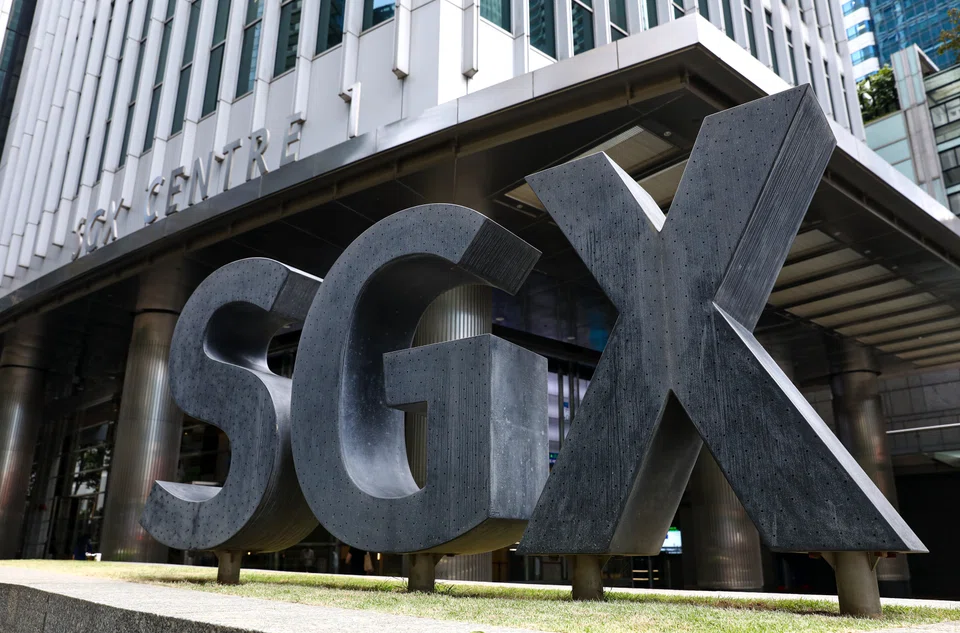
But that could soon change. This past week – on Sep 13 – Singapore Exchange Regulation (SGX RegCo) announced plans to require companies under its listing rules to report the remuneration of their directors and CEOs.
SGX RegCo also said it plans to cap the tenure of independent directors (IDs) under its listing rules, after observing that subjecting long-serving IDs to a 2-tier vote has not been effective.
This stiffening regulatory attitude is unlikely to be popular among corporate boards.
Although the Code of Corporate Governance requires companies to disclose the remuneration of their CEOs and each individual director, most companies report their CEO and director remuneration in bands.
A review of disclosures by Singapore-listed companies conducted by KPMG Singapore found only 18 per cent of companies disclosed what they paid their CEOs, and only 35 per cent disclosed their actual director remuneration.
Worse, a survey by KPMG found that only 8 per cent of directors support disclosing the exact remuneration of key management personnel and board members on a named basis.
Meanwhile, many companies have evidently not been deterred from keeping long-serving IDs on their boards despite the 9-year rule taking effect at the beginning of this year.
A study by Nanyang Business School found nearly 70 per cent of the 391 long-serving IDs that were up for re-election in 2021 had retained their board positions through the 2-tier voting process.
This column also noted at the beginning of this year that many companies were keeping their long-tenured IDs on by simply re-designating them as non-independent non-executive directors.
SGX RegCo said last week: “If this is allowed to continue, we may not be able to achieve the renewal and diversity outcomes that we seek. It is therefore timely for SGX RegCo to consult on hard-coding the 9-year limit for IDs.”
Transparency and independence
As an investor, I am wary of regulators being too prescriptive about how companies are organised and run. But I am wholly supportive of greater transparency.
SGX RegCo is right to be concerned about the poor disclosure of remuneration of directors and CEOs – and not just because it is crucial to understanding the link between a company’s performance and what its managers are paid.
Transparency on remuneration of directors and CEOs cuts to the heart of the principal-agent problem – which is the central issue that corporate governance is supposed to address.
Corporate boards, along with external auditors and other paid advisers, are a key legal protection that shareholders rely on to keep their managers honest. It seems outrageous to me that directors would take the view that board and top executive remuneration should not be fully disclosed.
This brings me to the question of why the independence of IDs might be compromised after 9 years. The consensus seems to be that it is only natural for a company’s IDs to become less sceptical after a long period of collegiality with management.
My own view is that it might also have something to do with there being a lack of consequences for not behaving independently. If IDs faced the risk of onerous regulatory sanction or minority shareholder retribution, their independence might never wane.
Unfortunately, independence is determined largely by whether an ID has links to a company’s management or controlling shareholder; not whether the ID recommends minority investors vote for a lopsided corporate deal or calls for a company’s board and top executive remuneration to be kept under wraps.
Accountability and competence
In a separate development this past week, Minister in the Prime Minister’s Office Indranee Rajah responded to a question in Parliament about the Noble Group case.
Among other things, the minister said information that could be obtained about the case was insufficient to prove that Noble’s offences were attributable to neglect by any particular individual.
Officials at the Singapore unit of Noble were also found to have been following the group’s accounting policies, and had not been warned by auditors that the accounting treatment for certain marketing contracts was wrong.
As for Ernst & Young Singapore, the firm’s audit work “did not reflect a competent application of accounting principles for long-term marketing agreements”, the minister said. But the audit issues were not straightforward, she added, and technical experts that EY Singapore consulted had concurred with the accounting treatment.
The minister also said the Ministry of Finance and the Accounting and Corporate Regulatory Authority are reviewing the fines that can be imposed on directors of companies for failing to prepare and table annual financial statements that comply with the prescribed accounting standards in Singapore.
While the minister’s statement in Parliament on Noble may well be the last word from the authorities on the matter, many investors will probably not be entirely satisfied.
Even if Noble’s officials were not warned by their auditors that the accounting treatment for certain marketing contracts was wrong, those officials could not have failed to hear the alarm in the market about the company’s accounting practices.
Against that backdrop, the apparent involvement of a daisy chain of Noble officials, external auditors and technical experts in applying the wrong accounting treatment smacks of passing the buck.
SGX RegCo should be applauded for its gumption in pushing for the 9-year term limit for IDs and full transparency of board and CEO remuneration to be hardcoded under the listing rules. But it – and the other local market regulators – should now turn their attention to ensuring the issues surfaced by the Noble case are fully addressed.
In particular, regulators ought to ensure corporate boards and their paid advisers are accountable and competent. They should also make it clear that boards cannot offload their responsibilities to auditors, any more than auditors can offload their responsibilities to technical experts.