Shape of things to come after Covid-19
Coronavirus pandemic is likely to be a transformative event that will drive world towards major changes in political and economic systems and shift global balance of power
IT HAS been compared to the Spanish Flu that caused the death of tens of millions at the start of the 20th century; at the same time it's already apparent that its economic consequences could be the worst the world has suffered since the Great Depression.
Historians recall the way the bubonic plague, also called the Black Plague, which may have reduced the world population from an estimated 475 million to 350-375 million in the 14th century, also helped to demolish the feudal system and create the foundations for the modern age.
It may be too early to try to figure out the long-term consequences of the outbreak of Covid-19, but even if we dismiss the apocalyptic scenarios drawn by some it's-the-end-of-the-world observers, it would not be an exaggeration to stipulate that the deadly pandemic has paralysed the global economy, if not demobilised the entire human race. It has shut down factories, grounded airplanes, and left entire populations quarantined in their homes, and has been more devastating in its effects than any war or natural disaster since the end of World War II. In a way, the world has held its breath for a few weeks.
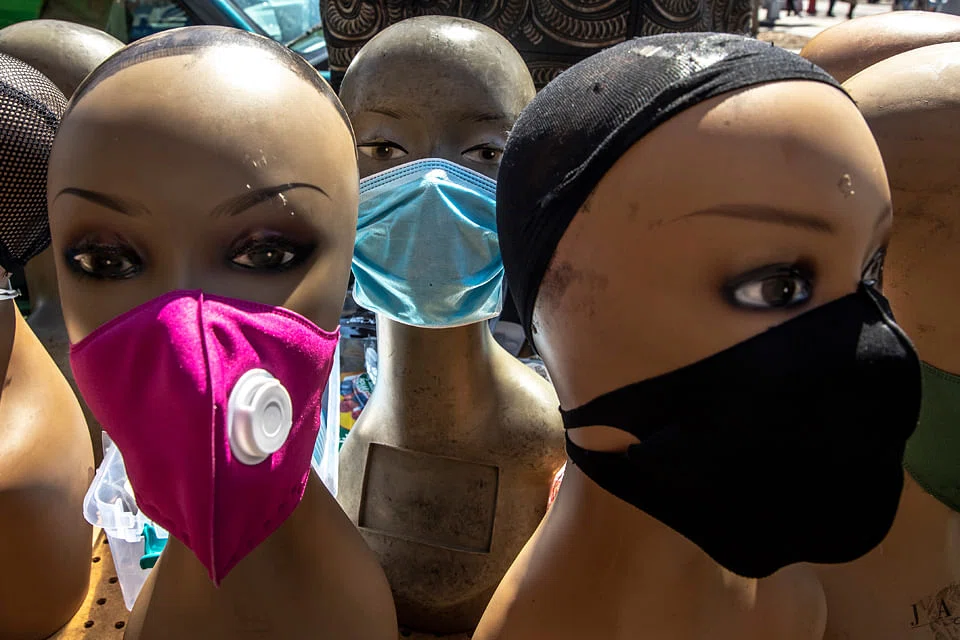
It is not clear yet whether we can start breathing again, which has anyway become difficult for those of us who will continue wearing masks in the foreseeable future. But there are signs that the United States and other nations are preparing to take small steps towards so-called "exit strategies" as they move to relax some of the restrictions imposed on their citizens and open their economies back to doing business.
Last week, US President Donald Trump released a set of nonbinding guidelines that anticipated a gradual return to work and schools over weeks and months, telling the nation's governors on Thursday that they could begin opening businesses, restaurants and gyms on May 1 or even earlier if they conclude that it is safe to do so.
But in a week when the death toll from the coronavirus surged by more than 2,000 for a total over 30,000 in the US, the expectation is that the restoration of any sense of normalcy in America will depend very much on the conditions in each state. Hence New York - which has been devastated beyond recognition by the pandemic - will probably suspend its stay-at-home guidelines long after, say, Idaho - a state with a population of less than 600,000 and that is mostly rural - does so.
Indeed, one of the lessons the world has been learning is that when it comes to fighting Covid-19, one size does not fit all. The high-trust and homogenous society of Sweden responds differently to an epidemic than the low-trust and multi-ethnic population of New York City where 800 languages are being spoken. And the Singaporean model may not necessarily be applicable to the challenges facing Chicago or London.
It is clear, however, that until a coronavirus vaccine is developed - and that could take at least a year - America and the entire world will have to remain cautious, with masks and social distancing remaining in place, before starting to fully fire the economic engines. And some wonder if that would even happen in our lifetime.
Thanks to advances in medical science and out functioning modern societies, the hope is that the number who succumb to the coronavirus would be smaller than those who died during the Spanish Flu a century ago.
But many of us are wondering whether even with less-than-expected death, the pandemic will prove to be a transformative event, which - like the Great Depression and the ensuing World War II of the last century - would dramatically change our economic and political system and the global balance of power.
After all, we now recognise that the 2008 global financial crisis and the Great Recession set in motion the populist insurgencies of the last two decades that have challenged the globalisation process, and have helped bring President Trump to power and energised the Brexit forces in Britain.
So, it is difficult to imagine that the meltdown of the American economy - with small and big businesses going bankrupt, more than 22 million Americans out of jobs, and an unemployment rate higher than that of the Great Depression - would not shake up the political and economic underpinnings of the country.
POLITICAL-ECONOMIC REVOLUTION
The Great Depression, after all, led to the election of Democratic President Franklin D Roosevelt that set in motion what amounted to a political-economic revolution, changing the way the capitalist system operated, leading to growing intervention by the federal government in the economy, and laying the basis for the modern American welfare state.
At the same time, the Great Depression and its aftermath accelerated the coming to power of fascist and militaristic regimes worldwide, and that in turn opened the road to the catastrophic World War II. That transformed the entire international system, leading to the rise of the US and the Soviet Union, accelerating the decline of the colonial European powers, and facilitating the emergence of the post-1945 liberal international order.
So how would the US and the world look, say, five years after an anti-Covid-19 vaccine is discovered? Will it look like it did the week before the epidemic started ravaging it? Recall how in the aftermath of the terrorist attacks on 9/11 many had predicted that "everything will be different now". Well, that did not really happen. So maybe we are heading to the same old, same old?
It is more likely that the global pandemic would amount to a collective traumatic event that will drive the world towards major changes. But the question is: In what way?
It is difficult to imagine that it will be business as usual in America, especially if the economy enters a new Great Depression. The shape of things to come are being made clear: Millions of out-of-job workers outside unemployment offices; long lines of cars stretching for miles in front of food banks; tenants being evicted from their homes because they could not pay the rent or the mortgage; hospitals and medical doctors who cannot cope, with thousands of Americans waiting for virus testing.
And this is all happening after Americans were being told that their economy was booming and were expecting more of the same for years to come.
In a way, the pandemic has demonstrated that a bullish stock market is not enough to sustain Americans if, during times of crisis, it cannot provide them with medical care, food, and shelter, and that a thriving free market system cannot substitute for a durable welfare state. Gig jobs and pension funds tied to the stock market are great but there is no alternative to secure and well-paying jobs.
So expect a major change in the nation's political zeitgeist, and whatever you want to call it - Socialism? Social democracy? Social liberalism? American politicians are going to call for universal medical care so that no one is afraid to go to the doctor if he or she feels sick and has to pay thousands of dollars for a simple operation; for major increases in the minimum wage for low-wage workers who helped Americans survive through the pandemic (which may include a path to citizenship for undocumented workers); for pensions guaranteed by companies and the state; for more government intervention in the economy.
If this sounds like a shift to the political left, one can also anticipate a move to the political right, in the form of nationalism, protectionism and anti-immigration sentiments.
In fact, we will probably see an acceleration of the political and economic changes that commenced before Covid-19, and that have placed the nation-state at the centre of the political-economic universe.
You do not have to be a nativist or a xenophobe to recognise that one of the ways to prevent the spread of epidemics is by securing the country's borders and imposing more restrictions on foreigners who enter it. So now no politician is going to advocate "open borders".
Similarly, after Americans discovered during the epidemic the extent to which they were dependent on China for supply of critical medical products, the pressure to de-couple the American and Chinese economies is bound to grow, with more US companies relocating their operations from China.
In that context, the tensions between China and a post-Covid-19 America, which is worried that the former is exploiting US' problems in order to promote its influence around the world, will probably grow, and make it likely that a great power competition, and not liberal values, will define the international system in the coming years.