Shaping the energy future of Singapore
The global climate change movement will have an enduring impact on the power industry here, and energy players need to be agile in responding to these changes.
THE energy sector is experiencing a significant time of transformation. Renewables are replacing fossil fuels, energy markets are liberalising and digitalisation is enabling capabilities that never existed before.
Singapore is at the forefront of embracing these developments to drive greater efficiency and sustainability in the generation, transmission and consumption of power. The government is investing heavily in the shift towards cleaner energy sources and adoption of technology to advance Singapore's energy industry.
While the opportunities for growth are plenty, like any and all major transformations, these developments have brought with them their fair share of challenges. How effectively and swiftly we respond to these challenges and future-proof the industry will set the blueprint for Singapore's energy future.
A major challenge that Singapore's energy industry recently faced was the massive overcapacity of power.
The power generation sector is typically subject to cyclical fluctuations in power demand and supply. However, the demand-supply imbalance was exacerbated in 2012 when close to 3,000 MW of capacity was added by the industry within two years. On the other hand, the demand growth for electricity was slower than forecast. In 2017, the peak demand in Singapore averaged 7,000 MW in comparison to a total generation capacity of 13,600 MW.
The overcapacity issue has a knock-on effect on the sustainability of the power generation sector, and consequently Singapore's energy security and reliability. As such, resolving the issue has been a top priority for the government and the generation companies (gencos).
To that end, gencos have been working with the Energy Market Authority (EMA) to retire some of their older and more inefficient generation assets to mitigate the issue of overcapacity in the system. Last year alone saw 1,250 MW of generation capacity decommissioned from the system, with another 2,800 MW indicated for retirement progressively up until 2021.
At the same time, energy demand in Singapore has picked up with the introduction of electric vehicles and growth in high-energy-consumption data centres. By 2030, data centres are set to account for up to 12 per cent of the country's total energy demand.
The confluence of these factors is allowing demand to catch up with supply in the system, and we are already seeing improvements in the market as a result. The outlook for the industry looks positive as demand and supply progressively tighten and consequently attract greater investments in the sector.
Solving the overcapacity issue is just one part of the puzzle. Beyond this, the industry needs to be future-proofed. In order to safeguard the energy sector, the government and industry players must work together to capture opportunities and overcome any challenges that transformation may bring.
For example, one of the key developments shaping the global energy industry that calls for concerted efforts by the government and industry players is the fight against climate change.
AMBITIOUS TARGETS
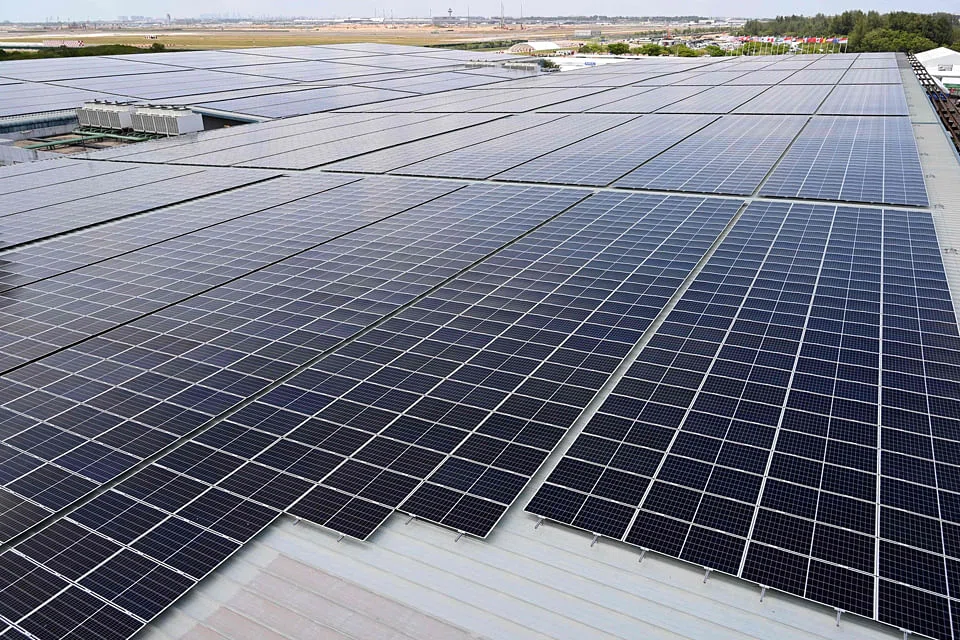
As part of its efforts to reduce carbon emissions, Singapore has set ambitious targets to increase the share of solar energy in Singapore's energy mix. By 2030, the government aims to increase its solar capacity by more than seven times from current levels to meet 4 per cent of the country's total electricity demand.
The government's targets are supported by increased adoption of solar energy by the private sector, with the latter doubling its solar installations from 2015 to 2018. For energy companies like us, solar energy - being one of the most viable renewable energy options in Singapore - is a promising growth area. Recognising the potential of the sector, we launched our first solar energy project in 2018 and now we are exploring a pilot project in peer-to-peer trading of solar energy to drive greater solar adoption among Singaporeans.
While opportunities in solar energy abound, and despite Singapore's sunny disposition, harnessing the sun for power is not without challenges. The intermittent nature of sunshine can cause more frequent supply-demand imbalances and in turn greater price volatility in energy prices.
Recognising this issue, Trade and Industry Minister Chan Chun Sing has emphasised the role of natural gas as a key source in meeting Singapore's energy needs for the next 50 years. Even as the government strives to increase the share of solar in the energy mix, it is important to supplement this with sufficient supply from natural gas-fuelled power plants that generate over 95 per cent of Singapore's electricity today.
Currently, the gencos are working with EMA on the development of a forward capacity market to ensure that they can continue to sustainably operate these power plants and support Singapore's energy security during this time of great change.
Collaboration between EMA and industry players is imperative, but gencos must also continue to look for ways to strengthen their own operating position and enhance their financial security. Senoko Energy was the first genco to refinance in May last year, and we expect that other gencos will follow suit. We have also invested in efficiency upgrades for our assets to further reduce our operating costs while contributing to Singapore's vision for a sustainable energy future.
The global climate change movement will have an enduring impact on the power industry in Singapore, and energy players need to be agile in responding to these changes and ensure that they can remain financially viable in order to support Singapore's transition to a low-carbon future.
The power sector is benefitting from many dynamic and exciting opportunities, including the open electricity market, renewable energy drive, and the use of smart technology to manage energy consumption. Our future is bright as energy demand forecasts remain optimistic and Singapore demonstrates leadership in the adoption of advanced green solutions.
Shaping the energy future of Singapore means ensuring the sustainability of the power industry - and it is a job for everyone. This includes the government and energy players, as well as businesses and individuals as they increasingly take on a more active role in their energy choices.